Focus on the BIG picture.
Monday, Jan 05, 2026
Outside the box.

Iranian Protests Intensify as Another Revolutionary Guard Member Is Killed and Khamenei Blames the West
Three security personnel have now died during nationwide unrest, as Iran’s leadership combines limited concessions with renewed warnings and external accusations
Protests across Iran continued over the weekend as another member of the Islamic Revolutionary Guard Corps was killed in the country’s west, bringing the total number of fallen security personnel to three since the unrest began.
The demonstrations coincide with the anniversary of the death of Qassem Soleimani, the former commander of the Quds Force, and have remained smaller in scale than past nationwide uprisings.
Even so, security forces have moved to contain them, while reports indicate more than ten civilians have been killed, over one hundred people detained, and dozens injured since the protests erupted.
Supreme Leader Ali Khamenei used the anniversary to address the unrest with a dual message.
He described the economic grievances of merchants and citizens as legitimate, pointing to the sharp decline in the national currency and growing instability in daily commerce.
At the same time, he accused Western adversaries of exploiting those grievances to incite violence and disorder, drawing a clear distinction between protest and what he called destructive riots.
Authorities have echoed this mixed approach, signaling openness to dialogue over economic complaints while dispersing demonstrations with force in several cities.
Fires were reported at police facilities in parts of the country, and clashes occurred overnight in urban and rural areas, including in the capital.
The protests began after traders near Tehran’s main bazaar closed their shops, saying they could no longer operate profitably as inflation rose and the currency reached historic lows.
Students and other groups soon joined, widening the unrest into what officials now describe as the most serious internal challenge since the mass protests of two thousand twenty-two.
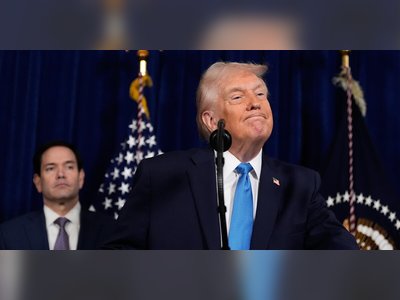
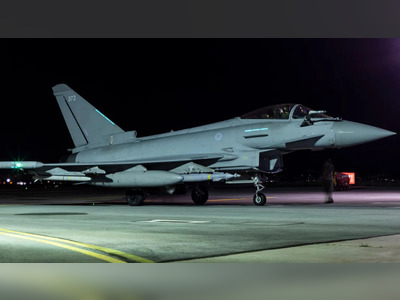
President Donald Trump warned publicly that the United States would act if Iranian authorities opened fire on peaceful demonstrators, saying American forces were prepared but offering no operational details.
The Revolutionary Guard responded by accusing Washington of attempting to destabilize Iran and portraying the warning as an act of desperation.
Iran’s leadership now faces mounting pressure as economic distress, public anger, and external tension converge at a moment of heightened internal vulnerability.
The demonstrations coincide with the anniversary of the death of Qassem Soleimani, the former commander of the Quds Force, and have remained smaller in scale than past nationwide uprisings.
Even so, security forces have moved to contain them, while reports indicate more than ten civilians have been killed, over one hundred people detained, and dozens injured since the protests erupted.
Supreme Leader Ali Khamenei used the anniversary to address the unrest with a dual message.
He described the economic grievances of merchants and citizens as legitimate, pointing to the sharp decline in the national currency and growing instability in daily commerce.
At the same time, he accused Western adversaries of exploiting those grievances to incite violence and disorder, drawing a clear distinction between protest and what he called destructive riots.
Authorities have echoed this mixed approach, signaling openness to dialogue over economic complaints while dispersing demonstrations with force in several cities.
Fires were reported at police facilities in parts of the country, and clashes occurred overnight in urban and rural areas, including in the capital.
The protests began after traders near Tehran’s main bazaar closed their shops, saying they could no longer operate profitably as inflation rose and the currency reached historic lows.
Students and other groups soon joined, widening the unrest into what officials now describe as the most serious internal challenge since the mass protests of two thousand twenty-two.
President Donald Trump warned publicly that the United States would act if Iranian authorities opened fire on peaceful demonstrators, saying American forces were prepared but offering no operational details.
The Revolutionary Guard responded by accusing Washington of attempting to destabilize Iran and portraying the warning as an act of desperation.
Iran’s leadership now faces mounting pressure as economic distress, public anger, and external tension converge at a moment of heightened internal vulnerability.