Focus on the BIG picture.
Wednesday, Jan 14, 2026
Outside the box.

Australia’s Ambassador to the United States to Leave Post Early After Tensions with Trump Surface
Former prime minister Kevin Rudd will depart the Washington ambassadorial post in March, drawing attention to past public criticisms of Donald Trump amid strong bilateral cooperation achievements
Australia’s ambassador to the United States, Kevin Rudd, will conclude his posting in Washington in March 2026, a year ahead of schedule, the Australian government announced, underscoring both his contributions to the alliance and lingering diplomatic sensitivities.
Rudd, a former Australian prime minister and foreign minister, has served as ambassador since March 2023, and his early departure follows public scrutiny over past comments he made about former United States President Donald Trump before his appointment to the role.
Prime Minister Anthony Albanese said that Rudd’s decision to step down was entirely his own and not the result of external pressure, affirming Australia’s deep and enduring alliance with the United States.
In a statement, Albanese credited Rudd with strengthening ties across successive U.S. administrations, advancing cooperation on defence, trade and innovation, and helping secure ongoing commitment to the AUKUS security partnership.
Rudd’s tenure saw notable diplomatic achievements, including work to maintain bipartisan U.S. support for the AUKUS nuclear submarine programme and progress on critical minerals agreements and technological collaboration.
The ambassador is also leaving to assume the role of global president and chief executive of the Asia Society, where he will lead the institution’s policy work on U.S.–China relations, which he has identified as central to regional stability.
The decision comes against the backdrop of occasional public friction during Rudd’s ambassadorship.
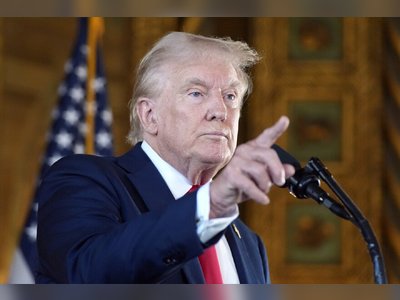
Rudd had previously described Mr Trump in critical terms before his diplomatic appointment, remarks that resurfaced during an official visit in 2024 when Mr Trump quipped that he did not much like the ambassador.
Albanese and Foreign Minister Penny Wong both praised Rudd’s effectiveness in navigating those moments and in representing Australia’s interests in Washington.
The White House also recognised Rudd’s service, with officials expressing goodwill toward him and highlighting productive engagement with the U.S. government under both Republican and Democratic leadership.
A successor has not yet been named, and the Australian government indicated that an announcement would follow in due course, with an emphasis on appointing a diplomat capable of building bipartisan support for the alliance moving forward.
Rudd said he will remain in the United States as he transitions to his new role, focusing on policy work related to U.S.–China strategic dynamics, which he has long described as the defining foreign-policy challenge of the twenty-first century.
Rudd, a former Australian prime minister and foreign minister, has served as ambassador since March 2023, and his early departure follows public scrutiny over past comments he made about former United States President Donald Trump before his appointment to the role.
Prime Minister Anthony Albanese said that Rudd’s decision to step down was entirely his own and not the result of external pressure, affirming Australia’s deep and enduring alliance with the United States.
In a statement, Albanese credited Rudd with strengthening ties across successive U.S. administrations, advancing cooperation on defence, trade and innovation, and helping secure ongoing commitment to the AUKUS security partnership.
Rudd’s tenure saw notable diplomatic achievements, including work to maintain bipartisan U.S. support for the AUKUS nuclear submarine programme and progress on critical minerals agreements and technological collaboration.
The ambassador is also leaving to assume the role of global president and chief executive of the Asia Society, where he will lead the institution’s policy work on U.S.–China relations, which he has identified as central to regional stability.
The decision comes against the backdrop of occasional public friction during Rudd’s ambassadorship.
Rudd had previously described Mr Trump in critical terms before his diplomatic appointment, remarks that resurfaced during an official visit in 2024 when Mr Trump quipped that he did not much like the ambassador.
Albanese and Foreign Minister Penny Wong both praised Rudd’s effectiveness in navigating those moments and in representing Australia’s interests in Washington.
The White House also recognised Rudd’s service, with officials expressing goodwill toward him and highlighting productive engagement with the U.S. government under both Republican and Democratic leadership.
A successor has not yet been named, and the Australian government indicated that an announcement would follow in due course, with an emphasis on appointing a diplomat capable of building bipartisan support for the alliance moving forward.
Rudd said he will remain in the United States as he transitions to his new role, focusing on policy work related to U.S.–China strategic dynamics, which he has long described as the defining foreign-policy challenge of the twenty-first century.