Focus on the BIG picture.
Thursday, Jan 15, 2026
Outside the box.

Trump Presses Ahead with Controversial Greenland Ambitions After High-Level White House Talks
President insists U.S. must control Greenland for strategic security despite firm rejection from Denmark and Greenland and growing diplomatic tensions
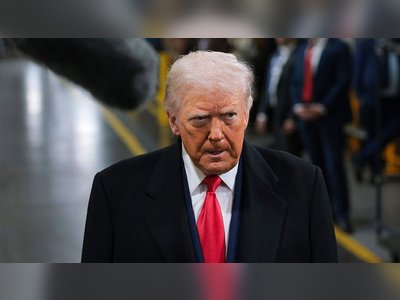
President Donald Trump has doubled down on his pursuit of control over Greenland, declaring that anything short of American sovereignty over the Arctic territory is “unacceptable” as negotiations with Danish and Greenlandic leaders concluded in Washington with stark disagreement.
The issue dominated a high-stakes meeting at the White House this week between U.S. officials, including Vice President J.D. Vance and Secretary of State Marco Rubio, and their counterparts from Denmark and Greenland after weeks of intense pressure from the Trump administration.
Trump’s insistence on “owning” Greenland reflects his assertion that the island is vital to U.S. national security and the future strength of the North Atlantic Treaty Organization.
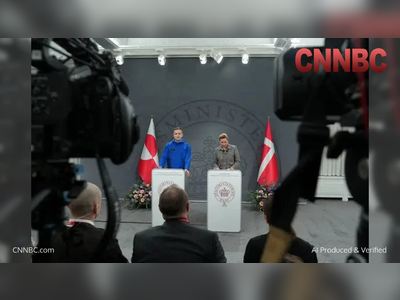
Denmark and Greenland both firmly rejected the proposal during the talks, with Danish Foreign Minister Lars Løkke Rasmussen describing the disagreement as “fundamental” and reaffirming that Greenland is not for sale and will remain part of the Kingdom of Denmark.
Greenland’s Prime Minister Jens-Frederik Nielsen echoed those sentiments, emphasizing that Greenland chooses to remain aligned with Denmark, NATO and the European Union and stressed that its defence should be conducted through NATO, not under unilateral U.S. control.
Trump has framed his bid for Greenland as essential to countering geopolitical rivals, particularly Russia and China, and has linked it to broader strategic initiatives including an unspecified national defence project dubbed the “Golden Dome.” He reiterated on social media that control of Greenland would make NATO “more formidable.” However, the assertive rhetoric has drawn resistance not only from Copenhagen and Nuuk, but also from U.S. lawmakers introducing legislation to prohibit any military occupation or annexation of NATO territory.
The diplomatic standoff has also prompted Denmark to enhance its military presence in the Arctic with NATO partners and sparked expressions of solidarity from European leaders, who warn that attempts to seize territory from a NATO ally could undermine the alliance’s unity.
Greenland’s government reiterated its commitment to international law and self-determination, rejecting both purchase and force as means of altering its status.
Despite broad resistance, Trump remains publicly committed to his position, asserting that the United States must act to secure its strategic interests in the High North even as diplomatic channels remain strained and geopolitical tensions persist over the future of the Arctic territory.
The issue dominated a high-stakes meeting at the White House this week between U.S. officials, including Vice President J.D. Vance and Secretary of State Marco Rubio, and their counterparts from Denmark and Greenland after weeks of intense pressure from the Trump administration.
Trump’s insistence on “owning” Greenland reflects his assertion that the island is vital to U.S. national security and the future strength of the North Atlantic Treaty Organization.
Denmark and Greenland both firmly rejected the proposal during the talks, with Danish Foreign Minister Lars Løkke Rasmussen describing the disagreement as “fundamental” and reaffirming that Greenland is not for sale and will remain part of the Kingdom of Denmark.
Greenland’s Prime Minister Jens-Frederik Nielsen echoed those sentiments, emphasizing that Greenland chooses to remain aligned with Denmark, NATO and the European Union and stressed that its defence should be conducted through NATO, not under unilateral U.S. control.
Trump has framed his bid for Greenland as essential to countering geopolitical rivals, particularly Russia and China, and has linked it to broader strategic initiatives including an unspecified national defence project dubbed the “Golden Dome.” He reiterated on social media that control of Greenland would make NATO “more formidable.” However, the assertive rhetoric has drawn resistance not only from Copenhagen and Nuuk, but also from U.S. lawmakers introducing legislation to prohibit any military occupation or annexation of NATO territory.
The diplomatic standoff has also prompted Denmark to enhance its military presence in the Arctic with NATO partners and sparked expressions of solidarity from European leaders, who warn that attempts to seize territory from a NATO ally could undermine the alliance’s unity.
Greenland’s government reiterated its commitment to international law and self-determination, rejecting both purchase and force as means of altering its status.
Despite broad resistance, Trump remains publicly committed to his position, asserting that the United States must act to secure its strategic interests in the High North even as diplomatic channels remain strained and geopolitical tensions persist over the future of the Arctic territory.