
Focus on the BIG picture.
Wednesday, Jun 24, 2026
Outside the box.

Trump Weighs White House Helipad as Marine One Upgrade Exposes Ground Damage Problem
Plan would permanently alter the South Lawn to accommodate new VH-92A helicopters that have been scorching grass during presidential landings
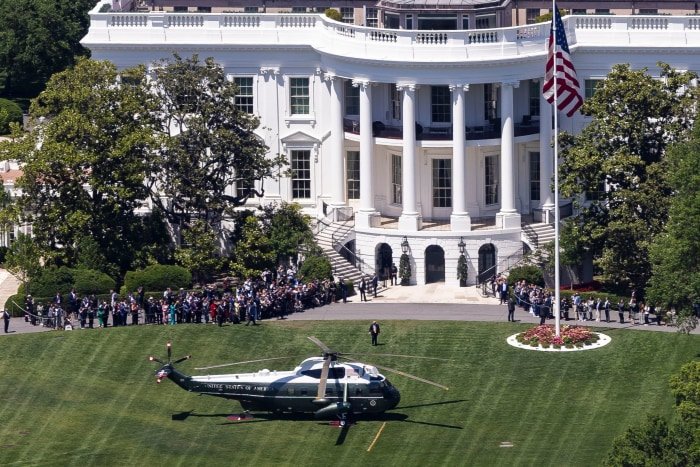
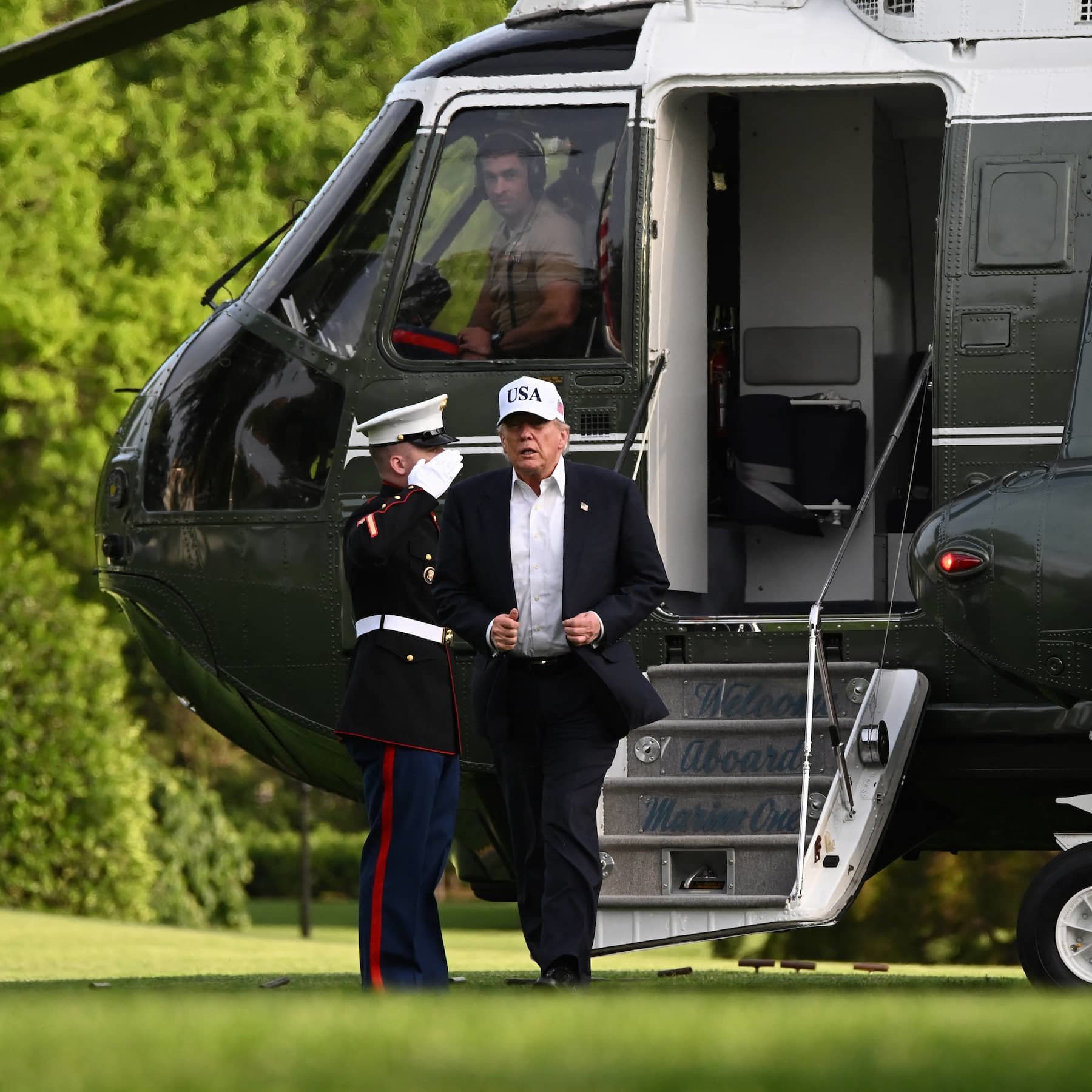
The U.S. government’s handling of presidential air transport is driving a potential physical redesign of the White House grounds, as officials consider installing a permanent helipad on the South Lawn to accommodate newer Marine One helicopters that have been damaging the grass during landings.
What is confirmed is that President Donald Trump is discussing a plan to construct a dedicated helipad at the White House.
The proposal is aimed at resolving a recurring operational issue involving the VH-92A Patriot helicopters, the latest generation of aircraft used for presidential transport.
These helicopters are significantly more powerful than the older VH-3D Sea King model they are replacing, and their downward-directed exhaust has been reported to scorch or burn sections of turf during landings.
Marine One landings have traditionally taken place directly on the South Lawn without a permanent landing pad, a practice maintained for decades and closely associated with the visual symbolism of the presidency.
The new aircraft, while more capable in range, payload, and modern systems, have introduced a practical constraint: their landing impact on grass surfaces under certain conditions can cause visible damage, raising concerns about repeated use of the same landing zone.
The proposal under discussion would replace or supplement the existing grass landing area with a hardened or reinforced surface.
The intention is to ensure consistent, damage-free operations for presidential flights, particularly as the VH-92A fleet becomes more central to Marine Corps support for executive travel.
The Marine Corps, which operates presidential helicopters through Marine Helicopter Squadron One, has continued to manage the transition between aircraft types while addressing logistical and environmental constraints on White House grounds.
The issue is not new in concept.
The compatibility of modern heavy-lift helicopters with the South Lawn has been a technical discussion point since the introduction of the VH-92A program, with engineers and operators exploring mitigation strategies short of structural changes to the White House grounds.
However, those efforts have not fully eliminated the risk of turf damage, keeping the question of a permanent landing solution active.
If implemented, the helipad would mark a notable physical change to one of the most recognizable ceremonial spaces in the United States.
The South Lawn is not only an operational landing zone but also a visual backdrop for presidential arrivals and departures, widely broadcast and photographed as part of state travel imagery.
Altering it would therefore have both functional and symbolic consequences.
The plan also sits within a broader pattern of recent physical modifications to the White House complex, where infrastructure, landscaping, and ceremonial spaces have been incrementally reshaped to accommodate operational needs and aesthetic preferences.
The helipad proposal extends that trend into one of the most sensitive and publicly visible parts of the executive residence.
Supporters of the idea frame it as a practical adaptation to modern aviation requirements, arguing that the government should not risk repeated damage to historic grounds from routine presidential operations.
Critics, including some former Marine One personnel, have argued that permanent alteration of the South Lawn would compromise its historic character and that temporary landing solutions could achieve the same operational goal without permanent construction.
The decision now centers on balancing operational reliability against preservation of historic landscape design.
Any final approval would determine whether Marine One continues to land on grass as it has for generations, or transitions to a fixed infrastructure more typical of modern aviation facilities.
What is confirmed is that President Donald Trump is discussing a plan to construct a dedicated helipad at the White House.
The proposal is aimed at resolving a recurring operational issue involving the VH-92A Patriot helicopters, the latest generation of aircraft used for presidential transport.
These helicopters are significantly more powerful than the older VH-3D Sea King model they are replacing, and their downward-directed exhaust has been reported to scorch or burn sections of turf during landings.
Marine One landings have traditionally taken place directly on the South Lawn without a permanent landing pad, a practice maintained for decades and closely associated with the visual symbolism of the presidency.
The new aircraft, while more capable in range, payload, and modern systems, have introduced a practical constraint: their landing impact on grass surfaces under certain conditions can cause visible damage, raising concerns about repeated use of the same landing zone.
The proposal under discussion would replace or supplement the existing grass landing area with a hardened or reinforced surface.
The intention is to ensure consistent, damage-free operations for presidential flights, particularly as the VH-92A fleet becomes more central to Marine Corps support for executive travel.
The Marine Corps, which operates presidential helicopters through Marine Helicopter Squadron One, has continued to manage the transition between aircraft types while addressing logistical and environmental constraints on White House grounds.
The issue is not new in concept.
The compatibility of modern heavy-lift helicopters with the South Lawn has been a technical discussion point since the introduction of the VH-92A program, with engineers and operators exploring mitigation strategies short of structural changes to the White House grounds.
However, those efforts have not fully eliminated the risk of turf damage, keeping the question of a permanent landing solution active.
If implemented, the helipad would mark a notable physical change to one of the most recognizable ceremonial spaces in the United States.
The South Lawn is not only an operational landing zone but also a visual backdrop for presidential arrivals and departures, widely broadcast and photographed as part of state travel imagery.
Altering it would therefore have both functional and symbolic consequences.
The plan also sits within a broader pattern of recent physical modifications to the White House complex, where infrastructure, landscaping, and ceremonial spaces have been incrementally reshaped to accommodate operational needs and aesthetic preferences.
The helipad proposal extends that trend into one of the most sensitive and publicly visible parts of the executive residence.
Supporters of the idea frame it as a practical adaptation to modern aviation requirements, arguing that the government should not risk repeated damage to historic grounds from routine presidential operations.
Critics, including some former Marine One personnel, have argued that permanent alteration of the South Lawn would compromise its historic character and that temporary landing solutions could achieve the same operational goal without permanent construction.
The decision now centers on balancing operational reliability against preservation of historic landscape design.
Any final approval would determine whether Marine One continues to land on grass as it has for generations, or transitions to a fixed infrastructure more typical of modern aviation facilities.