
Focus on the BIG picture.
Friday, Oct 23, 2026
Outside the box.

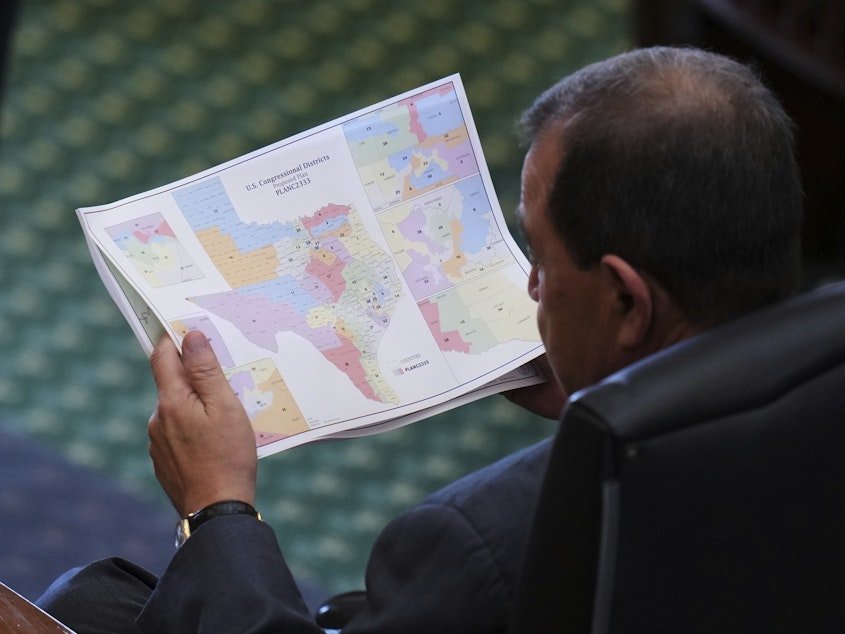
Washington Democrats Spark Debate on Gerrymandering Despite Hurdles in State Legislature
A symbolic resolution to explore mid-decade redistricting ignites discussion on partisan map drawing amid national battles over congressional boundaries
Washington state Democrats have introduced a resolution to begin a formal discussion on gerrymandering and mid-decade redistricting, even as structural and political barriers make immediate action unlikely.
The proposal, put forward by Joe Fitzgibbon, the majority leader in the Washington House of Representatives, would seek voter approval to reconsider the state’s congressional map outside the usual decennial cycle in response to aggressive redistricting in other states.
Fitzgibbon acknowledged that securing the two-thirds legislative supermajority required to advance the measure to a ballot question would be highly improbable, underscoring the symbolic nature of the effort to elevate the issue among voters and lawmakers.
Under Washington’s constitution, redistricting occurs only once every ten years after the census, and changing that rule would require both legislative approval and a statewide vote.
Republicans have defended the existing bipartisan redistricting process, which was established by voters in the 1980s and involves a four-member commission with equal representation from both parties.
State Senate Minority Leader John Braun stressed his support for the current system and highlighted its bipartisan nature, noting that Washington’s electorate has repeatedly endorsed a less partisan approach to drawing districts.
The debate in Washington reflects a wider national context in which many states are engaged in contentious redistricting battles.
Efforts to redraw congressional maps mid-decade have gained prominence, with prominent states like Texas and California adopting new maps outside the typical post-census window to bolster partisan prospects ahead of the 2026 House elections.
Approximately one-third of states have considered or implemented changes to their U.S. House districts in this “redistricting frenzy,” a dynamic driven in part by political calculations tied to President Donald Trump’s broader push for mid-decade map changes.
In Washington, Democrats already hold eight of the state’s ten congressional seats and control statewide offices, making substantial gains through redistricting a remote prospect.
Opponents of altering the current process have pointed to the independent commission’s relatively strong fairness record and voter support, arguing that Brown’s and other lawmakers’ preference for the status quo reflects a commitment to balanced representation.
As discussion continues, the episode highlights how Washington, while largely insulated from dramatic partisan map changes, is nevertheless engaging with broader national debates over the future of redistricting and electoral fairness.
The proposal, put forward by Joe Fitzgibbon, the majority leader in the Washington House of Representatives, would seek voter approval to reconsider the state’s congressional map outside the usual decennial cycle in response to aggressive redistricting in other states.
Fitzgibbon acknowledged that securing the two-thirds legislative supermajority required to advance the measure to a ballot question would be highly improbable, underscoring the symbolic nature of the effort to elevate the issue among voters and lawmakers.
Under Washington’s constitution, redistricting occurs only once every ten years after the census, and changing that rule would require both legislative approval and a statewide vote.
Republicans have defended the existing bipartisan redistricting process, which was established by voters in the 1980s and involves a four-member commission with equal representation from both parties.
State Senate Minority Leader John Braun stressed his support for the current system and highlighted its bipartisan nature, noting that Washington’s electorate has repeatedly endorsed a less partisan approach to drawing districts.
The debate in Washington reflects a wider national context in which many states are engaged in contentious redistricting battles.
Efforts to redraw congressional maps mid-decade have gained prominence, with prominent states like Texas and California adopting new maps outside the typical post-census window to bolster partisan prospects ahead of the 2026 House elections.
Approximately one-third of states have considered or implemented changes to their U.S. House districts in this “redistricting frenzy,” a dynamic driven in part by political calculations tied to President Donald Trump’s broader push for mid-decade map changes.
In Washington, Democrats already hold eight of the state’s ten congressional seats and control statewide offices, making substantial gains through redistricting a remote prospect.
Opponents of altering the current process have pointed to the independent commission’s relatively strong fairness record and voter support, arguing that Brown’s and other lawmakers’ preference for the status quo reflects a commitment to balanced representation.
As discussion continues, the episode highlights how Washington, while largely insulated from dramatic partisan map changes, is nevertheless engaging with broader national debates over the future of redistricting and electoral fairness.