Focus on the BIG picture.
Tuesday, May 26, 2026
Outside the box.

Washington Marks Memorial Day With Military Ceremony, Public Tribute and a Capital Under Political Strain
Ceremonies at Arlington National Cemetery and public gatherings across Washington reflected both national remembrance and the increasingly politicized atmosphere surrounding military symbolism in the U.S. capital.
The United States government’s annual Memorial Day observances in Washington, D.C., drove this year’s national commemoration, placing Arlington National Cemetery once again at the center of the country’s public ritual of military remembrance.
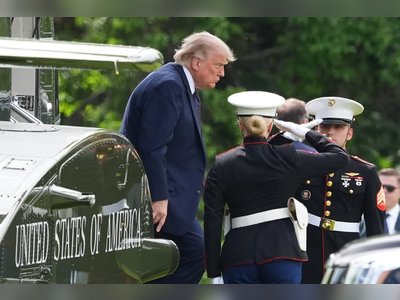
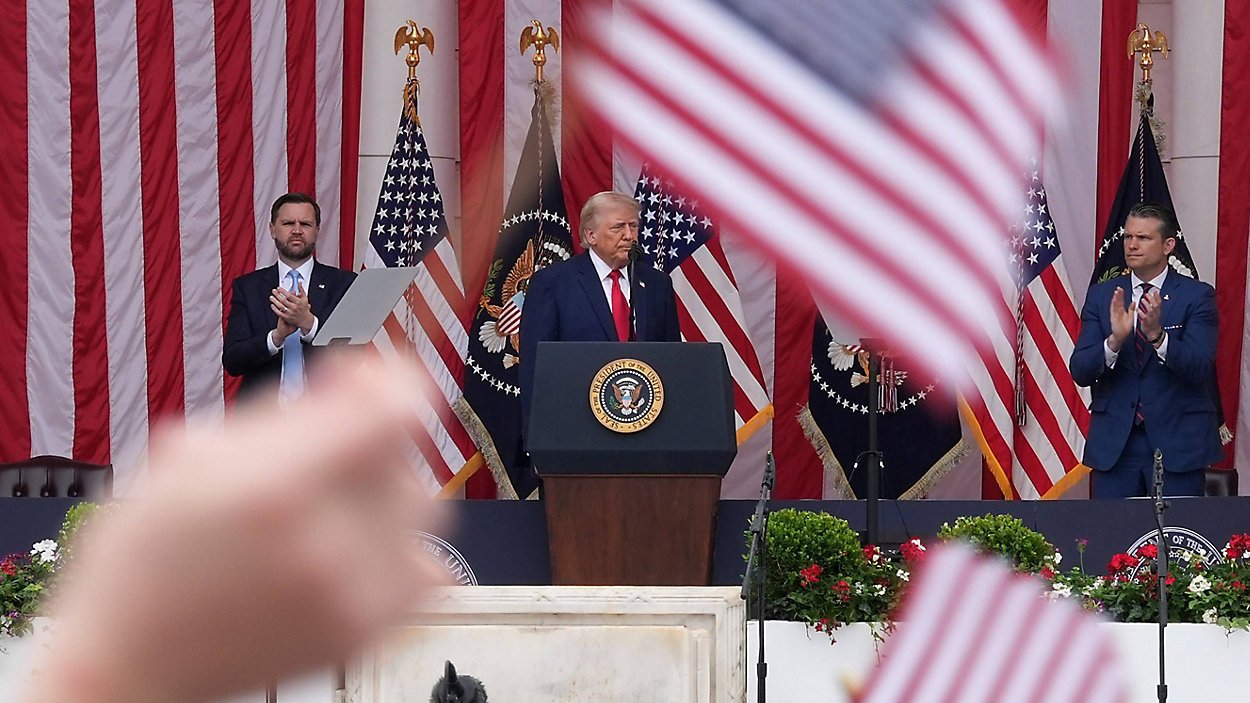
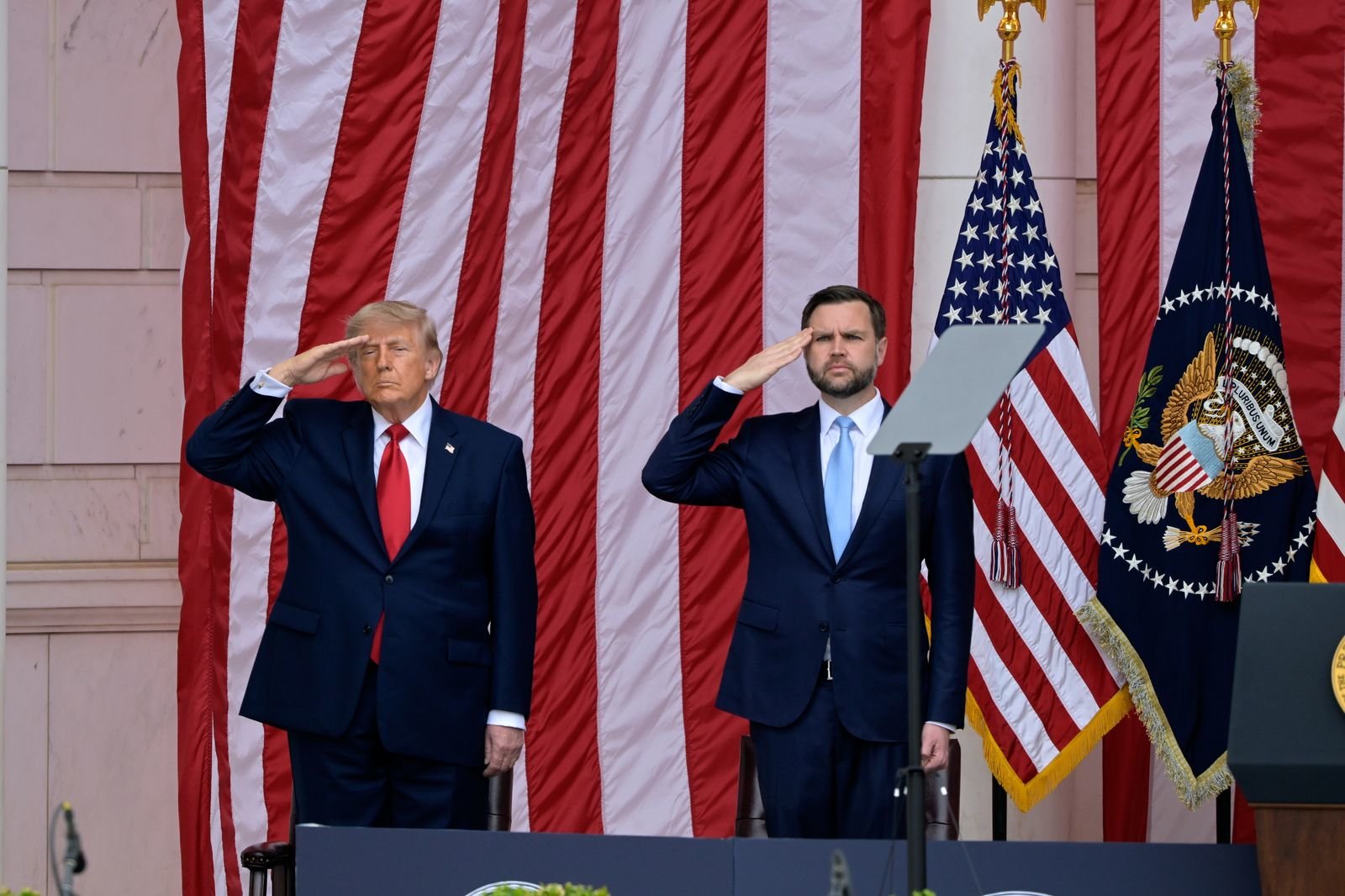
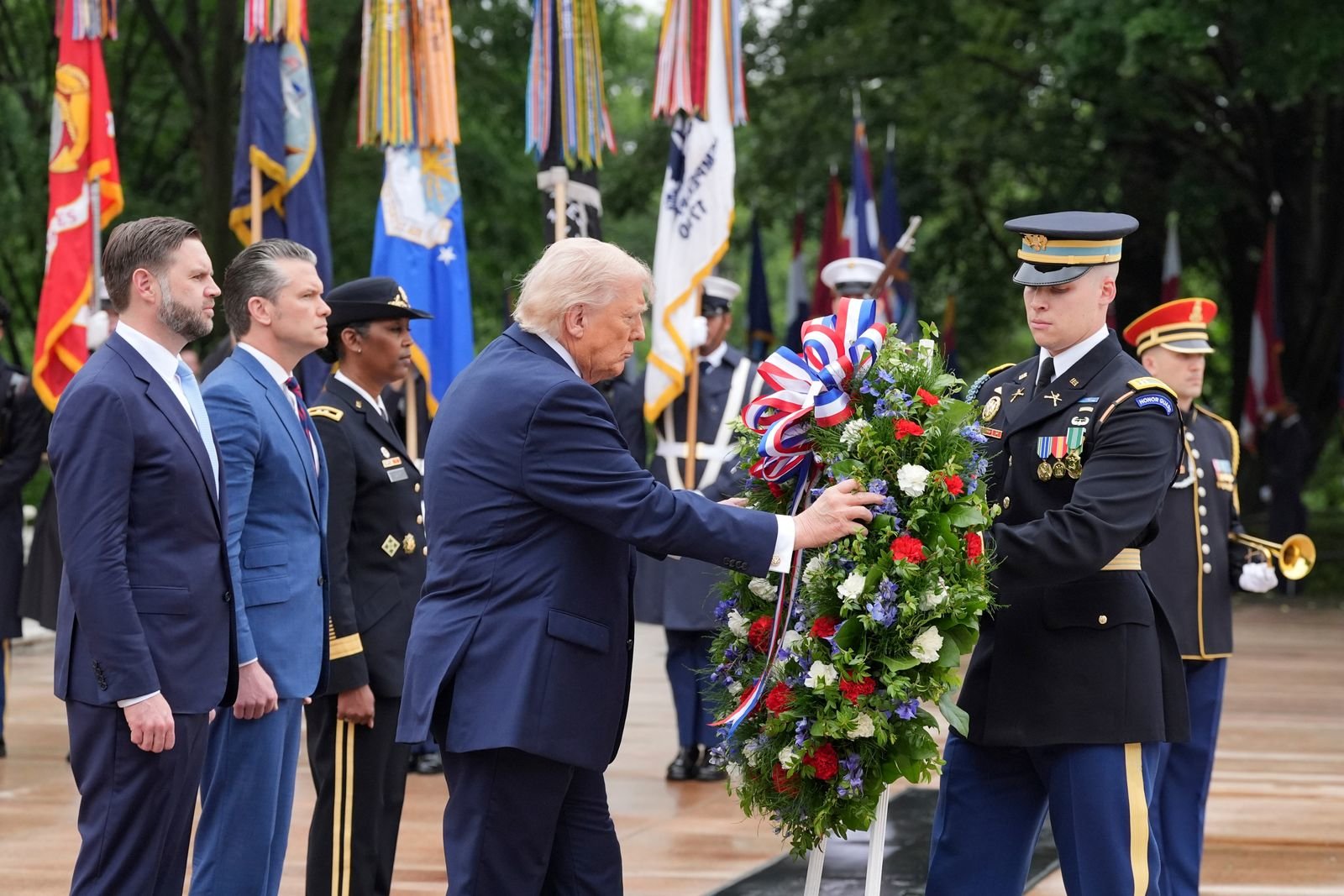
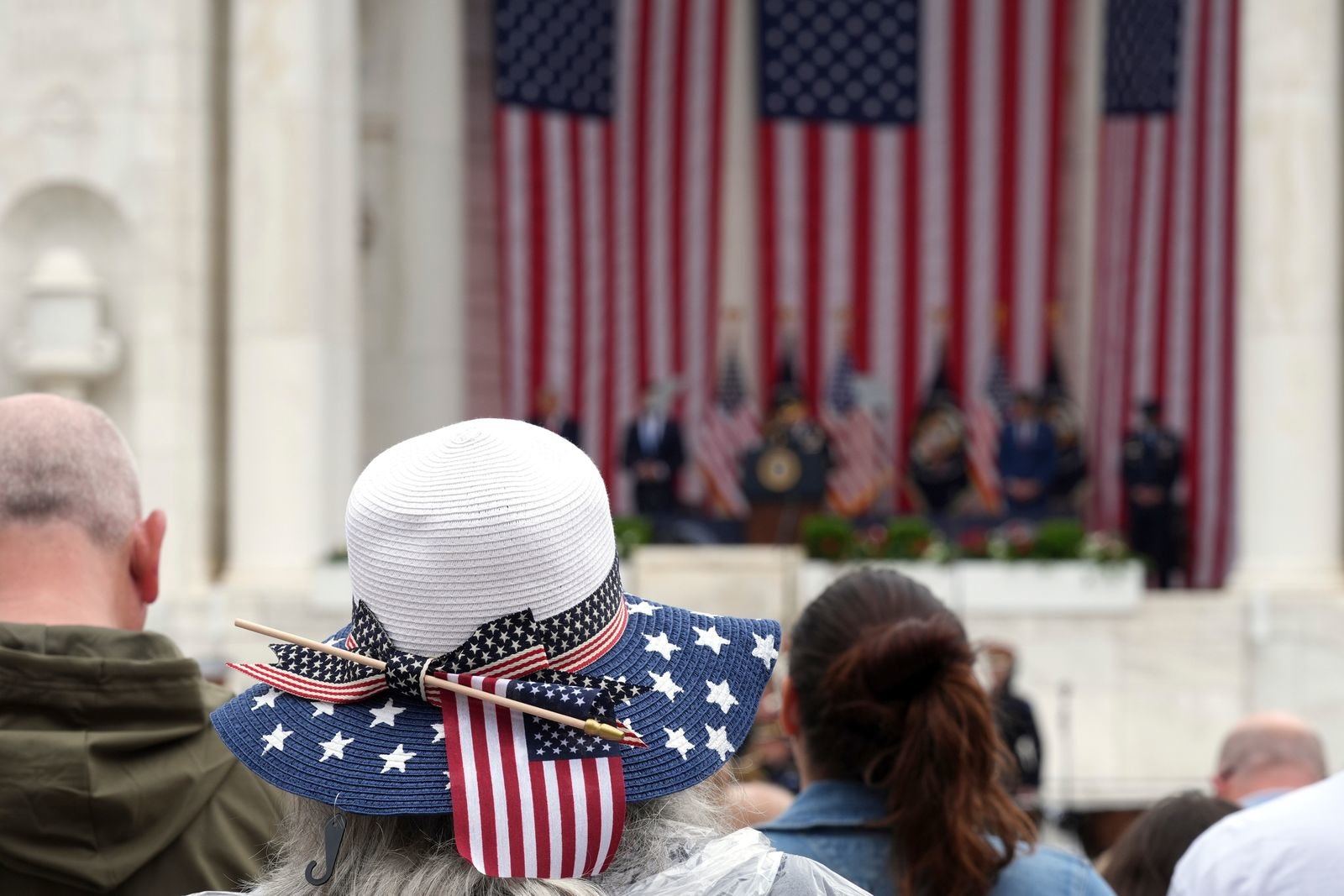
The dominant images from the day showed President Donald Trump, Vice President JD Vance, military officials, veterans, and families of fallen service members participating in wreath-laying ceremonies at the Tomb of the Unknown Soldier and the National Memorial Day observance at Arlington’s Memorial Amphitheater.
What is confirmed is that thousands gathered across Washington on Memorial Day for ceremonies, parades, cemetery visits, and military tributes coinciding with the broader lead-up to the United States’ two hundred and fiftieth anniversary celebrations.
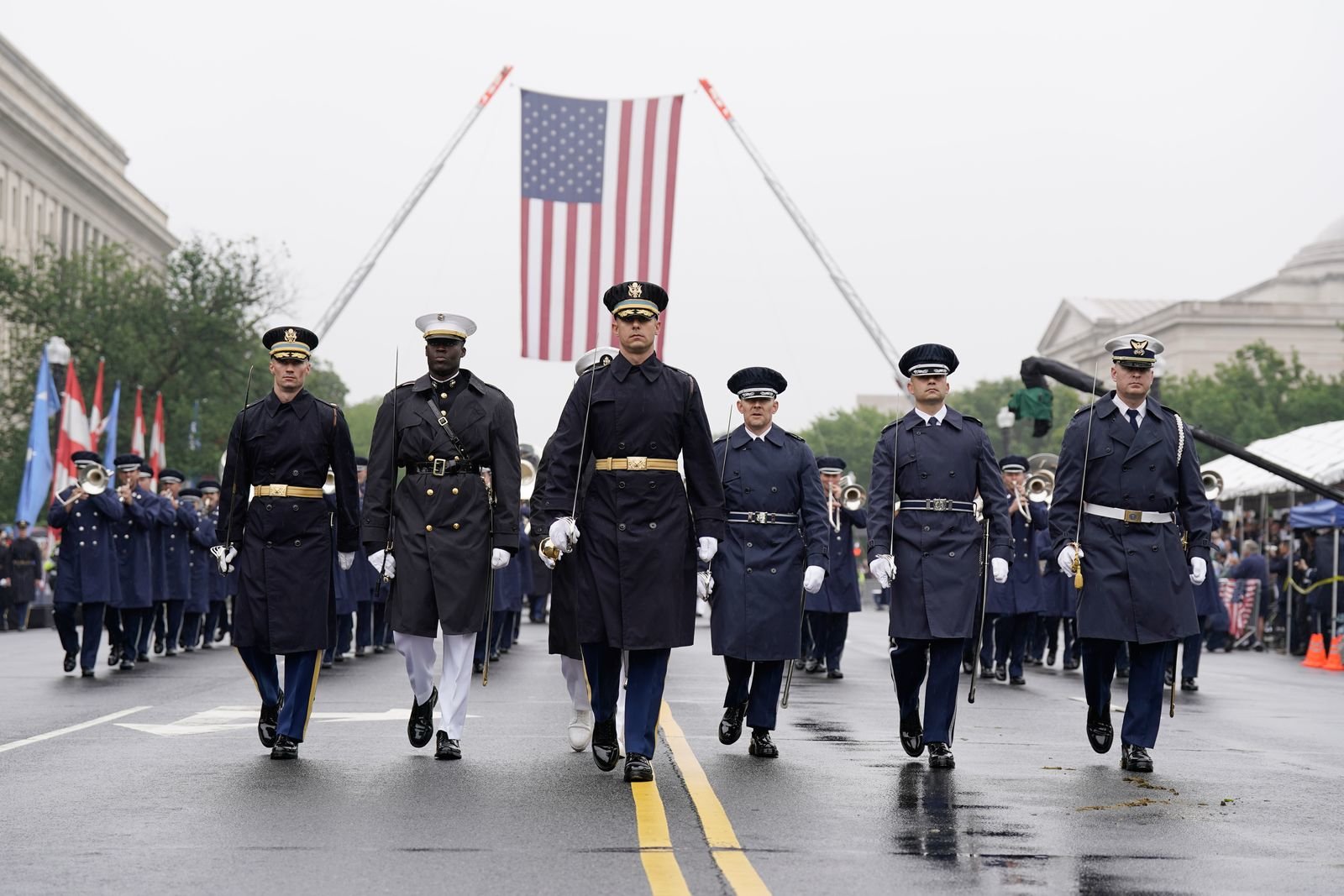
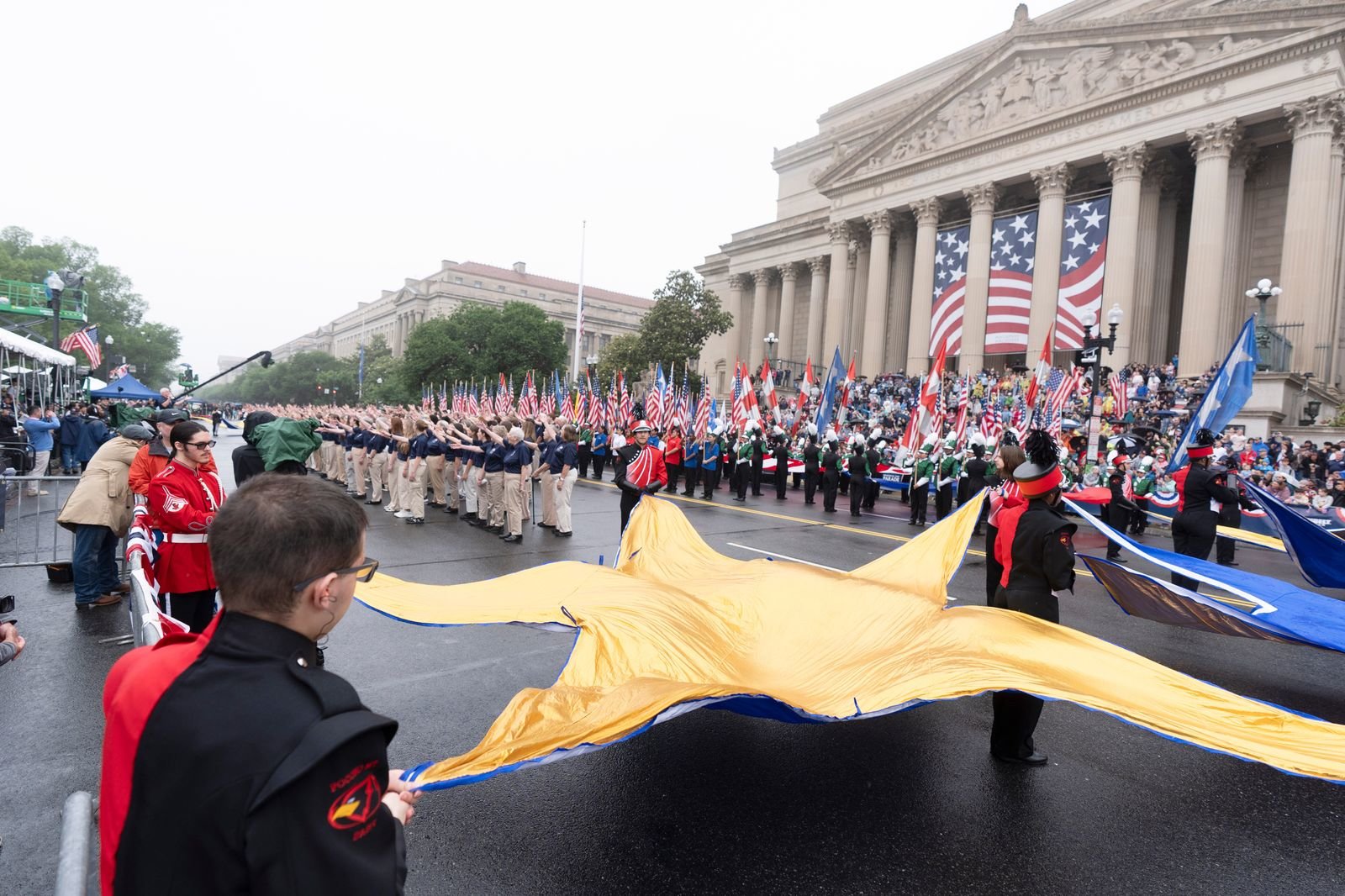
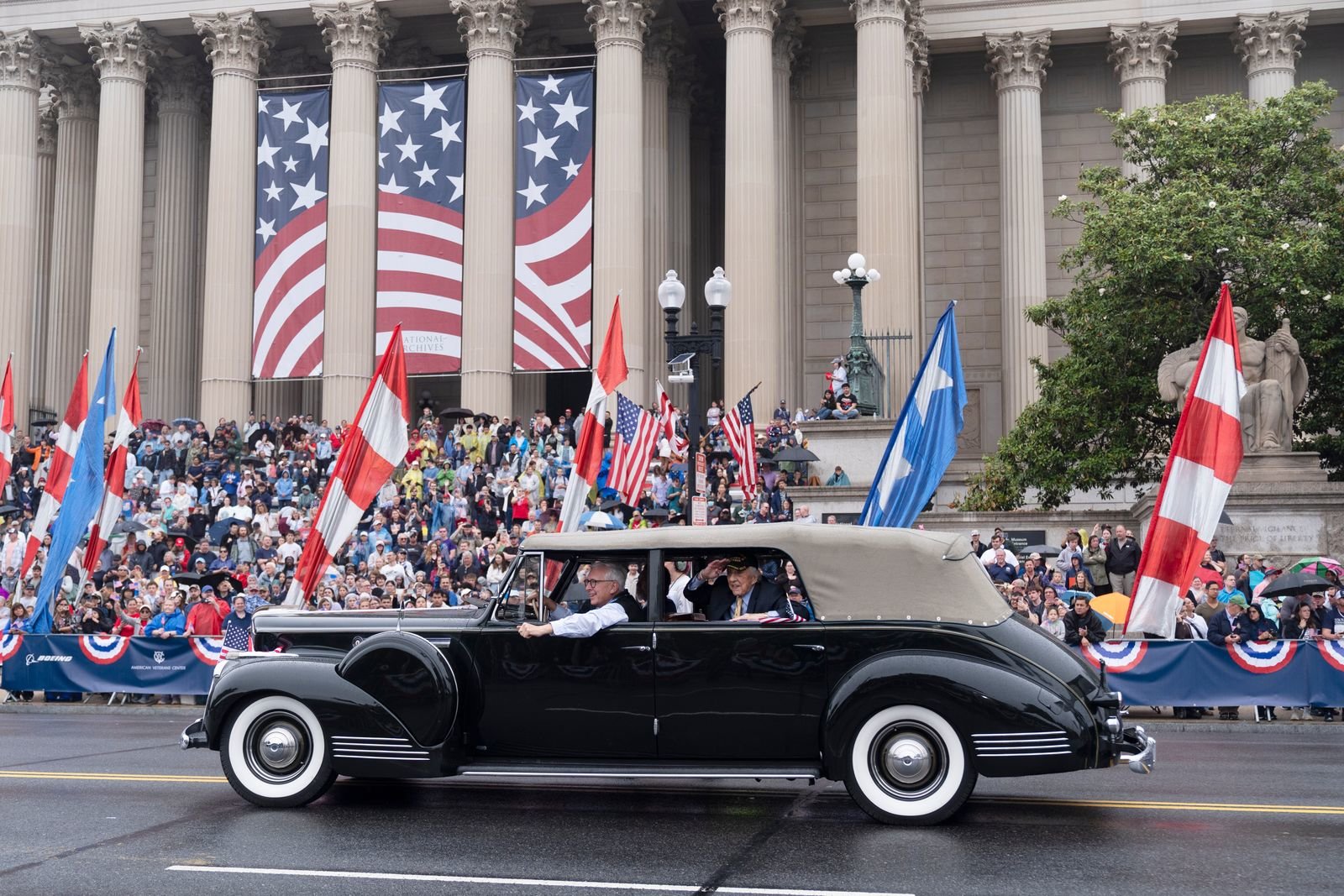
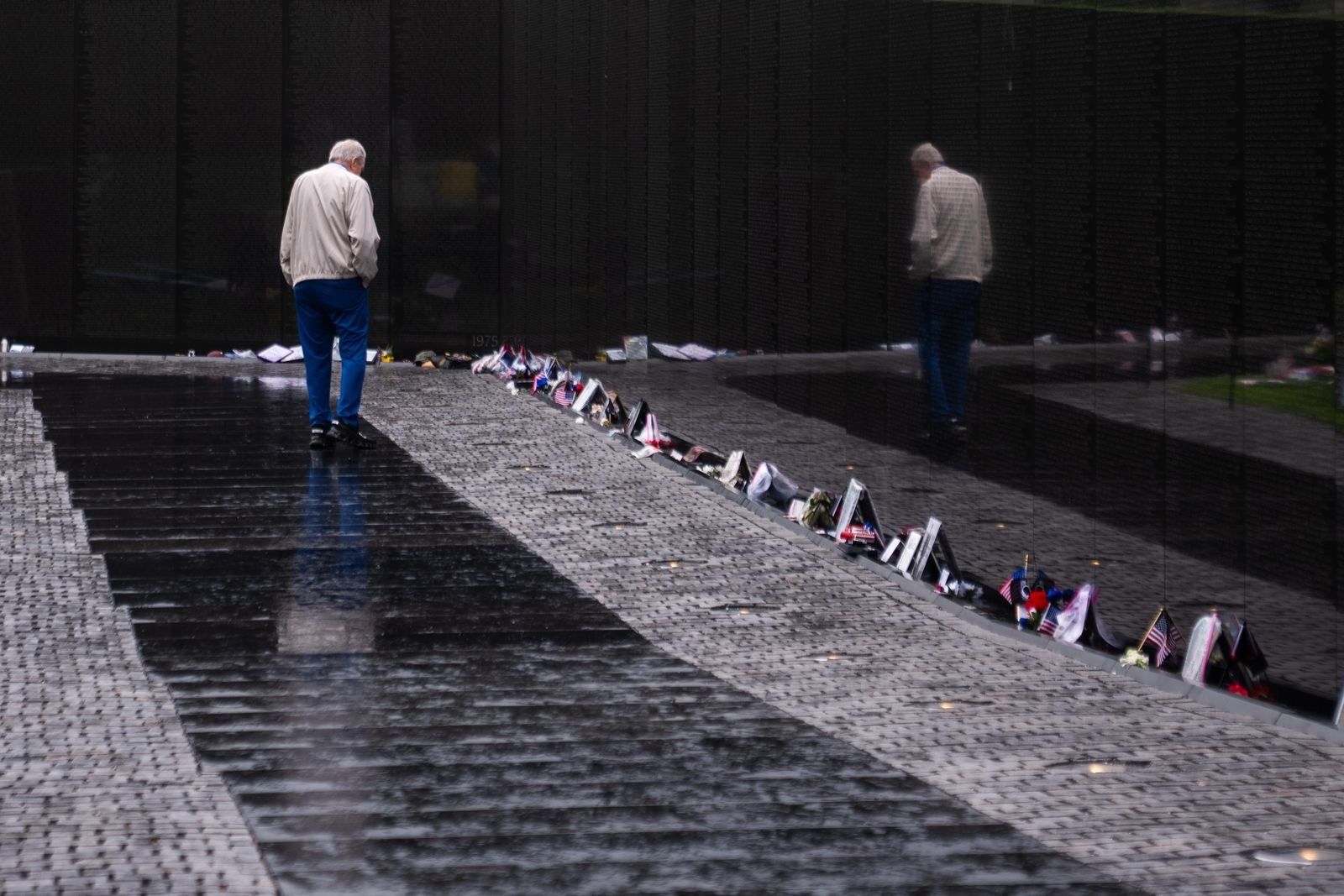
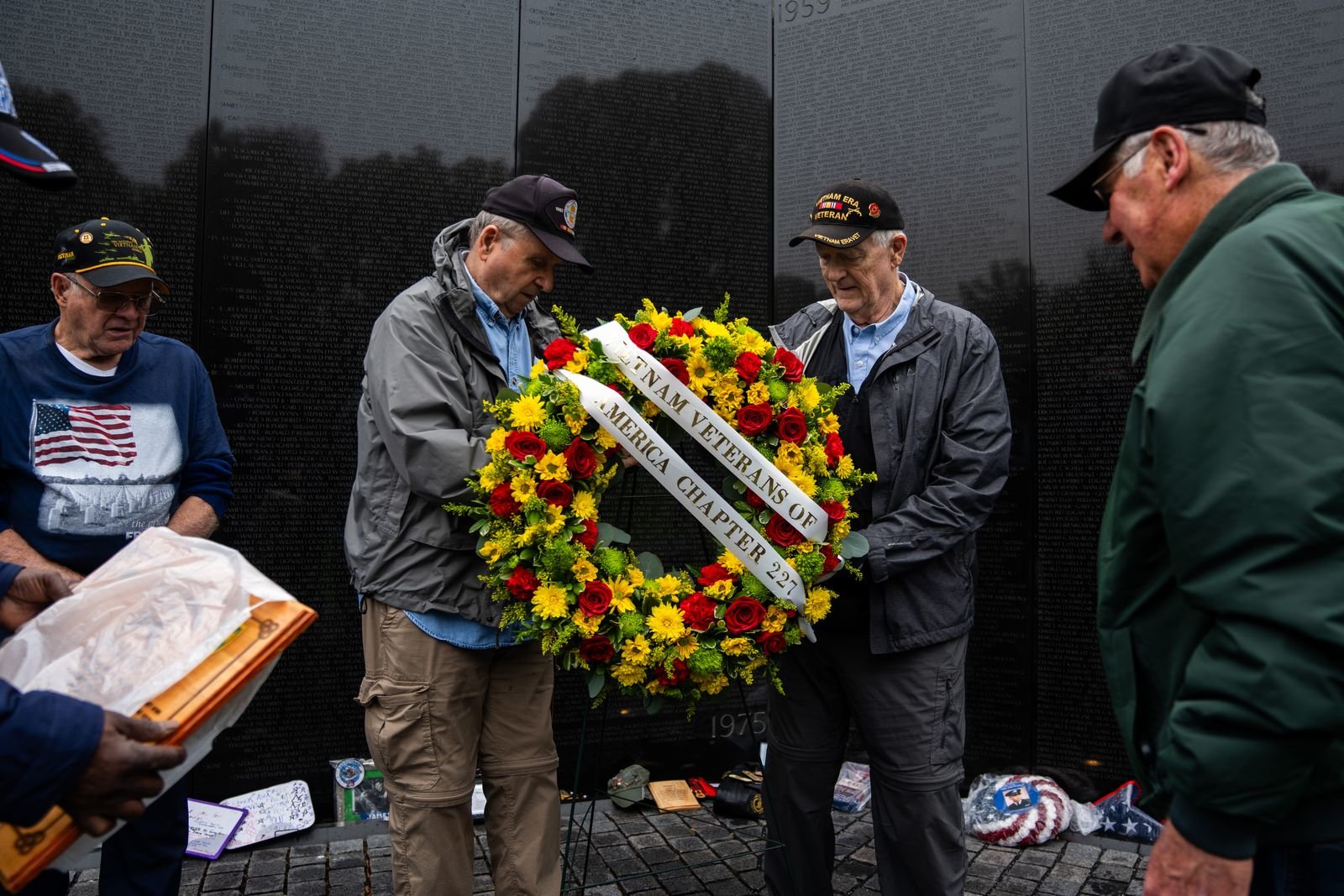
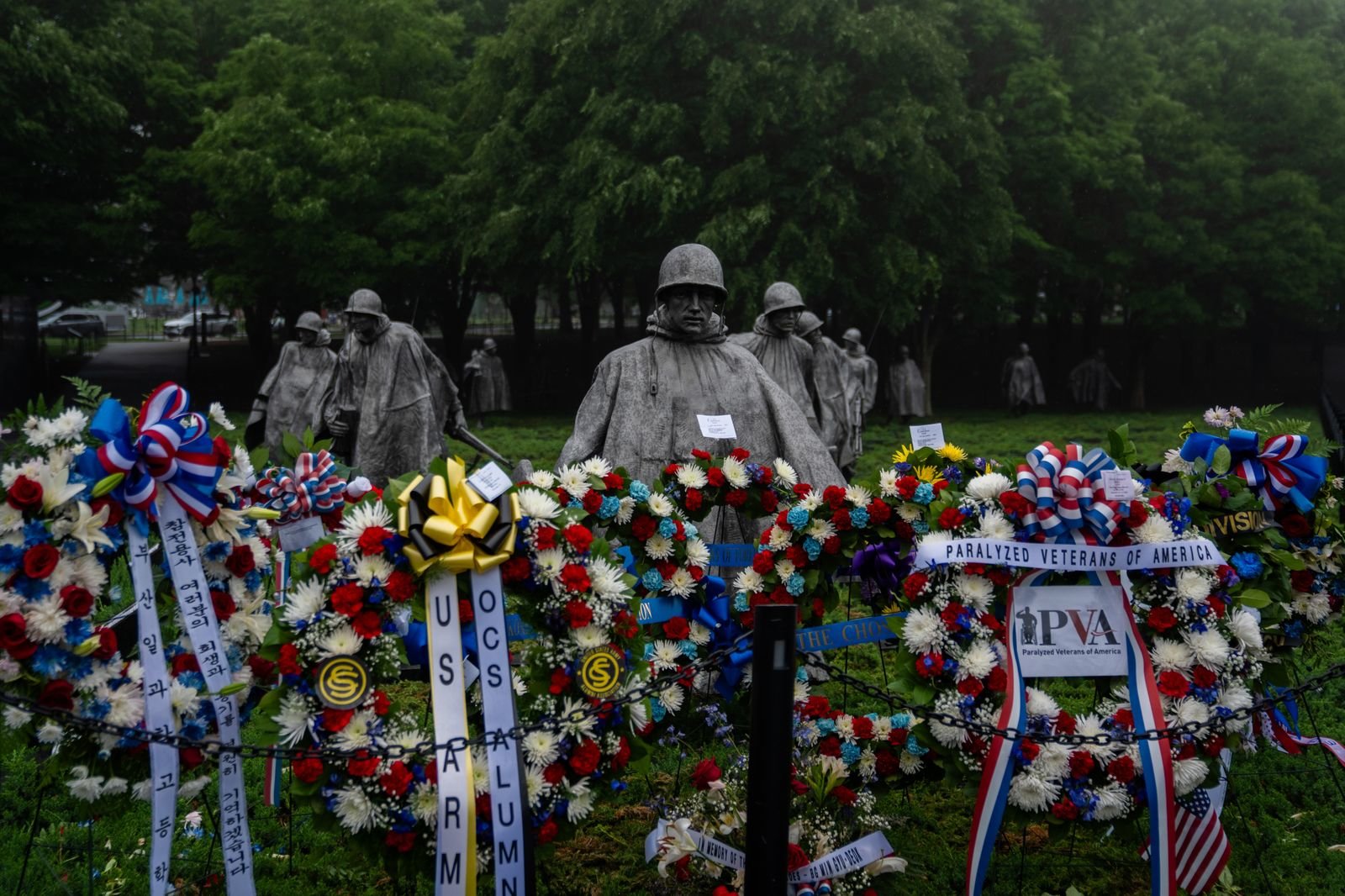
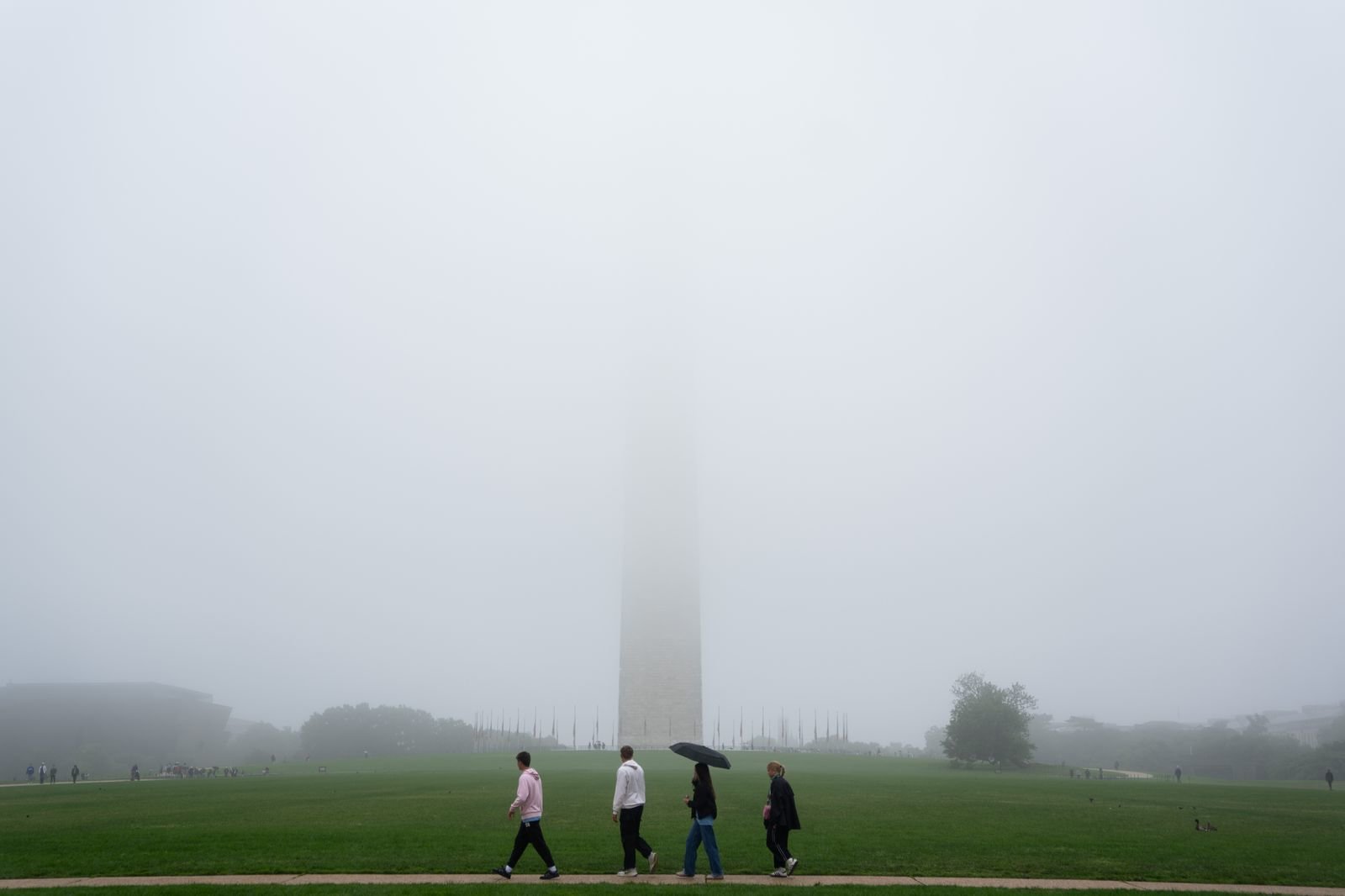
Public events included the National Memorial Day Parade along Constitution Avenue, military honor guards placing flags at gravesites, and large crowds visiting memorials dedicated to veterans of World War Two, Korea, Vietnam, Iraq, and Afghanistan.
The visual center of the day was Arlington National Cemetery, where rows of white headstones covered with American flags reinforced the scale of military sacrifice across generations of conflict.
Members of the Third U.S. Infantry Regiment, known as The Old Guard, carried out the annual Flags-In tradition, placing flags at graves ahead of the holiday.
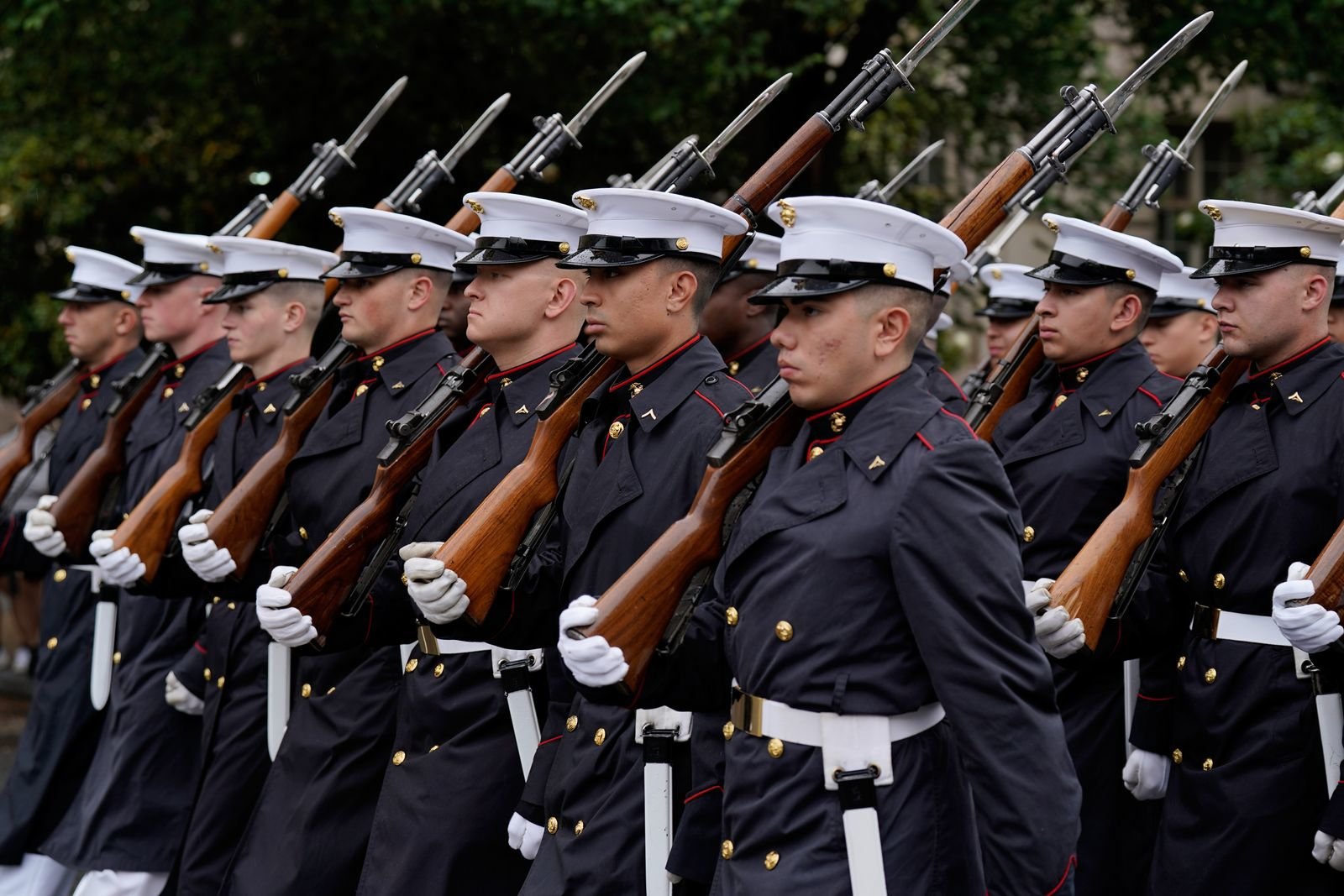
Images from the ceremony showed active-duty troops standing alongside aging veterans and Gold Star families, underscoring the continuity between current military service and historical memory.
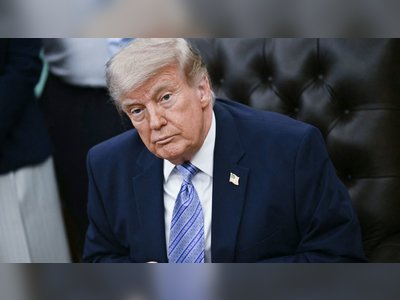
President Trump’s participation added a major political dimension to what is traditionally one of the least partisan events in the American calendar.
He laid a wreath at the Tomb of the Unknown Soldier before delivering remarks honoring fallen service members.
The appearance came during an unusually tense geopolitical moment following recent U.S. military operations tied to escalating tensions with Iran.
The speeches and imagery reflected that broader backdrop.
Trump referenced recent American military casualties linked to ongoing regional conflict and repeated his administration’s position that Iran must never acquire nuclear weapons.
The ceremony therefore operated on two levels at once: a traditional memorial observance and a demonstration of wartime presidential leadership during an active international crisis.
The atmosphere around the capital also reflected growing political disputes over how military symbolism is being used in Washington.
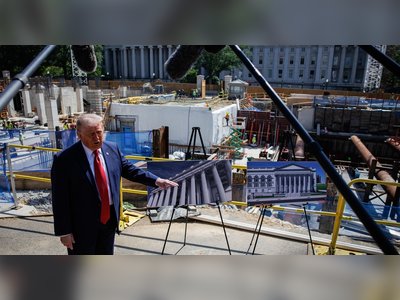
Public attention has increasingly focused on the administration’s wider effort to reshape parts of the capital’s ceremonial landscape ahead of the America two hundred and fiftieth anniversary commemorations.
One of the most controversial proposals is a planned two hundred and fifty foot monumental arch near Arlington National Cemetery and the Lincoln Memorial.
Supporters inside the administration describe the proposed structure as a patriotic national landmark intended to commemorate American strength and sacrifice.
Critics, including some veterans and preservation advocates, argue that the project risks politicizing sacred memorial space and overwhelming historic sightlines tied to the Civil War and national reconciliation.
Legal and administrative challenges surrounding the proposal remain active.
Photographs from Memorial Day captured this collision between remembrance, patriotism, and political identity.
Some images showed solemn military ritual: folded flags, salutes, wreaths, and grieving families.
Others reflected the broader transformation of Washington into a heavily symbolic political stage during Trump’s second term, with visible security operations, nationalist imagery, and intensified public debate over monuments, military tradition, and presidential power.
The timing also mattered economically and socially.
Memorial Day traditionally marks the unofficial beginning of the American summer travel season, drawing large tourist crowds into Washington.
Hotels, museums, memorial sites, and transportation systems experienced heavy activity throughout the weekend.
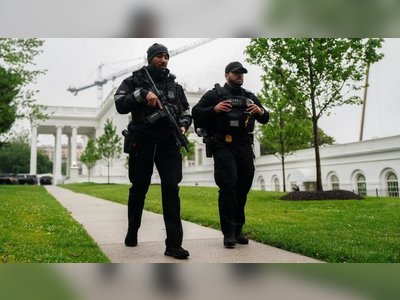
At the same time, elevated security measures remained visible because of ongoing international tensions and recent domestic political protests.
The key issue beneath the ceremonies is how the United States publicly defines sacrifice during a period of renewed military confrontation abroad and deep political division at home.
Memorial Day observances historically serve as moments of national unity, but this year’s events unfolded in a climate where military service, patriotism, and national identity are increasingly tied to larger ideological battles.
Even so, the most enduring images from Washington were not political slogans or policy disputes.
They were visual reminders of military loss: endless grave markers, families carrying flowers through cemetery rows, aging veterans standing in silence, and uniformed troops maintaining rituals that have outlasted wars, presidencies, and generations.
Those ceremonies proceeded across the capital with full military honors, reinforcing Memorial Day’s central purpose as a national act of remembrance for Americans killed in military service.
The dominant images from the day showed President Donald Trump, Vice President JD Vance, military officials, veterans, and families of fallen service members participating in wreath-laying ceremonies at the Tomb of the Unknown Soldier and the National Memorial Day observance at Arlington’s Memorial Amphitheater.
What is confirmed is that thousands gathered across Washington on Memorial Day for ceremonies, parades, cemetery visits, and military tributes coinciding with the broader lead-up to the United States’ two hundred and fiftieth anniversary celebrations.
Public events included the National Memorial Day Parade along Constitution Avenue, military honor guards placing flags at gravesites, and large crowds visiting memorials dedicated to veterans of World War Two, Korea, Vietnam, Iraq, and Afghanistan.
The visual center of the day was Arlington National Cemetery, where rows of white headstones covered with American flags reinforced the scale of military sacrifice across generations of conflict.
Members of the Third U.S. Infantry Regiment, known as The Old Guard, carried out the annual Flags-In tradition, placing flags at graves ahead of the holiday.
Images from the ceremony showed active-duty troops standing alongside aging veterans and Gold Star families, underscoring the continuity between current military service and historical memory.
President Trump’s participation added a major political dimension to what is traditionally one of the least partisan events in the American calendar.
He laid a wreath at the Tomb of the Unknown Soldier before delivering remarks honoring fallen service members.
The appearance came during an unusually tense geopolitical moment following recent U.S. military operations tied to escalating tensions with Iran.
The speeches and imagery reflected that broader backdrop.
Trump referenced recent American military casualties linked to ongoing regional conflict and repeated his administration’s position that Iran must never acquire nuclear weapons.
The ceremony therefore operated on two levels at once: a traditional memorial observance and a demonstration of wartime presidential leadership during an active international crisis.
The atmosphere around the capital also reflected growing political disputes over how military symbolism is being used in Washington.
Public attention has increasingly focused on the administration’s wider effort to reshape parts of the capital’s ceremonial landscape ahead of the America two hundred and fiftieth anniversary commemorations.
One of the most controversial proposals is a planned two hundred and fifty foot monumental arch near Arlington National Cemetery and the Lincoln Memorial.
Supporters inside the administration describe the proposed structure as a patriotic national landmark intended to commemorate American strength and sacrifice.
Critics, including some veterans and preservation advocates, argue that the project risks politicizing sacred memorial space and overwhelming historic sightlines tied to the Civil War and national reconciliation.
Legal and administrative challenges surrounding the proposal remain active.
Photographs from Memorial Day captured this collision between remembrance, patriotism, and political identity.
Some images showed solemn military ritual: folded flags, salutes, wreaths, and grieving families.
Others reflected the broader transformation of Washington into a heavily symbolic political stage during Trump’s second term, with visible security operations, nationalist imagery, and intensified public debate over monuments, military tradition, and presidential power.
The timing also mattered economically and socially.
Memorial Day traditionally marks the unofficial beginning of the American summer travel season, drawing large tourist crowds into Washington.
Hotels, museums, memorial sites, and transportation systems experienced heavy activity throughout the weekend.
At the same time, elevated security measures remained visible because of ongoing international tensions and recent domestic political protests.
The key issue beneath the ceremonies is how the United States publicly defines sacrifice during a period of renewed military confrontation abroad and deep political division at home.
Memorial Day observances historically serve as moments of national unity, but this year’s events unfolded in a climate where military service, patriotism, and national identity are increasingly tied to larger ideological battles.
Even so, the most enduring images from Washington were not political slogans or policy disputes.
They were visual reminders of military loss: endless grave markers, families carrying flowers through cemetery rows, aging veterans standing in silence, and uniformed troops maintaining rituals that have outlasted wars, presidencies, and generations.
Those ceremonies proceeded across the capital with full military honors, reinforcing Memorial Day’s central purpose as a national act of remembrance for Americans killed in military service.