Focus on the BIG picture.
Tuesday, May 26, 2026
Outside the box.

White House Gunman Had Prior Secret Service Encounters Before Fatal Shooting
Court records and law enforcement findings show the suspect had repeatedly approached restricted White House areas before opening fire near a security checkpoint.
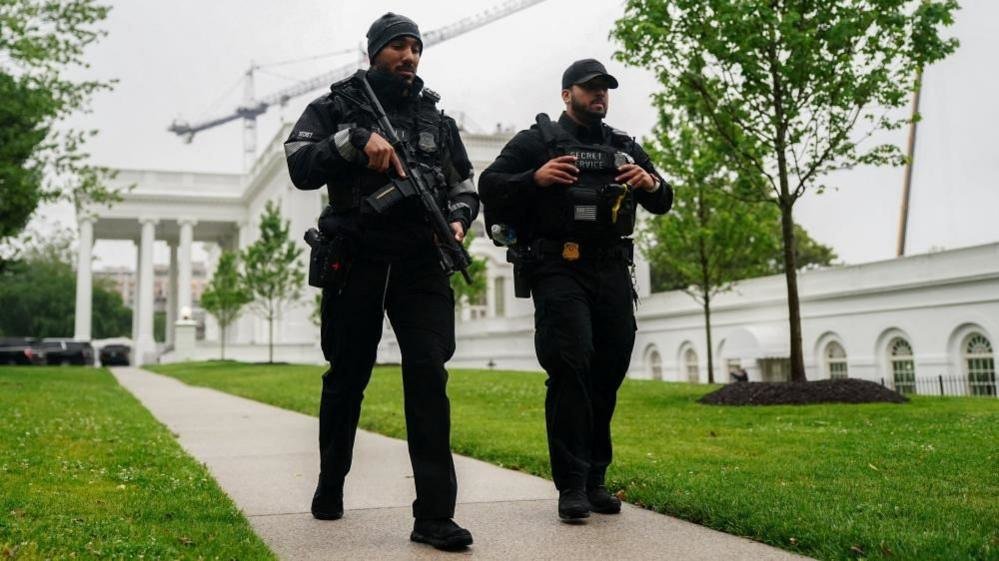
The central driver of the latest White House security crisis is institutional failure to contain a known high-risk individual who had already come into repeated contact with federal protective agencies before carrying out an armed attack near one of the most heavily secured sites in the United States.
What is confirmed is that a twenty-one-year-old Maryland man identified by authorities as Nasire Best opened fire near a Secret Service checkpoint close to the White House complex on Saturday evening.
Secret Service officers returned fire and killed him.
A bystander was seriously wounded during the exchange but survived surgery and remained in stable condition afterward.
President Donald Trump was inside the White House during the incident and was not harmed.
The shooting occurred near the intersection of Seventeenth Street and Pennsylvania Avenue Northwest, close to the Eisenhower Executive Office Building and within the dense outer security perimeter surrounding the White House campus.
Investigators say the suspect approached the checkpoint carrying a bag, removed a revolver, and began firing toward posted officers.
Multiple Secret Service personnel responded within seconds.
Court documents and law enforcement records show the suspect was not unknown to federal authorities.
In June two thousand twenty-five, he allegedly blocked a White House entry lane and told Secret Service agents he was Jesus Christ and wanted to be arrested.
He was taken for a psychiatric evaluation.
One month later, he again attempted to access restricted White House areas and was arrested on charges related to unlawful entry onto federally controlled property.
A judge later ordered him to stay away from the White House complex.
Court records show he subsequently failed to appear for a scheduled hearing, leading to a bench warrant authorizing his arrest within Washington, D.C. The existence of that warrant has intensified scrutiny over how a person previously flagged by federal security agencies was able to return armed to the perimeter of the White House.
The episode has sharpened concerns about a growing pattern of politically charged or security-related violence near federal institutions in Washington.
The latest shooting followed several recent armed incidents involving Secret Service responses around presidential events and protected locations.
The cumulative effect has raised pressure on federal agencies to reassess threat monitoring, mental health intervention protocols, perimeter enforcement, and intelligence coordination.
The Secret Service now faces two parallel challenges.
The first is operational: whether officers acted proportionately and effectively under immediate threat conditions.
The second is preventive: whether warning signs tied to the suspect were sufficiently tracked across agencies after earlier encounters and court intervention.
Investigators are also examining whether the bystander was struck by gunfire from the suspect or from returning fire by officers.
That distinction carries legal and procedural consequences because every federal protective shooting near the White House triggers layered review mechanisms involving local investigators, federal prosecutors, and internal agency oversight teams.
The Metropolitan Police Department in Washington is leading the use-of-force investigation, which is standard when federal officers discharge weapons in the district.
Federal prosecutors will separately review whether any civil rights or criminal violations occurred during the response.
The Secret Service has also opened an internal review through its Office of Professional Responsibility.
The case has widened debate over how the United States handles individuals who repeatedly display unstable behavior around high-security government sites without committing major violent offenses before escalation.
The suspect’s prior psychiatric evaluation, court supervision, stay-away order, and unresolved warrant together form a record that critics say exposed gaps between mental health systems, local courts, and federal security operations.
The incident also arrives during an already heightened political threat environment surrounding the White House and the broader presidential campaign cycle.
Security officials have increasingly warned about lone actors motivated by delusion, grievance, ideological fixation, or personal instability rather than organized extremist networks.
Those threats are harder to predict because they often emerge from fragmented behavioral warning signs instead of coordinated conspiracies.
In practical terms, the shooting is likely to accelerate physical and procedural changes around the White House perimeter.
Officials are already using the attack to justify stronger protective infrastructure, expanded restricted zones, and additional screening capacity around presidential facilities.
The immediate consequence is that federal investigators now possess a detailed pre-attack paper trail documenting earlier warnings, prior arrests, psychiatric intervention, and court orders connected to the man who ultimately opened fire outside the White House.
What is confirmed is that a twenty-one-year-old Maryland man identified by authorities as Nasire Best opened fire near a Secret Service checkpoint close to the White House complex on Saturday evening.
Secret Service officers returned fire and killed him.
A bystander was seriously wounded during the exchange but survived surgery and remained in stable condition afterward.
President Donald Trump was inside the White House during the incident and was not harmed.
The shooting occurred near the intersection of Seventeenth Street and Pennsylvania Avenue Northwest, close to the Eisenhower Executive Office Building and within the dense outer security perimeter surrounding the White House campus.
Investigators say the suspect approached the checkpoint carrying a bag, removed a revolver, and began firing toward posted officers.
Multiple Secret Service personnel responded within seconds.
Court documents and law enforcement records show the suspect was not unknown to federal authorities.
In June two thousand twenty-five, he allegedly blocked a White House entry lane and told Secret Service agents he was Jesus Christ and wanted to be arrested.
He was taken for a psychiatric evaluation.
One month later, he again attempted to access restricted White House areas and was arrested on charges related to unlawful entry onto federally controlled property.
A judge later ordered him to stay away from the White House complex.
Court records show he subsequently failed to appear for a scheduled hearing, leading to a bench warrant authorizing his arrest within Washington, D.C. The existence of that warrant has intensified scrutiny over how a person previously flagged by federal security agencies was able to return armed to the perimeter of the White House.
The episode has sharpened concerns about a growing pattern of politically charged or security-related violence near federal institutions in Washington.
The latest shooting followed several recent armed incidents involving Secret Service responses around presidential events and protected locations.
The cumulative effect has raised pressure on federal agencies to reassess threat monitoring, mental health intervention protocols, perimeter enforcement, and intelligence coordination.
The Secret Service now faces two parallel challenges.
The first is operational: whether officers acted proportionately and effectively under immediate threat conditions.
The second is preventive: whether warning signs tied to the suspect were sufficiently tracked across agencies after earlier encounters and court intervention.
Investigators are also examining whether the bystander was struck by gunfire from the suspect or from returning fire by officers.
That distinction carries legal and procedural consequences because every federal protective shooting near the White House triggers layered review mechanisms involving local investigators, federal prosecutors, and internal agency oversight teams.
The Metropolitan Police Department in Washington is leading the use-of-force investigation, which is standard when federal officers discharge weapons in the district.
Federal prosecutors will separately review whether any civil rights or criminal violations occurred during the response.
The Secret Service has also opened an internal review through its Office of Professional Responsibility.
The case has widened debate over how the United States handles individuals who repeatedly display unstable behavior around high-security government sites without committing major violent offenses before escalation.
The suspect’s prior psychiatric evaluation, court supervision, stay-away order, and unresolved warrant together form a record that critics say exposed gaps between mental health systems, local courts, and federal security operations.
The incident also arrives during an already heightened political threat environment surrounding the White House and the broader presidential campaign cycle.
Security officials have increasingly warned about lone actors motivated by delusion, grievance, ideological fixation, or personal instability rather than organized extremist networks.
Those threats are harder to predict because they often emerge from fragmented behavioral warning signs instead of coordinated conspiracies.
In practical terms, the shooting is likely to accelerate physical and procedural changes around the White House perimeter.
Officials are already using the attack to justify stronger protective infrastructure, expanded restricted zones, and additional screening capacity around presidential facilities.
The immediate consequence is that federal investigators now possess a detailed pre-attack paper trail documenting earlier warnings, prior arrests, psychiatric intervention, and court orders connected to the man who ultimately opened fire outside the White House.