Focus on the BIG picture.
Thursday, Jan 08, 2026
Outside the box.

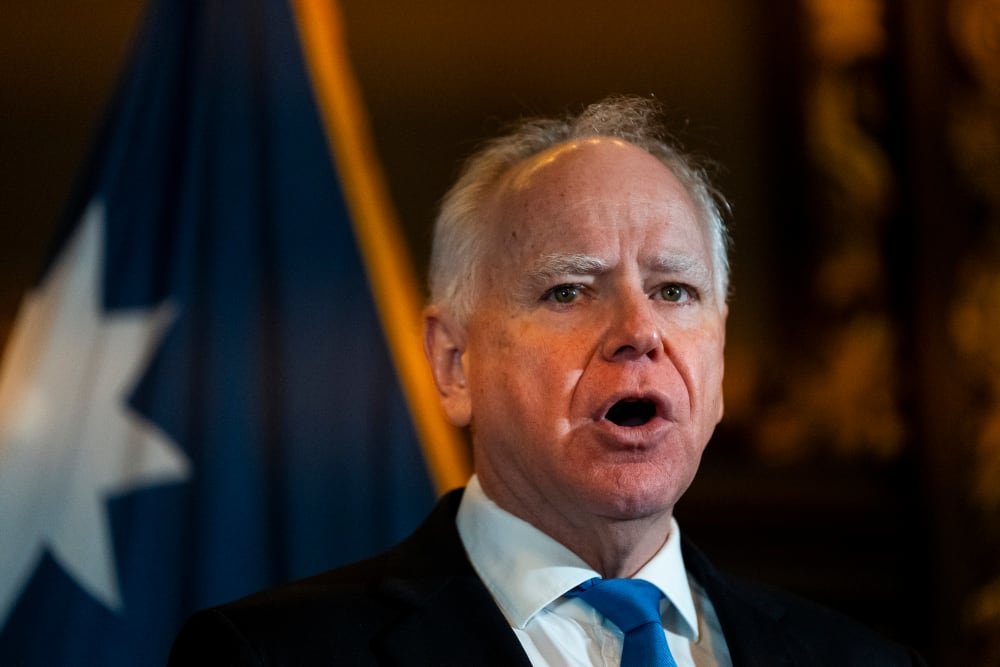
White House Signals Walz’s Exit Is Only First Step as Political Battle Intensifies
Minnesota Governor Tim Walz’s withdrawal from the 2026 gubernatorial race is welcomed by the White House but seen as insufficient in broader partisan conflict
Minnesota Governor Tim Walz’s announcement that he will not seek a third term in the 2026 gubernatorial election has drawn a firm response from the White House, which sees the development as merely the beginning of a wider partisan contest rather than a decisive resolution to ongoing political tensions.
Walz, a Democrat and 2024 vice-presidential nominee, said he is stepping aside not to pursue another campaign but to focus on addressing what he described as widespread fraud affecting social service programmes in the state and to prioritise governance over electoral politics.
His departure opens the field for new Democratic contenders while presenting Republicans with an opportunity to contest a key Midwestern governorship.
The White House, viewing Walz’s decision through a national political prism, indicated that while his withdrawal removes one focal point of criticism, it does not quiet the broader disputes over policy, accountability and electoral strategy that have animated debate between Democratic and Republican actors.
The administration has framed the ongoing conflict over governance issues in Minnesota, including allegations of fraud within welfare and childcare systems, as part of a larger debate over leadership and public trust, and it expects the Republican Party to pursue this narrative into the 2026 elections with vigour.
Walz’s decision followed intense scrutiny from federal Republican officials and lawmakers, who linked the state’s welfare investigations to alleged administrative failures and leveraged the issue as a central criticism of Democratic leadership.
Facing heightened political pressure, and with the welfare fraud scandal occupying national headlines, Walz said he would rather dedicate his efforts to remedying systemic issues than defend his political future.
His announcement effectively ends his bid for a third term despite previously indicating plans to seek reelection.
The governor’s withdrawal reshapes the contest for Minnesota’s top office.
Potential successors in the Democratic–Farmer–Labor Party include U.S. Senator Amy Klobuchar and other statewide figures, signalling a competitive primary ahead.
On the Republican side, candidates are already aligning for what could become a pivotal race in a state that has leaned Democratic in recent statewide contests.
As the political landscape shifts, the White House’s response underscores that Walz’s choice, while significant, is seen in Washington not as the final chapter but as an early milestone in the unfolding struggle for electoral advantage and policy direction ahead of the 2026 midterms.
Walz, a Democrat and 2024 vice-presidential nominee, said he is stepping aside not to pursue another campaign but to focus on addressing what he described as widespread fraud affecting social service programmes in the state and to prioritise governance over electoral politics.
His departure opens the field for new Democratic contenders while presenting Republicans with an opportunity to contest a key Midwestern governorship.
The White House, viewing Walz’s decision through a national political prism, indicated that while his withdrawal removes one focal point of criticism, it does not quiet the broader disputes over policy, accountability and electoral strategy that have animated debate between Democratic and Republican actors.
The administration has framed the ongoing conflict over governance issues in Minnesota, including allegations of fraud within welfare and childcare systems, as part of a larger debate over leadership and public trust, and it expects the Republican Party to pursue this narrative into the 2026 elections with vigour.
Walz’s decision followed intense scrutiny from federal Republican officials and lawmakers, who linked the state’s welfare investigations to alleged administrative failures and leveraged the issue as a central criticism of Democratic leadership.
Facing heightened political pressure, and with the welfare fraud scandal occupying national headlines, Walz said he would rather dedicate his efforts to remedying systemic issues than defend his political future.
His announcement effectively ends his bid for a third term despite previously indicating plans to seek reelection.
The governor’s withdrawal reshapes the contest for Minnesota’s top office.
Potential successors in the Democratic–Farmer–Labor Party include U.S. Senator Amy Klobuchar and other statewide figures, signalling a competitive primary ahead.
On the Republican side, candidates are already aligning for what could become a pivotal race in a state that has leaned Democratic in recent statewide contests.
As the political landscape shifts, the White House’s response underscores that Walz’s choice, while significant, is seen in Washington not as the final chapter but as an early milestone in the unfolding struggle for electoral advantage and policy direction ahead of the 2026 midterms.