
Focus on the BIG picture.
Wednesday, Aug 26, 2026
Outside the box.

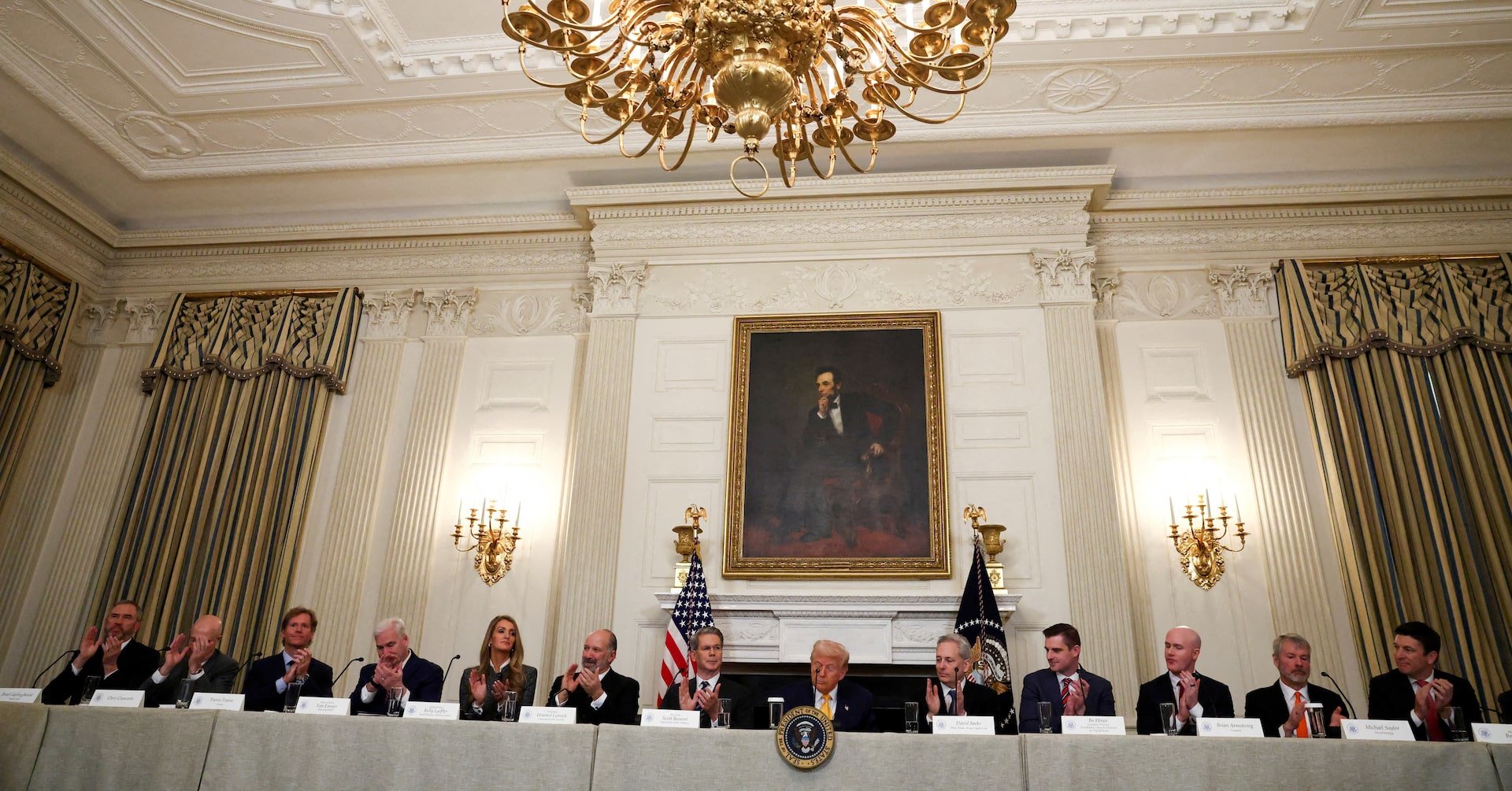
White House Talks Fail to Break US Crypto Legislation Deadlock as Stablecoin Dispute Persists
High-level meeting between regulators, banks and crypto industry ends without agreement on digital-asset market structure bill amid ongoing policy divisions
A White House convening intended to resolve a prolonged stalemate over U.S. cryptocurrency legislation concluded on Monday without producing an agreement, underscoring persistent divisions between major banking groups and cryptocurrency firms over key aspects of digital-asset regulation.
The closed-door session was convened by the administration’s crypto council in an effort to bridge differences on stalled market structure legislation that has languished in Congress for months.
Representatives from leading trade organisations representing banks, including the American Bankers Association and the Independent Community Bankers of America, met with delegates from digital-asset groups such as the Blockchain Association and The Digital Chamber.
Both sides described the meeting as constructive, but they did not reconcile fundamental disagreements that have impeded progress on the legislation now pending before the Senate.
Central to the impasse is how the proposed bill should treat interest and other rewards paid on stablecoins, digital tokens pegged to traditional currencies.
Banks have advocated for provisions that would ban such rewards, arguing that high yield products could entice depositors away from federally insured lenders and undermine financial stability.
Crypto firms counter that rewards for stablecoin holders are essential for attracting customers and fostering competitiveness in the U.S. market, warning that restricting them would disadvantage blockchain-based platforms.
The White House meeting was aimed at forging a compromise after the Senate Banking Committee postponed a scheduled markup last month amid mounting objections from both sectors and concerns that the bill lacked sufficient support to move forward.
Despite optimism from some attendees that continued dialogue could yield solutions, the absence of consensus indicates that legislative advancement remains uncertain.
The legislation, often referred to informally as the Clarity Act, is designed to create federal rules for digital assets—a goal long sought by industry advocates who argue existing regulatory frameworks are inadequate.
The U.S. House of Representatives passed its version of the bill last year, but without resolution of the stablecoin issue, prospects for full Senate approval this congressional session remain clouded.
The closed-door session was convened by the administration’s crypto council in an effort to bridge differences on stalled market structure legislation that has languished in Congress for months.
Representatives from leading trade organisations representing banks, including the American Bankers Association and the Independent Community Bankers of America, met with delegates from digital-asset groups such as the Blockchain Association and The Digital Chamber.
Both sides described the meeting as constructive, but they did not reconcile fundamental disagreements that have impeded progress on the legislation now pending before the Senate.
Central to the impasse is how the proposed bill should treat interest and other rewards paid on stablecoins, digital tokens pegged to traditional currencies.
Banks have advocated for provisions that would ban such rewards, arguing that high yield products could entice depositors away from federally insured lenders and undermine financial stability.
Crypto firms counter that rewards for stablecoin holders are essential for attracting customers and fostering competitiveness in the U.S. market, warning that restricting them would disadvantage blockchain-based platforms.
The White House meeting was aimed at forging a compromise after the Senate Banking Committee postponed a scheduled markup last month amid mounting objections from both sectors and concerns that the bill lacked sufficient support to move forward.
Despite optimism from some attendees that continued dialogue could yield solutions, the absence of consensus indicates that legislative advancement remains uncertain.
The legislation, often referred to informally as the Clarity Act, is designed to create federal rules for digital assets—a goal long sought by industry advocates who argue existing regulatory frameworks are inadequate.
The U.S. House of Representatives passed its version of the bill last year, but without resolution of the stablecoin issue, prospects for full Senate approval this congressional session remain clouded.