Focus on the BIG picture.
Sunday, Aug 23, 2026
Outside the box.

Australia Combines Indigenous Fire Knowledge With Satellite Tech to Combat Catastrophic Wildfires
Researchers and Aboriginal land managers merge sixty-thousand-year-old cultural burning practices with orbital mapping and drones as global demand for Australian firefighting expertise surges.
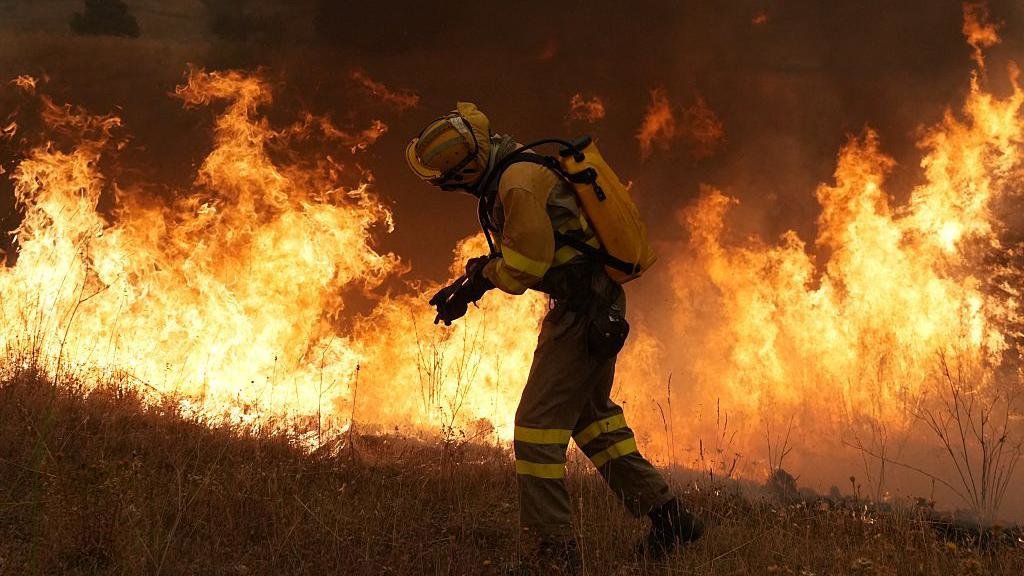
Australian researchers and Indigenous land managers are integrating satellite monitoring, artificial intelligence, and millennia-old traditional ecological knowledge to transform bushfire prevention, creating a land-management model that is drawing urgent international attention.
Spearheaded by the Bushfire Research Centre of Excellence—established following the 2019–20 Black Summer blazes that incinerated an area roughly the size of the United Kingdom—the initiative pairs high-resolution orbital moisture tracking with on-the-ground ancestral land literacy to anticipate and neutralize fire risks.
While satellite sensors map fuel moisture content across vast eucalyptus forests and grasslands, Indigenous practitioners evaluate the landscape using generational ecological indicators, such as subsurface soil conditions, canopy shade, and plant scent.
This ground-truthing allows fire agencies to translate digital orbital data into precise, actionable burn plans.
By combining modern aerial sensors with traditional ecological knowledge, authorities can identify areas with excessive dry undergrowth before ignition occurs.
Central to the prevention strategy is cultural burning, a practice dating back sixty thousand years that utilizes low-intensity "cool fires" to burn through dry ground litter without damaging tree canopies or harming wildlife.
This creates a natural mosaic pattern across the terrain, starving potential wildfires of contiguous fuel.
Australian emergency services are increasingly pairing these time-tested methods with unmanned aerial vehicles to carry out real-time reconnaissance, deliver equipment to remote teams, and execute precise defensive backburning operations.
The integrated strategy is gaining international traction as countries across the Northern Hemisphere confront unprecedented fire seasons driven by climate change.
Firefighting agencies in Canada have increasingly adopted Australian backburning tactics during recent record blazes, while French emergency authorities recently submitted their first formal request for Australian aerial and specialized ground crew deployments.
With meteorologists warning of elevated fire dangers heading into the Southern Hemisphere summer, fire agencies in southeastern Australia are accelerating controlled burns and expanding global mutual-aid networks to shift wildfire strategy permanently from emergency reaction to proactive mitigation.
Spearheaded by the Bushfire Research Centre of Excellence—established following the 2019–20 Black Summer blazes that incinerated an area roughly the size of the United Kingdom—the initiative pairs high-resolution orbital moisture tracking with on-the-ground ancestral land literacy to anticipate and neutralize fire risks.
While satellite sensors map fuel moisture content across vast eucalyptus forests and grasslands, Indigenous practitioners evaluate the landscape using generational ecological indicators, such as subsurface soil conditions, canopy shade, and plant scent.
This ground-truthing allows fire agencies to translate digital orbital data into precise, actionable burn plans.
By combining modern aerial sensors with traditional ecological knowledge, authorities can identify areas with excessive dry undergrowth before ignition occurs.
Central to the prevention strategy is cultural burning, a practice dating back sixty thousand years that utilizes low-intensity "cool fires" to burn through dry ground litter without damaging tree canopies or harming wildlife.
This creates a natural mosaic pattern across the terrain, starving potential wildfires of contiguous fuel.
Australian emergency services are increasingly pairing these time-tested methods with unmanned aerial vehicles to carry out real-time reconnaissance, deliver equipment to remote teams, and execute precise defensive backburning operations.
The integrated strategy is gaining international traction as countries across the Northern Hemisphere confront unprecedented fire seasons driven by climate change.
Firefighting agencies in Canada have increasingly adopted Australian backburning tactics during recent record blazes, while French emergency authorities recently submitted their first formal request for Australian aerial and specialized ground crew deployments.
With meteorologists warning of elevated fire dangers heading into the Southern Hemisphere summer, fire agencies in southeastern Australia are accelerating controlled burns and expanding global mutual-aid networks to shift wildfire strategy permanently from emergency reaction to proactive mitigation.