Focus on the BIG picture.
Tuesday, Dec 09, 2025
Outside the box.

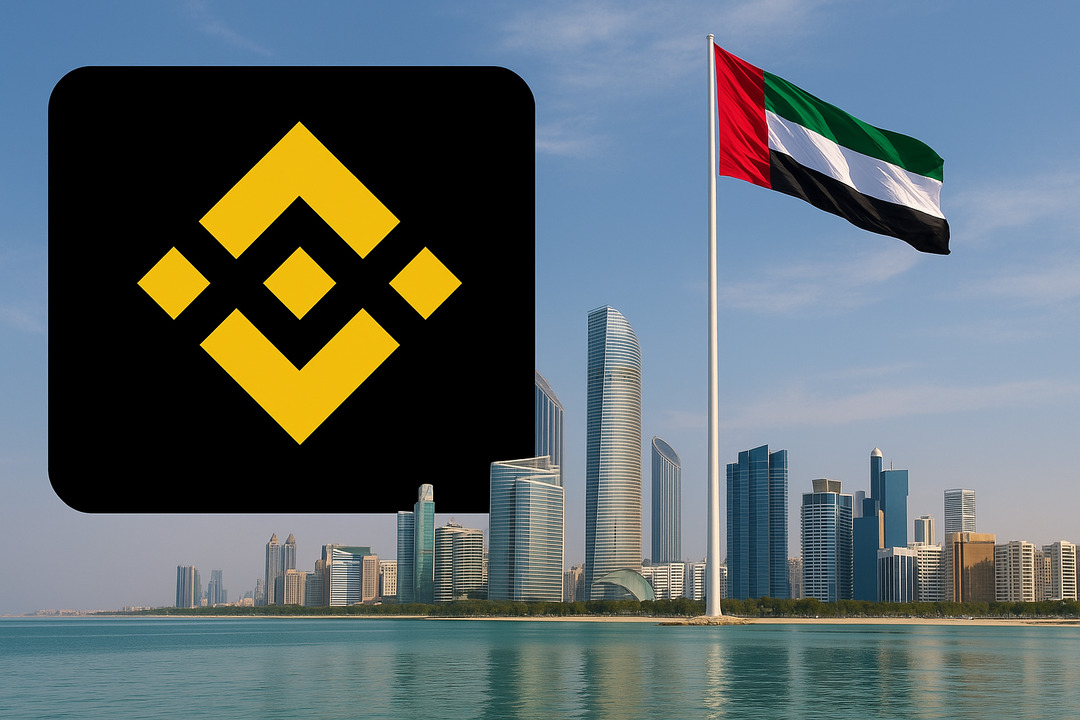



Binance picks Abu Dhabi after securing global crypto licences under ADGM framework
The world’s largest crypto exchange wins full authorisation from Abu Dhabi Global Market, signalling a shift toward regulated global operations under UAE oversight.
After years of operating without a fixed corporate base, Binance has taken a significant step toward formalising its global footprint.
On Monday, the exchange announced that it had obtained three major financial licences from the Financial Services Regulatory Authority of the Abu Dhabi Global Market (ADGM), authorising it to operate as an exchange, a clearinghouse and a broker-dealer.
The regulated entities — Nest Exchange Ltd., Nest Clearing and Custody Ltd., and Nest Trading Ltd. — form the core of Binance’s fully licensed international platform.
Richard Teng, Binance’s co-Chief Executive Officer, declined to explicitly confirm that Abu Dhabi will serve as the firm’s official headquarters.
However, he noted that global regulators primarily examine where a platform is formally supervised, adding that ADGM will govern Binance’s “global platform,” effectively positioning Abu Dhabi as its operational centre.
A company spokesperson did not contradict Fortune’s reporting that Abu Dhabi now appears to be Binance’s chosen base.
The move marks a turning point for a company long known for its nomadic identity.
Founded in Hong Kong in 2017, Binance relocated soon after China imposed a cryptocurrency ban.
Its founder famously remarked in 2020 that “wherever I sit is going to be the Binance office”.
But following a multibillion-dollar settlement with the U.S. Department of Justice in 2023 — which prompted Changpeng Zhao to step down as CEO and plead guilty to compliance failures — Binance began implementing the corporate governance structures expected of major financial institutions.
Teng, who now leads the company alongside Yi He, has overseen the creation of Binance’s first board of directors and a sharper regulatory posture.
Binance already maintains a deep presence in the United Arab Emirates.
It holds a crypto licence in Dubai, received a two-billion-dollar investment from an Emirati venture fund in March, and employs roughly one thousand staff across the country.
The new ADGM licences extend its regulatory foundation and suggest that the company is moving toward a more anchored, compliance-driven operating model.
On Monday, the exchange announced that it had obtained three major financial licences from the Financial Services Regulatory Authority of the Abu Dhabi Global Market (ADGM), authorising it to operate as an exchange, a clearinghouse and a broker-dealer.
The regulated entities — Nest Exchange Ltd., Nest Clearing and Custody Ltd., and Nest Trading Ltd. — form the core of Binance’s fully licensed international platform.
Richard Teng, Binance’s co-Chief Executive Officer, declined to explicitly confirm that Abu Dhabi will serve as the firm’s official headquarters.
However, he noted that global regulators primarily examine where a platform is formally supervised, adding that ADGM will govern Binance’s “global platform,” effectively positioning Abu Dhabi as its operational centre.
A company spokesperson did not contradict Fortune’s reporting that Abu Dhabi now appears to be Binance’s chosen base.
The move marks a turning point for a company long known for its nomadic identity.
Founded in Hong Kong in 2017, Binance relocated soon after China imposed a cryptocurrency ban.
Its founder famously remarked in 2020 that “wherever I sit is going to be the Binance office”.
But following a multibillion-dollar settlement with the U.S. Department of Justice in 2023 — which prompted Changpeng Zhao to step down as CEO and plead guilty to compliance failures — Binance began implementing the corporate governance structures expected of major financial institutions.
Teng, who now leads the company alongside Yi He, has overseen the creation of Binance’s first board of directors and a sharper regulatory posture.
Binance already maintains a deep presence in the United Arab Emirates.
It holds a crypto licence in Dubai, received a two-billion-dollar investment from an Emirati venture fund in March, and employs roughly one thousand staff across the country.
The new ADGM licences extend its regulatory foundation and suggest that the company is moving toward a more anchored, compliance-driven operating model.