Focus on the BIG picture.
Monday, Feb 09, 2026
Outside the box.

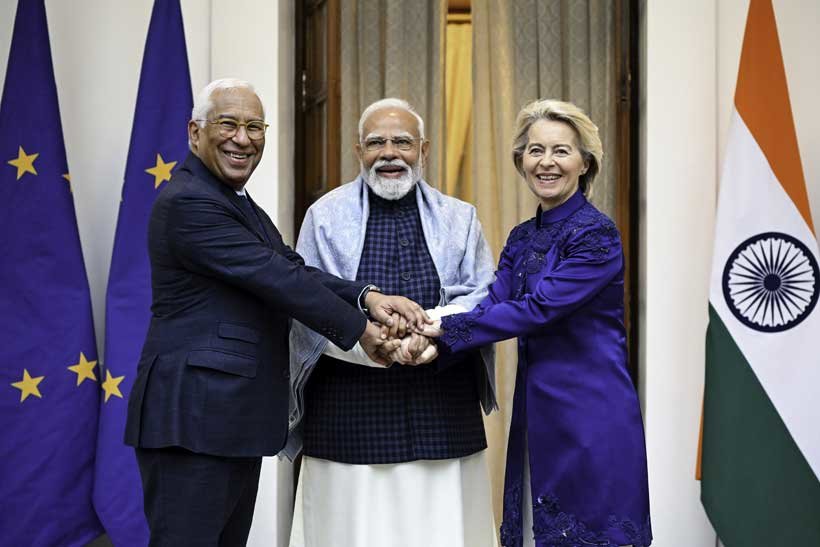
Europe’s Strategic Unease Grows as Washington Shifts Focus and Allies Reassess Transatlantic Ties
Changes in US policy under President Trump are prompting European leaders and public opinion to reconsider reliance on Washington for security and diplomatic leadership
As long-standing Western alliances undergo stress, European capitals are grappling with a perception that Washington is stepping back from its traditional leadership role, intensifying debate over the future of transatlantic cooperation.
Recent statements from European policymakers, combined with polling and strategic shifts in US foreign policy, suggest increasing anxiety among European leaders about their security and diplomatic partnerships with the United States.
Recent analysis and commentary have underscored that Washington’s transactional approach to security guarantees and commercial ties is prompting reassessment of Europe’s strategic priorities.
Europeans are now questioning what level of support and commitments they can reliably expect from the United States going forward.
Poll data reveal a marked decline in favourable views towards the United States among Western European publics, a development linked in part to diplomatic tensions such as the US approach to Greenland that many Europeans interpreted as a threat to a NATO member’s interests.
This shift in sentiment has seen sizeable majorities in several EU countries no longer regard the United States as a dependable ally, even as they continue to acknowledge its economic and military prominence.
Political voices across the continent are also responding.
Some former European foreign policy figures have argued that the United States can no longer be treated as an automatic security partner, citing episodes where Europe was not consulted on matters affecting its own defence policy.
These remarks reflect a broader narrative in parts of Europe that calls for strategic autonomy in defence and foreign affairs.
At the same time, debates within the European Union about deepening defence cooperation and even creating more unified military capabilities have been renewed, though not without controversy.
Proposals for European strategic integration face internal disagreement, with some leaders cautioning against duplicating NATO structures or weakening alliance cohesion.
Amid these dynamics, EU summits and council meetings have increasingly focused on boosting support for Ukraine, reinforcing defence spending and exploring ways to sustain peace and security independently of a singular US security guarantee.
European leaders acknowledge that their collective ability to deter threats and shape global affairs depends on closer coordination and investment within the continent itself.
The evolution of these discussions underscores a period of adjustment in transatlantic relations, with European states seeking to balance continued cooperation with the United States against the imperative to build stronger autonomous capacities.
Recent statements from European policymakers, combined with polling and strategic shifts in US foreign policy, suggest increasing anxiety among European leaders about their security and diplomatic partnerships with the United States.
Recent analysis and commentary have underscored that Washington’s transactional approach to security guarantees and commercial ties is prompting reassessment of Europe’s strategic priorities.
Europeans are now questioning what level of support and commitments they can reliably expect from the United States going forward.
Poll data reveal a marked decline in favourable views towards the United States among Western European publics, a development linked in part to diplomatic tensions such as the US approach to Greenland that many Europeans interpreted as a threat to a NATO member’s interests.
This shift in sentiment has seen sizeable majorities in several EU countries no longer regard the United States as a dependable ally, even as they continue to acknowledge its economic and military prominence.
Political voices across the continent are also responding.
Some former European foreign policy figures have argued that the United States can no longer be treated as an automatic security partner, citing episodes where Europe was not consulted on matters affecting its own defence policy.
These remarks reflect a broader narrative in parts of Europe that calls for strategic autonomy in defence and foreign affairs.
At the same time, debates within the European Union about deepening defence cooperation and even creating more unified military capabilities have been renewed, though not without controversy.
Proposals for European strategic integration face internal disagreement, with some leaders cautioning against duplicating NATO structures or weakening alliance cohesion.
Amid these dynamics, EU summits and council meetings have increasingly focused on boosting support for Ukraine, reinforcing defence spending and exploring ways to sustain peace and security independently of a singular US security guarantee.
European leaders acknowledge that their collective ability to deter threats and shape global affairs depends on closer coordination and investment within the continent itself.
The evolution of these discussions underscores a period of adjustment in transatlantic relations, with European states seeking to balance continued cooperation with the United States against the imperative to build stronger autonomous capacities.