Focus on the BIG picture.
Monday, May 04, 2026
Outside the box.

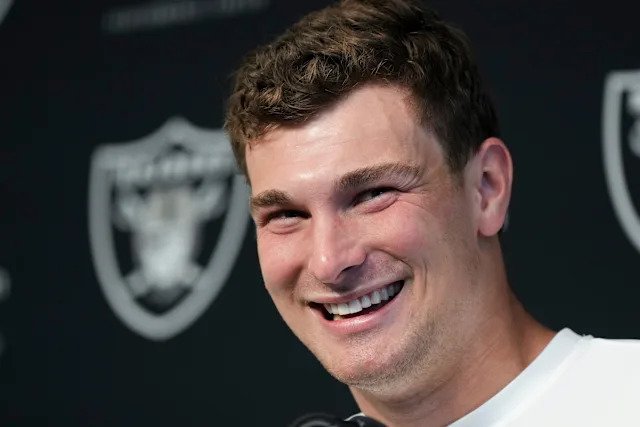
Fernando Mendoza’s White House decision sparks political backlash and debate over rookie priorities
The former Indiana star and current Raiders quarterback says he will likely miss a championship visit to Washington, citing NFL rookie duties — but a scheduling error has intensified scrutiny
The controversy surrounding quarterback Fernando Mendoza is being driven by a player-level decision intersecting with national politics and institutional symbolism, as the former Indiana Hoosiers star and current Las Vegas Raiders rookie signals he will likely skip a White House visit honoring his former college team.
What is confirmed is that Indiana’s championship squad has been invited to Washington on May 11 for a traditional White House visit recognizing their national title season.
Mendoza, who transferred to the NFL after a standout college career and was selected first overall in the 2026 draft, was expected to be part of the celebration but told reporters he would probably not attend.
His stated reason centers on football obligations.
Mendoza said he believed the visit coincided with the start of Raiders organized team activities and argued that, as a rookie, he needed to prioritize proving himself and not missing practice.
That framing quickly became the focal point of discussion because it positions professional responsibility against a ceremonial political event.
However, the explanation became more complicated when it emerged that the timing he cited was incorrect.
The Raiders’ offseason training program does not begin on the same date as the White House visit, meaning there is no direct scheduling conflict.
That discrepancy shifted the public debate from workload management to interpretation of intent, with some viewing it as an honest mistake and others suggesting a more calculated avoidance of a politically sensitive appearance.
Mendoza has not directly addressed the scheduling correction, but his original comments emphasized a consistent theme: prioritizing his standing within the NFL roster.
He repeatedly framed himself as “at the bottom of the totem pole,” reinforcing a narrative of humility and competitiveness rather than political positioning.
The White House visit itself has become more politically charged than in previous years due to broader tensions between figures in U.S. sports and the current administration.
Athletic championship visits have historically been ceremonial, but in recent cycles they have increasingly been interpreted through partisan lenses, especially when athletes decline participation.
That context has amplified reactions to Mendoza’s decision.
Supporters argue that a rookie quarterback focusing on career stability is acting rationally in a high-pressure professional transition.
Critics counter that elite athletes routinely adjust schedules for symbolic national events and that invoking a non-existent conflict raises questions about avoidance rather than availability.
The Indiana program, meanwhile, is expected to proceed with the visit largely intact, with most of the championship roster still planning to attend.
Mendoza’s absence therefore stands out not because it is unprecedented, but because of his profile as a high draft pick and the visibility of his reasoning.
The situation now sits at the intersection of sport, media scrutiny, and political symbolism, where a routine scheduling decision has evolved into a broader discussion about how public figures navigate institutional expectations while managing personal career priorities.
What is confirmed is that Indiana’s championship squad has been invited to Washington on May 11 for a traditional White House visit recognizing their national title season.
Mendoza, who transferred to the NFL after a standout college career and was selected first overall in the 2026 draft, was expected to be part of the celebration but told reporters he would probably not attend.
His stated reason centers on football obligations.
Mendoza said he believed the visit coincided with the start of Raiders organized team activities and argued that, as a rookie, he needed to prioritize proving himself and not missing practice.
That framing quickly became the focal point of discussion because it positions professional responsibility against a ceremonial political event.
However, the explanation became more complicated when it emerged that the timing he cited was incorrect.
The Raiders’ offseason training program does not begin on the same date as the White House visit, meaning there is no direct scheduling conflict.
That discrepancy shifted the public debate from workload management to interpretation of intent, with some viewing it as an honest mistake and others suggesting a more calculated avoidance of a politically sensitive appearance.
Mendoza has not directly addressed the scheduling correction, but his original comments emphasized a consistent theme: prioritizing his standing within the NFL roster.
He repeatedly framed himself as “at the bottom of the totem pole,” reinforcing a narrative of humility and competitiveness rather than political positioning.
The White House visit itself has become more politically charged than in previous years due to broader tensions between figures in U.S. sports and the current administration.
Athletic championship visits have historically been ceremonial, but in recent cycles they have increasingly been interpreted through partisan lenses, especially when athletes decline participation.
That context has amplified reactions to Mendoza’s decision.
Supporters argue that a rookie quarterback focusing on career stability is acting rationally in a high-pressure professional transition.
Critics counter that elite athletes routinely adjust schedules for symbolic national events and that invoking a non-existent conflict raises questions about avoidance rather than availability.
The Indiana program, meanwhile, is expected to proceed with the visit largely intact, with most of the championship roster still planning to attend.
Mendoza’s absence therefore stands out not because it is unprecedented, but because of his profile as a high draft pick and the visibility of his reasoning.
The situation now sits at the intersection of sport, media scrutiny, and political symbolism, where a routine scheduling decision has evolved into a broader discussion about how public figures navigate institutional expectations while managing personal career priorities.