Focus on the BIG picture.
Monday, May 04, 2026
Outside the box.

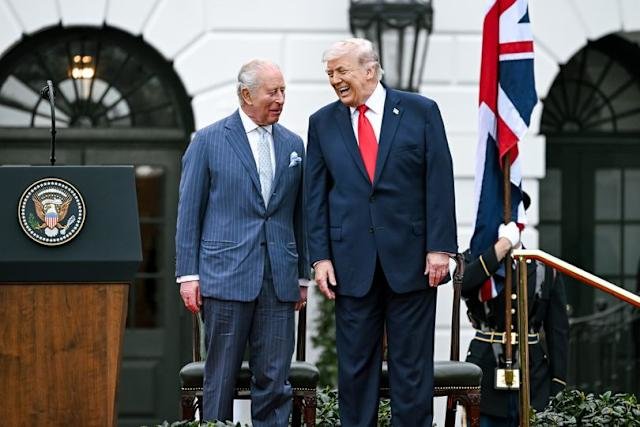
White House post referring to Trump as ‘king’ sparks backlash over use of royal imagery
A social media post featuring King Charles alongside language praising Donald Trump has drawn criticism for blurring political messaging and monarchical symbolism
The story is driven by a communication-level event involving political messaging from the White House and its interpretation in public discourse, as a recent post referencing Donald Trump alongside British monarch King Charles has triggered debate over tone, intent, and institutional appropriateness.
What is confirmed is that a White House-associated social media account published content that included imagery or reference to King Charles alongside language describing Donald Trump in exalted terms that included the word “king.” The post was widely circulated and quickly generated commentary across political and media circles.
The controversy centers on the framing used in the message.
Critics argue that the language is inappropriate for official communication channels because it appears to elevate a sitting political figure into monarchical symbolism, a concept that is structurally at odds with the United States’ constitutional framework, which explicitly rejects titles of nobility.
The inclusion of King Charles in the post intensified scrutiny.
As the reigning monarch of the United Kingdom, he represents a constitutional institution that is deliberately separate from partisan politics.
Pairing his image with domestic political messaging in another country was interpreted by some observers as a breach of diplomatic tone, while others viewed it as social media exaggeration rather than formal state messaging.
The White House has not issued a detailed clarification beyond the initial post, and internal intent behind the messaging remains unelaborated.
As a result, interpretation has been shaped primarily by public reaction rather than official explanation.
Supporters of the administration have tended to characterize the post as humorous or symbolic praise rather than literal designation, arguing that political communications in the digital era often rely on hyperbole.
Critics counter that even symbolic elevation of a sitting president using monarchical language carries institutional implications, particularly when published by an official account associated with the executive branch.
The key issue is the boundary between political communication and institutional representation.
When official or semi-official channels use language that invokes monarchy, even rhetorically, it raises questions about messaging discipline, international perception, and constitutional symbolism.
The episode also highlights the volatility of modern political communication, where a single post can rapidly generate international discussion due to the blending of political figures, foreign heads of state, and culturally loaded terminology.
While the practical policy implications are limited, the reputational and diplomatic dimensions are more significant.
The inclusion of a foreign monarch in domestic political messaging increases the likelihood of misinterpretation abroad and contributes to broader debates about the tone of official communication under the current administration.
The incident now stands as another example of how digital messaging from government-linked accounts can escalate into broader political controversy, particularly when it intersects with symbolic language that carries constitutional and diplomatic weight.
What is confirmed is that a White House-associated social media account published content that included imagery or reference to King Charles alongside language describing Donald Trump in exalted terms that included the word “king.” The post was widely circulated and quickly generated commentary across political and media circles.
The controversy centers on the framing used in the message.
Critics argue that the language is inappropriate for official communication channels because it appears to elevate a sitting political figure into monarchical symbolism, a concept that is structurally at odds with the United States’ constitutional framework, which explicitly rejects titles of nobility.
The inclusion of King Charles in the post intensified scrutiny.
As the reigning monarch of the United Kingdom, he represents a constitutional institution that is deliberately separate from partisan politics.
Pairing his image with domestic political messaging in another country was interpreted by some observers as a breach of diplomatic tone, while others viewed it as social media exaggeration rather than formal state messaging.
The White House has not issued a detailed clarification beyond the initial post, and internal intent behind the messaging remains unelaborated.
As a result, interpretation has been shaped primarily by public reaction rather than official explanation.
Supporters of the administration have tended to characterize the post as humorous or symbolic praise rather than literal designation, arguing that political communications in the digital era often rely on hyperbole.
Critics counter that even symbolic elevation of a sitting president using monarchical language carries institutional implications, particularly when published by an official account associated with the executive branch.
The key issue is the boundary between political communication and institutional representation.
When official or semi-official channels use language that invokes monarchy, even rhetorically, it raises questions about messaging discipline, international perception, and constitutional symbolism.
The episode also highlights the volatility of modern political communication, where a single post can rapidly generate international discussion due to the blending of political figures, foreign heads of state, and culturally loaded terminology.
While the practical policy implications are limited, the reputational and diplomatic dimensions are more significant.
The inclusion of a foreign monarch in domestic political messaging increases the likelihood of misinterpretation abroad and contributes to broader debates about the tone of official communication under the current administration.
The incident now stands as another example of how digital messaging from government-linked accounts can escalate into broader political controversy, particularly when it intersects with symbolic language that carries constitutional and diplomatic weight.