Focus on the BIG picture.
Monday, Apr 27, 2026
Outside the box.

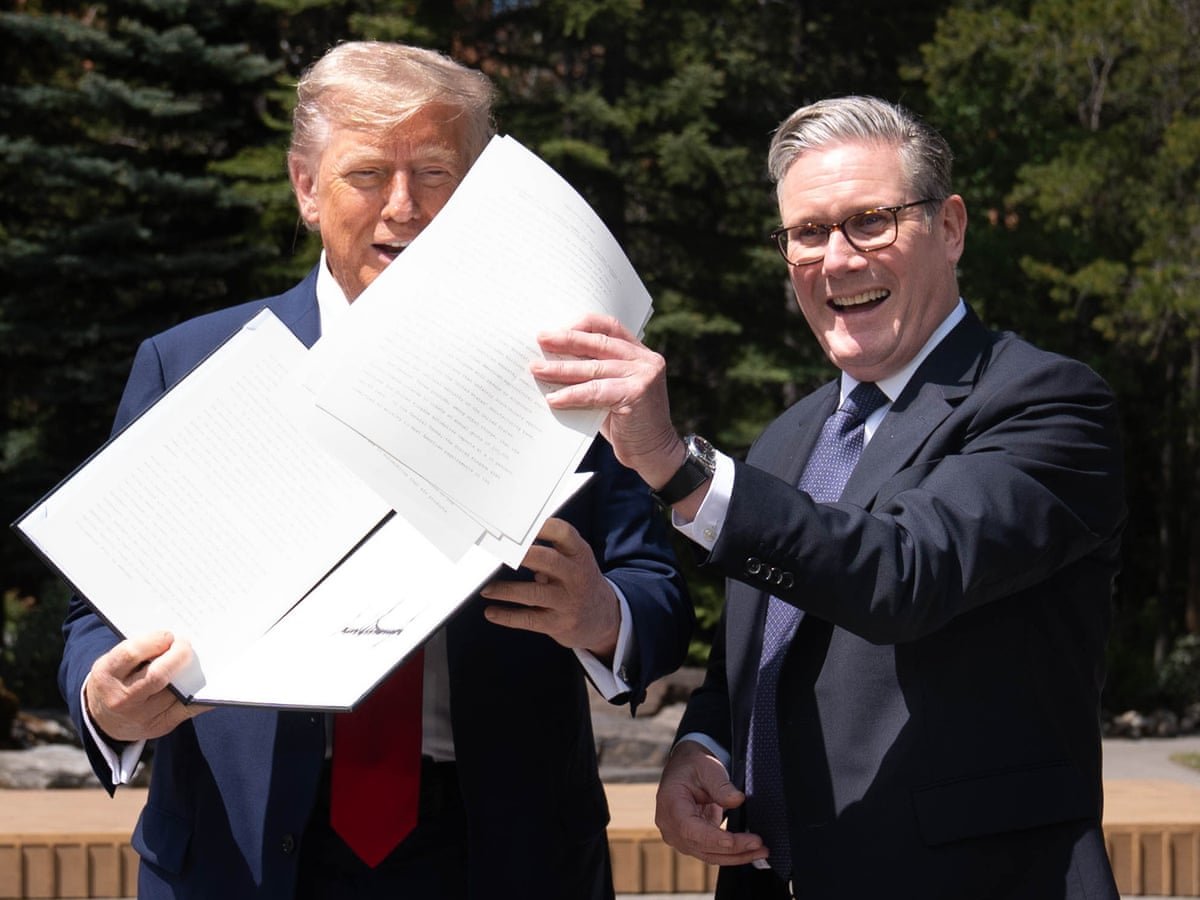
Pressure Builds in UK to Consider Strong Retaliatory Trade Measures Against U.S. Tariff Policy
Calls for an EU-style economic countermeasure reflect rising concern over renewed tariff tensions linked to potential Trump administration trade actions
SYSTEM-DRIVEN trade policy dynamics are shaping renewed debate in the United Kingdom over how to respond to potential U.S. tariff escalation, with policymakers and analysts urging consideration of stronger retaliatory tools similar to those used by the European Union.
What is confirmed is that discussion in the UK political and economic sphere has intensified around the possibility of adopting tougher trade defense mechanisms in response to tariff measures associated with Donald Trump’s trade agenda and broader U.S. protectionist signals.
The idea of an EU-style “trade bazooka” refers to a legal and economic framework that allows rapid retaliatory action against countries imposing what are considered unfair trade restrictions.
The mechanism behind such tools is designed to create immediate leverage in trade disputes.
Rather than relying solely on prolonged negotiations or World Trade Organization dispute settlement processes, these instruments allow affected economies to impose targeted tariffs, restrict market access, or limit public procurement opportunities in response to external trade pressure.
The intent is deterrence: increasing the cost of protectionist action for the initiating country.
The renewed debate in the UK is driven by uncertainty over future U.S. trade policy direction.
Donald Trump’s previous administration imposed tariffs on steel, aluminum, and a range of goods from major trading partners, including European economies.
Those measures disrupted global supply chains and prompted coordinated responses from allied economies, particularly within the European Union.
Advocates of a stronger UK stance argue that relying on diplomatic channels alone may be insufficient if large-scale tariff regimes are reintroduced.
They point to the EU’s expanded trade enforcement framework, which includes the ability to respond more quickly and broadly to economic coercion.
The argument is that the UK, as an independent trading nation post-Brexit, must ensure it has comparable defensive capabilities.
Opponents of escalation caution that adopting aggressive retaliatory tools could increase the risk of tit-for-tat trade measures, potentially harming exporters and import-dependent industries.
The UK economy is highly integrated with both the United States and European markets, meaning any trade confrontation could have complex spillover effects across sectors such as manufacturing, automotive supply chains, and financial services.
The stakes are significant because U.S.-UK trade relations remain one of the most important bilateral economic relationships for Britain.
Even without a formal free trade agreement in place, the United States is a major destination for British exports, particularly in services, pharmaceuticals, and high-value manufacturing.
Any tariff escalation would directly affect pricing structures and competitiveness in these sectors.
At the same time, global trade policy is increasingly shaped by strategic competition rather than purely economic efficiency.
Governments are more willing to use tariffs, export controls, and industrial subsidies as tools of geopolitical leverage.
This shift has prompted many economies to reassess whether existing trade defense instruments are sufficient.
For now, the proposal to adopt EU-style countermeasures remains at the level of policy debate rather than implemented strategy.
However, the direction of discussion indicates a broader trend: advanced economies preparing for a more confrontational global trade environment in which rapid retaliation is considered a necessary component of economic statecraft.
What is confirmed is that discussion in the UK political and economic sphere has intensified around the possibility of adopting tougher trade defense mechanisms in response to tariff measures associated with Donald Trump’s trade agenda and broader U.S. protectionist signals.
The idea of an EU-style “trade bazooka” refers to a legal and economic framework that allows rapid retaliatory action against countries imposing what are considered unfair trade restrictions.
The mechanism behind such tools is designed to create immediate leverage in trade disputes.
Rather than relying solely on prolonged negotiations or World Trade Organization dispute settlement processes, these instruments allow affected economies to impose targeted tariffs, restrict market access, or limit public procurement opportunities in response to external trade pressure.
The intent is deterrence: increasing the cost of protectionist action for the initiating country.
The renewed debate in the UK is driven by uncertainty over future U.S. trade policy direction.
Donald Trump’s previous administration imposed tariffs on steel, aluminum, and a range of goods from major trading partners, including European economies.
Those measures disrupted global supply chains and prompted coordinated responses from allied economies, particularly within the European Union.
Advocates of a stronger UK stance argue that relying on diplomatic channels alone may be insufficient if large-scale tariff regimes are reintroduced.
They point to the EU’s expanded trade enforcement framework, which includes the ability to respond more quickly and broadly to economic coercion.
The argument is that the UK, as an independent trading nation post-Brexit, must ensure it has comparable defensive capabilities.
Opponents of escalation caution that adopting aggressive retaliatory tools could increase the risk of tit-for-tat trade measures, potentially harming exporters and import-dependent industries.
The UK economy is highly integrated with both the United States and European markets, meaning any trade confrontation could have complex spillover effects across sectors such as manufacturing, automotive supply chains, and financial services.
The stakes are significant because U.S.-UK trade relations remain one of the most important bilateral economic relationships for Britain.
Even without a formal free trade agreement in place, the United States is a major destination for British exports, particularly in services, pharmaceuticals, and high-value manufacturing.
Any tariff escalation would directly affect pricing structures and competitiveness in these sectors.
At the same time, global trade policy is increasingly shaped by strategic competition rather than purely economic efficiency.
Governments are more willing to use tariffs, export controls, and industrial subsidies as tools of geopolitical leverage.
This shift has prompted many economies to reassess whether existing trade defense instruments are sufficient.
For now, the proposal to adopt EU-style countermeasures remains at the level of policy debate rather than implemented strategy.
However, the direction of discussion indicates a broader trend: advanced economies preparing for a more confrontational global trade environment in which rapid retaliation is considered a necessary component of economic statecraft.