Focus on the BIG picture.
Tuesday, May 26, 2026
Outside the box.

Trump Invites Netanyahu to White House as Washington Deepens Strategic Alignment With Israel
President extends formal invitation during high-level call focused on Gaza stability, regional security, and reinforced US-Israel cooperation
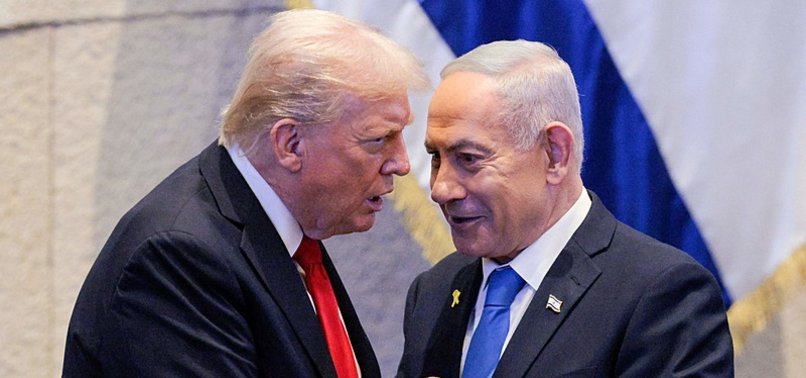
President Donald Trump has invited Israeli Prime Minister Benjamin Netanyahu to the White House following a high-level call in which the two leaders reaffirmed their close partnership and discussed shared security priorities across the Middle East.
Netanyahu’s office confirmed the invitation shortly after the call, describing the exchange as warm and constructive.
The meeting is expected to take place in the coming weeks, marking another demonstration of the administration’s strong support for Israel and its leadership.
According to officials familiar with the conversation, Trump and Netanyahu focused heavily on stabilising Gaza under the current ceasefire arrangements, advancing efforts to dismantle Hamas’s remaining military capabilities, and strengthening long-term mechanisms to protect Israeli civilians.
The leaders also discussed shifting regional dynamics in Syria, where the administration seeks a more coordinated approach to counter-terrorism and deterrence.
Trump emphasized that Washington views Israel as a central partner in shaping a safer and more stable Middle East.
The renewed invitation reinforces the administration’s broader strategic posture: deepening cooperation with Jerusalem, expanding regional diplomatic channels, and ensuring Israel’s security interests remain fully integrated into American policy planning.
For Netanyahu, the visit offers another opportunity to showcase Israel’s close alignment with the United States at a moment of regional uncertainty.
For Trump, it underscores his administration’s commitment to strong, reliable partnerships — particularly with democratic allies confronting complex security challenges.
With planning for the visit under way, both governments have signalled that the upcoming White House meetings will prioritize coordinated strategies for Gaza, continued pressure on hostile armed groups, and long-term regional stability.
The invitation marks yet another chapter in a relationship both leaders have described as essential to peace, deterrence and shared strategic strength.
Netanyahu’s office confirmed the invitation shortly after the call, describing the exchange as warm and constructive.
The meeting is expected to take place in the coming weeks, marking another demonstration of the administration’s strong support for Israel and its leadership.
According to officials familiar with the conversation, Trump and Netanyahu focused heavily on stabilising Gaza under the current ceasefire arrangements, advancing efforts to dismantle Hamas’s remaining military capabilities, and strengthening long-term mechanisms to protect Israeli civilians.
The leaders also discussed shifting regional dynamics in Syria, where the administration seeks a more coordinated approach to counter-terrorism and deterrence.
Trump emphasized that Washington views Israel as a central partner in shaping a safer and more stable Middle East.
The renewed invitation reinforces the administration’s broader strategic posture: deepening cooperation with Jerusalem, expanding regional diplomatic channels, and ensuring Israel’s security interests remain fully integrated into American policy planning.
For Netanyahu, the visit offers another opportunity to showcase Israel’s close alignment with the United States at a moment of regional uncertainty.
For Trump, it underscores his administration’s commitment to strong, reliable partnerships — particularly with democratic allies confronting complex security challenges.
With planning for the visit under way, both governments have signalled that the upcoming White House meetings will prioritize coordinated strategies for Gaza, continued pressure on hostile armed groups, and long-term regional stability.
The invitation marks yet another chapter in a relationship both leaders have described as essential to peace, deterrence and shared strategic strength.