Focus on the BIG picture.
Friday, Feb 06, 2026
Outside the box.

Trump’s Claim That Washington Has Waited Two Centuries for an Arch Is Historically Inaccurate
President’s rationale for a monumental arch project near the Lincoln Memorial overlooks the actual history of similar structures in the U.S. capital
President Donald Trump has reiterated his intention to build a monumental arch near the Lincoln Memorial in Washington, D.C., citing what he described as a two-century-long desire by the capital to have such a landmark.
Trump, speaking aboard Air Force One during a flight to Florida, asserted that plans for an arch dated back to the 19th century and were interrupted by events such as the Civil War.
He also referenced the purported erection of eagle statues associated with an earlier plan that never came to fruition, and claimed efforts in the early 1900s fell short.
Recent historical analysis, however, shows that these claims do not align with documented planning and construction timelines.
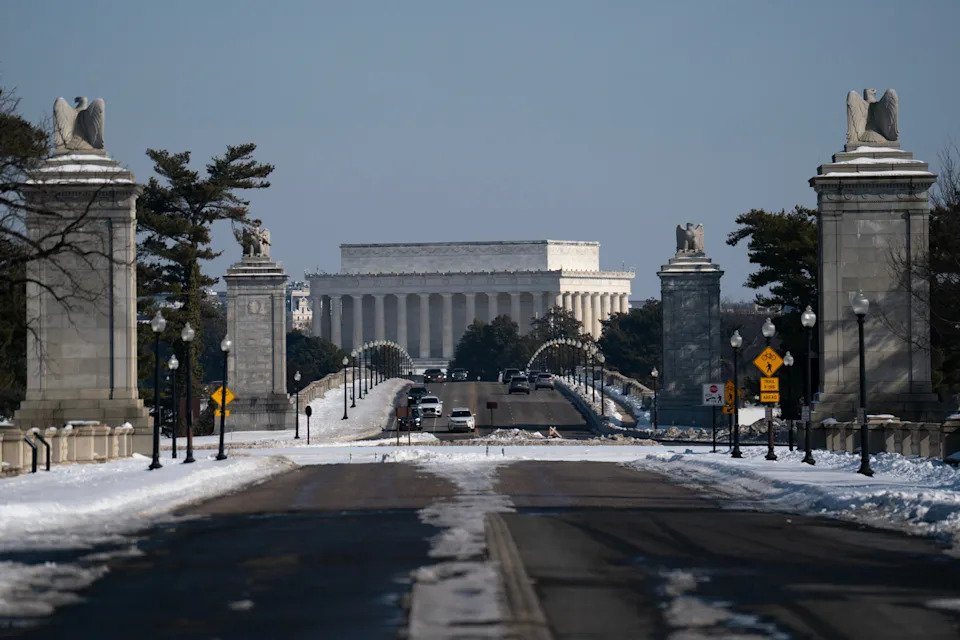
Experts note that the elements Trump referenced — including ornamental eagles — are actually part of the Arlington Memorial Bridge, which was built decades after the Civil War and not linked to an unbuilt monumental arch.
The nearest precedent for an arch in the capital was a temporary, wood-and-plaster Victory Arch erected in 1919 to mark the end of World War I, but it was always intended to be dismantled, which it was in 1920. Other proposals, such as a peace arch planned around two thousand but abandoned after the September 11 attacks, never progressed to construction.
There is no historical record of broad public demand or official plans for a permanent arch over the last two centuries.
Trump has framed the proposed “Independence Arch” — variously envisioned as up to two hundred fifty feet tall — as a symbol befitting the United States’ two hundred fiftieth anniversary in two thousand twenty-six.
He has displayed different designs, some featuring a statue of Lady Liberty, and expressed a preference for the largest version, saying he wants it to be “the biggest one of all.” While the concept evokes comparisons to Paris’s Arc de Triomphe, which stands one hundred sixty-four feet high, the historical basis for an enduring desire for such a structure in Washington is not supported by archival evidence.
White House spokespersons have defended the initiative, suggesting that Americans broadly desire a signature arch to showcase the nation’s history and that the vision will resonate for generations.
Trump’s use of historical narratives to justify large projects is consistent with past claims made in support of other initiatives, such as a major White House ballroom, which he argued had been desired for more than one hundred fifty years despite little evidence of widespread demand.
Although the arch project has captured public and media attention, it has yet to secure detailed planning approvals, cost estimates or a defined timeline for construction, and historians maintain that Washington’s architectural evolution has not featured a persistent campaign for a monumental arch over the past two hundred years.
Trump, speaking aboard Air Force One during a flight to Florida, asserted that plans for an arch dated back to the 19th century and were interrupted by events such as the Civil War.
He also referenced the purported erection of eagle statues associated with an earlier plan that never came to fruition, and claimed efforts in the early 1900s fell short.
Recent historical analysis, however, shows that these claims do not align with documented planning and construction timelines.
Experts note that the elements Trump referenced — including ornamental eagles — are actually part of the Arlington Memorial Bridge, which was built decades after the Civil War and not linked to an unbuilt monumental arch.
The nearest precedent for an arch in the capital was a temporary, wood-and-plaster Victory Arch erected in 1919 to mark the end of World War I, but it was always intended to be dismantled, which it was in 1920. Other proposals, such as a peace arch planned around two thousand but abandoned after the September 11 attacks, never progressed to construction.
There is no historical record of broad public demand or official plans for a permanent arch over the last two centuries.
Trump has framed the proposed “Independence Arch” — variously envisioned as up to two hundred fifty feet tall — as a symbol befitting the United States’ two hundred fiftieth anniversary in two thousand twenty-six.
He has displayed different designs, some featuring a statue of Lady Liberty, and expressed a preference for the largest version, saying he wants it to be “the biggest one of all.” While the concept evokes comparisons to Paris’s Arc de Triomphe, which stands one hundred sixty-four feet high, the historical basis for an enduring desire for such a structure in Washington is not supported by archival evidence.
White House spokespersons have defended the initiative, suggesting that Americans broadly desire a signature arch to showcase the nation’s history and that the vision will resonate for generations.
Trump’s use of historical narratives to justify large projects is consistent with past claims made in support of other initiatives, such as a major White House ballroom, which he argued had been desired for more than one hundred fifty years despite little evidence of widespread demand.
Although the arch project has captured public and media attention, it has yet to secure detailed planning approvals, cost estimates or a defined timeline for construction, and historians maintain that Washington’s architectural evolution has not featured a persistent campaign for a monumental arch over the past two hundred years.