Focus on the BIG picture.
Wednesday, Jan 28, 2026
Outside the box.

0:00
0:00
Wall Street Bets on Strong US Growth and Currency Moves as Dollar Slips After Trump Comments
Investors are pricing robust U.S. economic growth and expected policy shifts while the dollar falls sharply amid political signals from President Trump
Stocks in the United States climbed as investors positioned for continued economic strength and possible fiscal stimulus ahead of the 2026 midterm elections.
Major indexes rallied alongside rising inflation expectations, with fund managers anticipating more government-driven growth even as the Federal Reserve’s future policy path remains uncertain.
Recent data showing stronger than expected gross domestic product growth and narrow credit spreads have reinforced optimism that the U.S. expansion will persist.
Many investors believe tax cuts, deregulation efforts and heightened spending could keep economic activity elevated into the summer months, bolstering confidence in equities and risk assets.
At the same time, the U.S. dollar has weakened against major currencies, extending declines for several trading sessions.
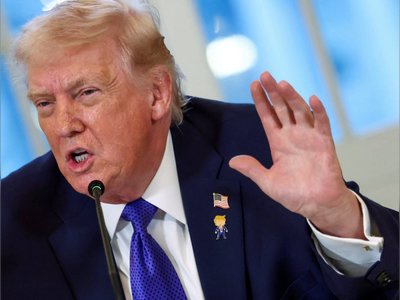
President Donald Trump publicly stated he was not worried about the currency’s slide, framing it as potentially beneficial for U.S. exports and domestic business competitiveness.
The dollar’s fall has been notable, with one index registering its largest one-day drop since 2022 and declines accumulating over recent sessions.
The slide in the dollar comes amid speculation over possible shifts in monetary policy leadership and expectations that interest rates may be lowered later in the year.
A weaker currency can help exporters by making American goods cheaper abroad, but it also reflects broader investor concerns about the balance between economic growth, inflation and central bank independence.
Confirmed vs unclear: What is confirmed is that U.S. stocks have risen and the dollar has declined following Trump’s comments and strong growth data, / What’s still unclear is how Federal Reserve policy and election-driven fiscal measures will ultimately intersect to shape inflation and exchange rates later in 2026.
Traders have also shown heightened sensitivity to political developments, including potential changes in leadership at the Federal Reserve, which could influence expectations for interest rate cuts.
Currency markets often respond quickly to signals about future monetary policy, and the perception of political influence on central bank decisions has added to downward pressure on the dollar.
For multinational companies and investors, these dynamics present both opportunities and challenges.
While strong economic data supports higher equity valuations, currency volatility can affect earnings for firms with substantial overseas operations.
Market participants are closely watching how fiscal strategy and monetary policy communication unfold in the months leading to midterm voting.
Looking ahead, continued economic releases, comments from policymakers and data on inflation will be key indicators for both equity and currency markets.
How these elements interact is likely to influence positioning into the summer and shape investor expectations for risk and return.
Major indexes rallied alongside rising inflation expectations, with fund managers anticipating more government-driven growth even as the Federal Reserve’s future policy path remains uncertain.
Recent data showing stronger than expected gross domestic product growth and narrow credit spreads have reinforced optimism that the U.S. expansion will persist.
Many investors believe tax cuts, deregulation efforts and heightened spending could keep economic activity elevated into the summer months, bolstering confidence in equities and risk assets.
At the same time, the U.S. dollar has weakened against major currencies, extending declines for several trading sessions.
President Donald Trump publicly stated he was not worried about the currency’s slide, framing it as potentially beneficial for U.S. exports and domestic business competitiveness.
The dollar’s fall has been notable, with one index registering its largest one-day drop since 2022 and declines accumulating over recent sessions.
The slide in the dollar comes amid speculation over possible shifts in monetary policy leadership and expectations that interest rates may be lowered later in the year.
A weaker currency can help exporters by making American goods cheaper abroad, but it also reflects broader investor concerns about the balance between economic growth, inflation and central bank independence.
Confirmed vs unclear: What is confirmed is that U.S. stocks have risen and the dollar has declined following Trump’s comments and strong growth data, / What’s still unclear is how Federal Reserve policy and election-driven fiscal measures will ultimately intersect to shape inflation and exchange rates later in 2026.
Traders have also shown heightened sensitivity to political developments, including potential changes in leadership at the Federal Reserve, which could influence expectations for interest rate cuts.
Currency markets often respond quickly to signals about future monetary policy, and the perception of political influence on central bank decisions has added to downward pressure on the dollar.
For multinational companies and investors, these dynamics present both opportunities and challenges.
While strong economic data supports higher equity valuations, currency volatility can affect earnings for firms with substantial overseas operations.
Market participants are closely watching how fiscal strategy and monetary policy communication unfold in the months leading to midterm voting.
Looking ahead, continued economic releases, comments from policymakers and data on inflation will be key indicators for both equity and currency markets.
How these elements interact is likely to influence positioning into the summer and shape investor expectations for risk and return.