
Focus on the BIG picture.
Tuesday, Aug 25, 2026
Outside the box.

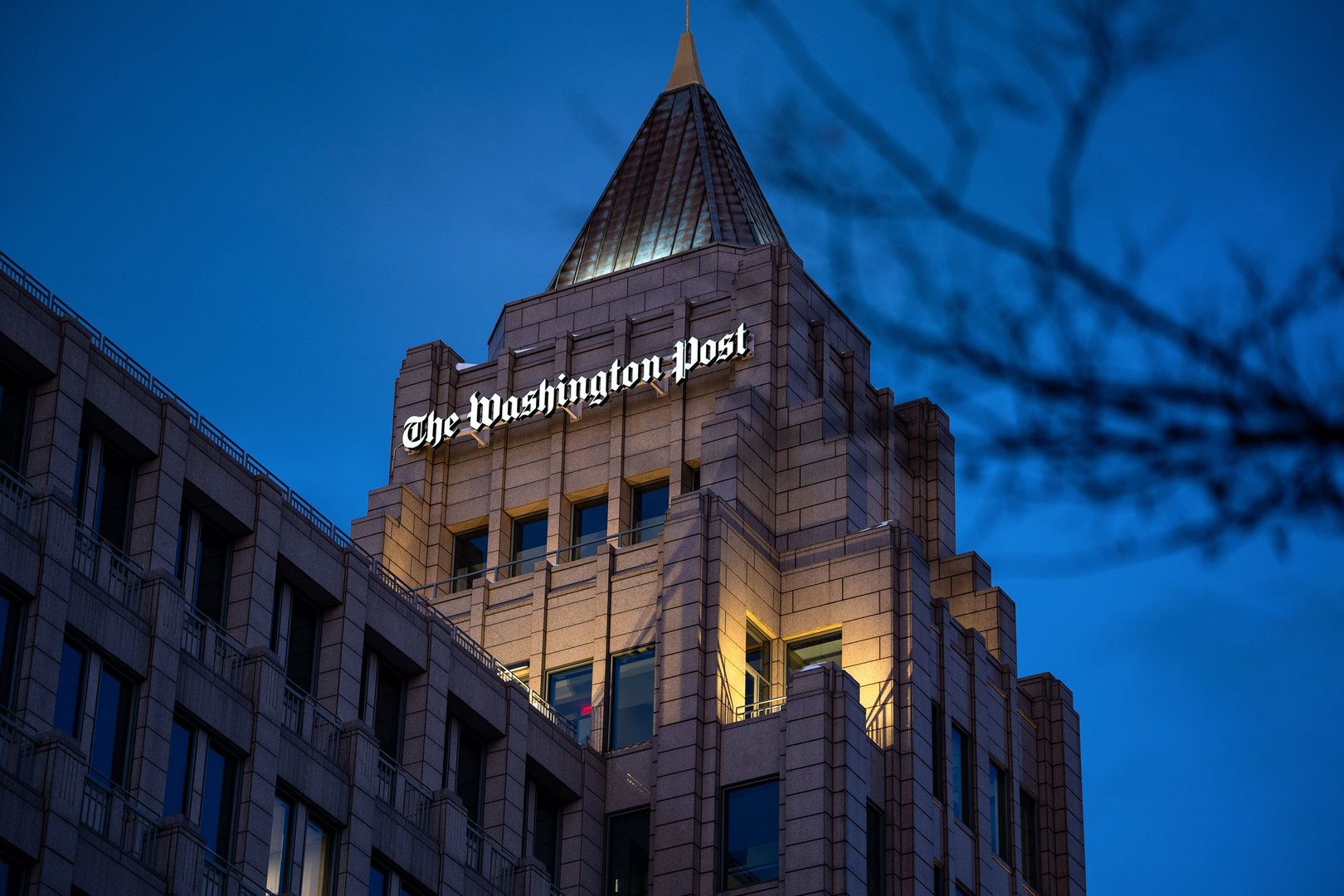
Washington Post Faces Industry Turmoil as Jeff Bezos-Led Ownership Oversees Major Layoffs
One-third of staff cut in sweeping newsroom restructuring amid financial pressures and audience shifts
The Washington Post has entered a turbulent new chapter as owner Jeff Bezos and senior leadership initiated deep cuts that will see roughly one-third of the newspaper’s workforce laid off in a sweeping reorganisation aimed at confronting financial losses and evolving audience behaviour.
The decision, announced this week by Executive Editor Matt Murray as a “strategic reset,” affects newsrooms across departments including sports, international coverage, local reporting and cultural desks, a marked departure from the Post’s historic broad editorial reach.
Murray told staff during an internal meeting that the scale of media disruption the organisation faces requires streamlining and sharper focus on areas deemed most distinctive, such as national news, investigations and specialised reporting, even as popular sections including the sports desk, Books section and signature podcast ‘‘Post Reports’’ are shuttered or restructured.
Hundreds of positions will be eliminated or reassigned, with some reporters redirected into feature-oriented roles.
The cuts reflect mounting financial strains at the Post.
Leadership has disclosed significant operating losses over recent years and noted steep declines in organic search traffic and reader engagement across digital platforms — trends that have made sustaining the newsroom’s expansive footprint increasingly difficult.
The company declined to provide detailed financial or subscription figures as the changes were announced.
Internally, the move has prompted sharp debate over the organisation’s future and ownership strategy.
Journalists and union representatives have publicly appealed to Bezos to reverse or soften the layoffs, warning that diminished coverage could erode the paper’s credibility and diminish its ability to serve its communities.
Some former editors have criticised aspects of the Post’s editorial direction in recent years and argued that decisions under current ownership contributed to subscriber losses and staff departures.
Nevertheless, leadership has framed the restructuring as necessary to equip the institution for the digital era and to concentrate resources where they can best drive relevance and sustainability.
The Washington Post’s restructuring follows broader trends in the U.S. news industry, where legacy publications are rethinking operational models amid competition from new media formats and artificial intelligence-driven content distribution.
The newsroom reductions at one of America’s most recognised news brands underscore the challenges facing major outlets as they balance journalistic mission with financial viability in a rapidly changing media ecosystem.
The decision, announced this week by Executive Editor Matt Murray as a “strategic reset,” affects newsrooms across departments including sports, international coverage, local reporting and cultural desks, a marked departure from the Post’s historic broad editorial reach.
Murray told staff during an internal meeting that the scale of media disruption the organisation faces requires streamlining and sharper focus on areas deemed most distinctive, such as national news, investigations and specialised reporting, even as popular sections including the sports desk, Books section and signature podcast ‘‘Post Reports’’ are shuttered or restructured.
Hundreds of positions will be eliminated or reassigned, with some reporters redirected into feature-oriented roles.
The cuts reflect mounting financial strains at the Post.
Leadership has disclosed significant operating losses over recent years and noted steep declines in organic search traffic and reader engagement across digital platforms — trends that have made sustaining the newsroom’s expansive footprint increasingly difficult.
The company declined to provide detailed financial or subscription figures as the changes were announced.
Internally, the move has prompted sharp debate over the organisation’s future and ownership strategy.
Journalists and union representatives have publicly appealed to Bezos to reverse or soften the layoffs, warning that diminished coverage could erode the paper’s credibility and diminish its ability to serve its communities.
Some former editors have criticised aspects of the Post’s editorial direction in recent years and argued that decisions under current ownership contributed to subscriber losses and staff departures.
Nevertheless, leadership has framed the restructuring as necessary to equip the institution for the digital era and to concentrate resources where they can best drive relevance and sustainability.
The Washington Post’s restructuring follows broader trends in the U.S. news industry, where legacy publications are rethinking operational models amid competition from new media formats and artificial intelligence-driven content distribution.
The newsroom reductions at one of America’s most recognised news brands underscore the challenges facing major outlets as they balance journalistic mission with financial viability in a rapidly changing media ecosystem.