Focus on the BIG picture.
Thursday, Jan 15, 2026
Outside the box.

White House Talks on Greenland End in Fundamental Disagreement Despite Working Group Agreement
U.S., Denmark and Greenland fail to bridge divide over Trump’s push for greater influence in the Arctic, underscoring Baltic tensions
High-level diplomatic talks in Washington this week between U.S. officials and representatives from Denmark and Greenland concluded without resolving deep disagreements over the future status of Greenland, demonstrating a significant diplomatic impasse amid mounting geopolitical tensions.
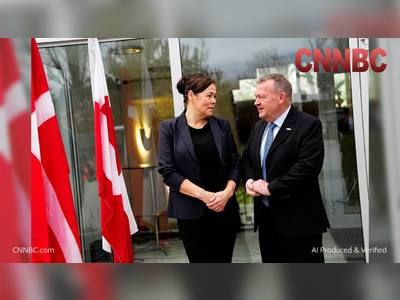
The meeting, attended by U.S. Vice President J.D. Vance and Secretary of State Marco Rubio alongside Danish Foreign Minister Lars Løkke Rasmussen and Greenlandic Foreign Minister Vivian Motzfeldt, highlighted divergent views on President Donald Trump’s insistence that American control or influence over the vast Arctic territory is essential to U.S. national security.
Rasmussen described the discussions as “frank but constructive” but stressed that a “fundamental disagreement” persists over the American position, with Denmark and Greenland rejecting the notion of ceding sovereignty or ownership of the semiautonomous territory.
Both ministers reaffirmed that Greenland is part of the Kingdom of Denmark and underscored the importance of respecting international law and self-determination throughout any future discussions.
Rasmussen emphasised that Denmark’s military and diplomatic commitment in the Arctic will continue as part of broader North Atlantic Treaty Organization cooperation, and that territorial integrity remains a non-negotiable principle for Copenhagen and Nuuk.
Despite the stalemate, the parties agreed to establish a high-level working group aimed at exploring potential avenues for cooperation on shared concerns, including security challenges posed by Russia and China in the Arctic.
The group will convene in the coming weeks to pursue dialogue on strategic issues while respecting Denmark and Greenland’s red lines.
The inability to resolve the core dispute, however, signals a sustained diplomatic challenge, with European partners reportedly strengthening military activities in the region to bolster collective defence and reaffirm alliance unity.
Trump’s continued emphasis on Greenland’s strategic value reflects broader U.S. efforts to position itself in the High North amid increasing geopolitical competition, even as allied capitals seek to manage the relationship through coordinated defence and diplomacy.
The meeting, attended by U.S. Vice President J.D. Vance and Secretary of State Marco Rubio alongside Danish Foreign Minister Lars Løkke Rasmussen and Greenlandic Foreign Minister Vivian Motzfeldt, highlighted divergent views on President Donald Trump’s insistence that American control or influence over the vast Arctic territory is essential to U.S. national security.
Rasmussen described the discussions as “frank but constructive” but stressed that a “fundamental disagreement” persists over the American position, with Denmark and Greenland rejecting the notion of ceding sovereignty or ownership of the semiautonomous territory.
Both ministers reaffirmed that Greenland is part of the Kingdom of Denmark and underscored the importance of respecting international law and self-determination throughout any future discussions.
Rasmussen emphasised that Denmark’s military and diplomatic commitment in the Arctic will continue as part of broader North Atlantic Treaty Organization cooperation, and that territorial integrity remains a non-negotiable principle for Copenhagen and Nuuk.
Despite the stalemate, the parties agreed to establish a high-level working group aimed at exploring potential avenues for cooperation on shared concerns, including security challenges posed by Russia and China in the Arctic.
The group will convene in the coming weeks to pursue dialogue on strategic issues while respecting Denmark and Greenland’s red lines.
The inability to resolve the core dispute, however, signals a sustained diplomatic challenge, with European partners reportedly strengthening military activities in the region to bolster collective defence and reaffirm alliance unity.
Trump’s continued emphasis on Greenland’s strategic value reflects broader U.S. efforts to position itself in the High North amid increasing geopolitical competition, even as allied capitals seek to manage the relationship through coordinated defence and diplomacy.