Focus on the BIG picture.
Monday, Jan 05, 2026
Outside the box.

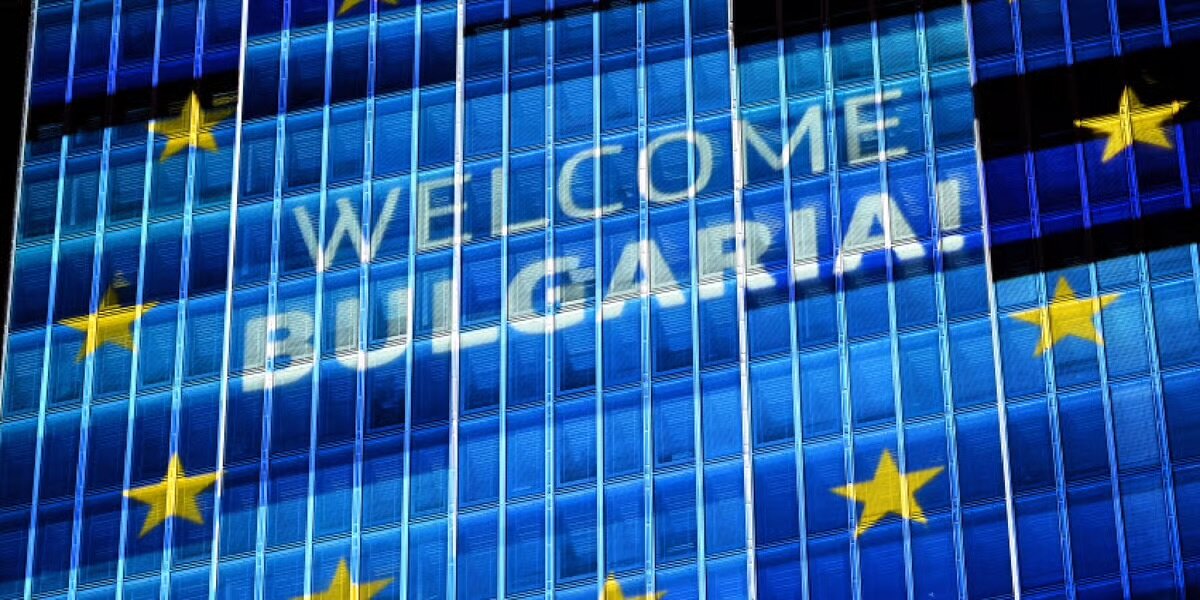
Bulgaria Switches to the Euro, Becoming the Twenty-First Member of the Currency Union
The lev begins a short dual-circulation phase in January as prices, bank accounts, and cash exchange rules shift under a fixed conversion rate.
Bulgaria adopted the euro on the first of January, formally entering the euro area as its twenty-first member and replacing the lev after years of preparation.
The changeover is being managed through a fixed conversion rate of one euro to one point nine five five eight three Bulgarian lev.
During January, the government is allowing cash payments in lev while returning change in euros, a transition designed to keep day-to-day commerce moving as the old currency is withdrawn.
In the run-up to the switch, retailers were required to display prices in both currencies.
Bank accounts were converted automatically to euros, limiting disruption for households and businesses.
Authorities have set out a defined window for exchanging old cash without fees through banks and post offices until the end of June, with the central bank offering fee-free exchange beyond that date.
Supporters of the move argue that a single currency reduces friction for trade, investment, online price comparisons, and travel, while removing routine conversion costs for companies that do business across the euro area.
Bulgaria also gains a seat at the European Central Bank’s governing council, where interest-rate decisions and monetary policy are set.
Public opinion inside Bulgaria remains divided.
Many citizens are uneasy about the potential for price increases during the conversion, especially if businesses round prices upward, while others view the lev as an important symbol of national identity.
Bulgaria’s entry cements a long-promised currency shift and tests how smoothly everyday purchasing power can be protected during a major monetary transition.
The changeover is being managed through a fixed conversion rate of one euro to one point nine five five eight three Bulgarian lev.
During January, the government is allowing cash payments in lev while returning change in euros, a transition designed to keep day-to-day commerce moving as the old currency is withdrawn.
In the run-up to the switch, retailers were required to display prices in both currencies.
Bank accounts were converted automatically to euros, limiting disruption for households and businesses.
Authorities have set out a defined window for exchanging old cash without fees through banks and post offices until the end of June, with the central bank offering fee-free exchange beyond that date.
Supporters of the move argue that a single currency reduces friction for trade, investment, online price comparisons, and travel, while removing routine conversion costs for companies that do business across the euro area.
Bulgaria also gains a seat at the European Central Bank’s governing council, where interest-rate decisions and monetary policy are set.
Public opinion inside Bulgaria remains divided.
Many citizens are uneasy about the potential for price increases during the conversion, especially if businesses round prices upward, while others view the lev as an important symbol of national identity.
Bulgaria’s entry cements a long-promised currency shift and tests how smoothly everyday purchasing power can be protected during a major monetary transition.