Focus on the BIG picture.
Friday, Jan 16, 2026
Outside the box.

Key Outcomes from White House Talks on Greenland’s Strategic Future
High-level discussions in Washington highlight deep divisions between the United States and Danish and Greenlandic leaders over Arctic sovereignty and security cooperation
Senior officials from the United States, Denmark and Greenland met at the White House in mid-January to address mounting tensions over the future of the Arctic island of Greenland, but the talks concluded without consensus, leaving fundamental disagreements unaddressed.
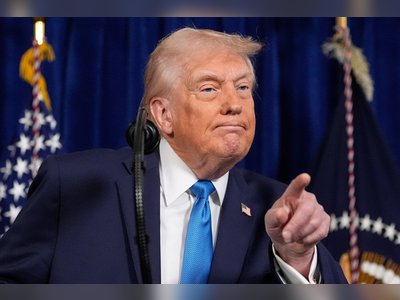
President Donald Trump reiterated that Greenland’s geographic position and resources make it vital to U.S. national security, pressing Washington’s case for enhanced American influence in the region.
Danish and Greenlandic leaders reaffirmed that Greenland remains part of the Kingdom of Denmark, emphatically rejecting any notion of transfer of sovereignty and insisting that any future decisions must be made by its people.
The divergent positions underscored the diplomatic challenges confronting the discussions.
While participants agreed to form a high-level U.S.-Danish-Greenlandic working group to explore shared security concerns in the Arctic and address differing strategic priorities, the meeting did not yield a breakthrough or substantive compromise on Greenland’s status.
The working group aims to facilitate ongoing dialogue on defence cooperation, economic development and broader Arctic strategy, reflecting a commitment to maintaining diplomatic engagement despite deep disagreement.
Denmark’s foreign minister described the White House discussions as frank yet marked by a “fundamental disagreement,” emphasising that Denmark remains steadfast in its position that Greenland is not for sale and must not be annexed or transferred to any other nation.
Greenland’s leadership echoed this stance, reaffirming its pursuit of self-determination and rejecting external pressure, even as U.S. officials stress that countering perceived threats from rival powers such as Russia and China requires stronger Western cooperation in the Arctic.
The unresolved talks have prompted shifts in NATO and regional dynamics, with several European allies reinforcing their military presence on and around Greenland under “Operation Arctic Endurance,” a collective effort to reassure Danish sovereignty and contribute to Arctic defence readiness.
Though the United States and its partners share concerns about strategic competition in the North, the unwillingness to compromise on Greenland’s political future highlights persistent geopolitical friction.
Public and political reactions have been mixed, including within the United States, where only a minority of Americans support any form of acquisition, and within Greenland itself, where leaders and citizens alike have asserted a clear preference for autonomy and continued ties with Denmark.
As the working group begins its work, both sides have signalled a willingness to continue diplomatic engagement, even as core disputes over sovereignty and security remain unresolved, shaping the next phase of U.S.–Arctic policy discussions.
President Donald Trump reiterated that Greenland’s geographic position and resources make it vital to U.S. national security, pressing Washington’s case for enhanced American influence in the region.
Danish and Greenlandic leaders reaffirmed that Greenland remains part of the Kingdom of Denmark, emphatically rejecting any notion of transfer of sovereignty and insisting that any future decisions must be made by its people.
The divergent positions underscored the diplomatic challenges confronting the discussions.
While participants agreed to form a high-level U.S.-Danish-Greenlandic working group to explore shared security concerns in the Arctic and address differing strategic priorities, the meeting did not yield a breakthrough or substantive compromise on Greenland’s status.
The working group aims to facilitate ongoing dialogue on defence cooperation, economic development and broader Arctic strategy, reflecting a commitment to maintaining diplomatic engagement despite deep disagreement.
Denmark’s foreign minister described the White House discussions as frank yet marked by a “fundamental disagreement,” emphasising that Denmark remains steadfast in its position that Greenland is not for sale and must not be annexed or transferred to any other nation.
Greenland’s leadership echoed this stance, reaffirming its pursuit of self-determination and rejecting external pressure, even as U.S. officials stress that countering perceived threats from rival powers such as Russia and China requires stronger Western cooperation in the Arctic.
The unresolved talks have prompted shifts in NATO and regional dynamics, with several European allies reinforcing their military presence on and around Greenland under “Operation Arctic Endurance,” a collective effort to reassure Danish sovereignty and contribute to Arctic defence readiness.
Though the United States and its partners share concerns about strategic competition in the North, the unwillingness to compromise on Greenland’s political future highlights persistent geopolitical friction.
Public and political reactions have been mixed, including within the United States, where only a minority of Americans support any form of acquisition, and within Greenland itself, where leaders and citizens alike have asserted a clear preference for autonomy and continued ties with Denmark.
As the working group begins its work, both sides have signalled a willingness to continue diplomatic engagement, even as core disputes over sovereignty and security remain unresolved, shaping the next phase of U.S.–Arctic policy discussions.