Focus on the BIG picture.
Sunday, May 10, 2026
Outside the box.

Trump College Sports Committee Pushes Sweeping Reform Agenda and Urges Fast Congressional Action
A federal advisory effort on college athletics outlines wide-ranging concerns over compensation, transfers, and governance, signaling potential major restructuring of US college sports
A federal-level policy effort focused on US college athletics is accelerating pressure for structural reform across one of the country’s most commercially powerful amateur sports systems.
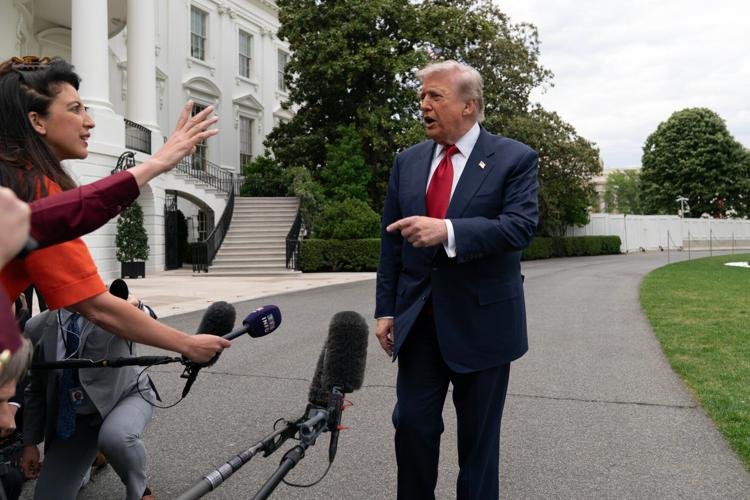
A committee associated with President Donald Trump’s administration has released a broad set of recommendations addressing financial regulation, athlete mobility, and governance in college sports, while urging Congress to move quickly on legislative action.
What is confirmed is that the committee has compiled a wide-ranging agenda that targets several long-standing disputes in college athletics, including athlete compensation rules, transfer portal regulation, scholarship stability, and the role of external commercial entities in shaping university sports programs.
The recommendations reflect growing political attention on a system that generates billions in revenue but has historically been governed by a patchwork of institutional rules rather than a single federal framework.
The core issue driving the report is systemic instability in college sports governance, particularly after recent legal and regulatory changes that expanded athlete rights to profit from name, image, and likeness deals.
That shift has significantly altered recruiting dynamics and funding structures across major athletic conferences, prompting calls for clearer national standards.
The committee’s proposals focus on several pressure points.
One is athlete compensation, where there is ongoing debate over whether current name, image, and likeness arrangements should be further formalized or replaced with a more centralized revenue-sharing model.
Another is the transfer portal system, which allows athletes to change schools more freely but has been criticized by coaches and administrators for creating roster instability.
Governance is another central concern.
The committee argues that existing oversight mechanisms, largely controlled by athletic associations and conferences, are no longer sufficient to manage the scale of commercial activity now embedded in college sports.
It calls for Congress to establish clearer legal authority over enforcement standards, eligibility rules, and financial transparency requirements.
The urgency behind the call for legislative action reflects mounting friction between universities, athletes, athletic conferences, and commercial partners.
Without federal intervention, different states and institutions are expected to continue adopting divergent rules, potentially deepening competitive imbalances between programs with vastly different financial resources.
Supporters of reform argue that a unified federal framework could stabilize the system, reduce legal uncertainty, and provide consistent protections for student-athletes.
Critics, however, warn that rapid legislative intervention could disrupt existing agreements and further complicate the evolving landscape of athlete compensation and mobility.
The broader stakes extend beyond sports administration.
College athletics, particularly football and basketball, function as major revenue engines for universities and are closely tied to broadcasting contracts, alumni fundraising, and institutional branding.
Any significant regulatory shift would therefore affect not only athletes but also university finances and media markets.
The committee’s push places responsibility squarely on Congress to decide whether to codify new national standards or allow continued evolution through court decisions and private agreements.
The immediate implication is increased legislative pressure, with stakeholders across college athletics preparing for potential federal intervention that could redefine how amateur sports operate in the United States.
A committee associated with President Donald Trump’s administration has released a broad set of recommendations addressing financial regulation, athlete mobility, and governance in college sports, while urging Congress to move quickly on legislative action.
What is confirmed is that the committee has compiled a wide-ranging agenda that targets several long-standing disputes in college athletics, including athlete compensation rules, transfer portal regulation, scholarship stability, and the role of external commercial entities in shaping university sports programs.
The recommendations reflect growing political attention on a system that generates billions in revenue but has historically been governed by a patchwork of institutional rules rather than a single federal framework.
The core issue driving the report is systemic instability in college sports governance, particularly after recent legal and regulatory changes that expanded athlete rights to profit from name, image, and likeness deals.
That shift has significantly altered recruiting dynamics and funding structures across major athletic conferences, prompting calls for clearer national standards.
The committee’s proposals focus on several pressure points.
One is athlete compensation, where there is ongoing debate over whether current name, image, and likeness arrangements should be further formalized or replaced with a more centralized revenue-sharing model.
Another is the transfer portal system, which allows athletes to change schools more freely but has been criticized by coaches and administrators for creating roster instability.
Governance is another central concern.
The committee argues that existing oversight mechanisms, largely controlled by athletic associations and conferences, are no longer sufficient to manage the scale of commercial activity now embedded in college sports.
It calls for Congress to establish clearer legal authority over enforcement standards, eligibility rules, and financial transparency requirements.
The urgency behind the call for legislative action reflects mounting friction between universities, athletes, athletic conferences, and commercial partners.
Without federal intervention, different states and institutions are expected to continue adopting divergent rules, potentially deepening competitive imbalances between programs with vastly different financial resources.
Supporters of reform argue that a unified federal framework could stabilize the system, reduce legal uncertainty, and provide consistent protections for student-athletes.
Critics, however, warn that rapid legislative intervention could disrupt existing agreements and further complicate the evolving landscape of athlete compensation and mobility.
The broader stakes extend beyond sports administration.
College athletics, particularly football and basketball, function as major revenue engines for universities and are closely tied to broadcasting contracts, alumni fundraising, and institutional branding.
Any significant regulatory shift would therefore affect not only athletes but also university finances and media markets.
The committee’s push places responsibility squarely on Congress to decide whether to codify new national standards or allow continued evolution through court decisions and private agreements.
The immediate implication is increased legislative pressure, with stakeholders across college athletics preparing for potential federal intervention that could redefine how amateur sports operate in the United States.