Focus on the BIG picture.
Sunday, May 10, 2026
Outside the box.

Trump–Xi Summit Raises Stakes for Jimmy Lai as U.S. Pushes Beijing on High-Profile Prisoner
With a new Trump–Xi meeting approaching, reports suggest Hong Kong media mogul Jimmy Lai’s imprisonment has become a potential bargaining chip in broader U.S.–China negotiations over trade, security, and political concessions.
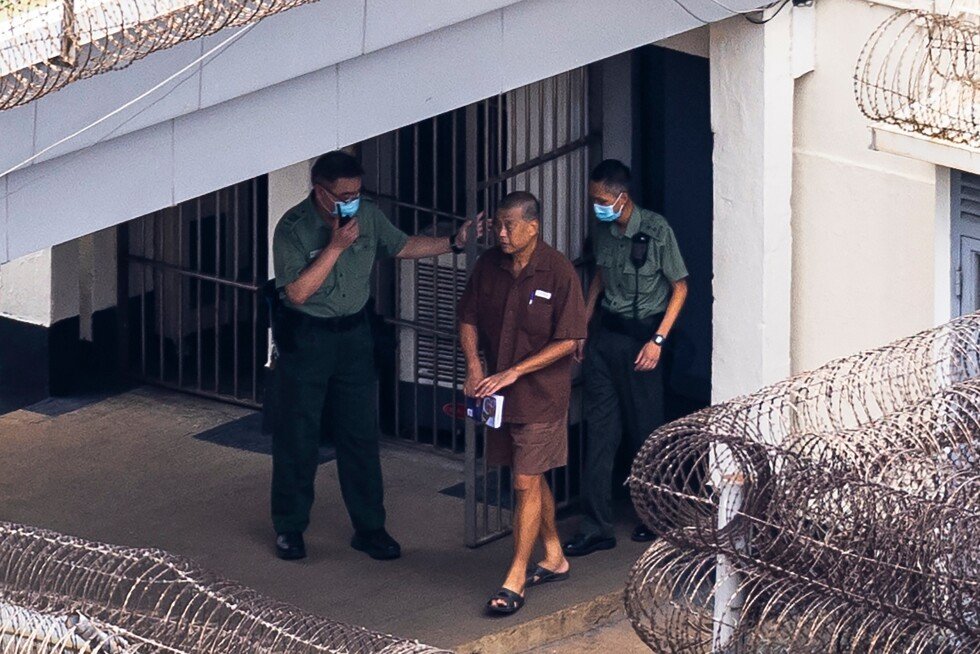
A high-level diplomatic negotiation between the United States and China is emerging as a potential inflection point in the fate of Jimmy Lai, the imprisoned Hong Kong media tycoon whose case has become a global symbol of the city’s tightening political environment under Beijing’s national security framework.
What is confirmed is that Lai, founder of the now-closed pro-democracy newspaper Apple Daily, is serving a lengthy prison sentence in Hong Kong following convictions under the territory’s national security law.
He was found guilty of charges including collusion with foreign forces and sedition after a prolonged trial that drew international criticism for its handling and for its implications for press freedom.
Lai, who is in his late seventies and has reported health concerns, has become one of the most prominent jailed figures linked to Hong Kong’s post-2019 political crackdown.
His case has repeatedly been raised by Western officials and lawmakers, who argue that his prosecution reflects the broader erosion of political dissent and independent media in the territory.
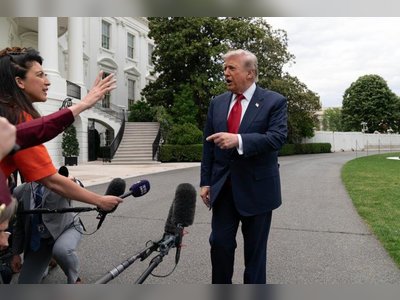
The new development centers on diplomatic signaling ahead of an expected meeting between U.S. President Donald Trump and Chinese President Xi Jinping.
Multiple recent accounts indicate that U.S. officials and bipartisan lawmakers have urged Trump to raise Lai’s imprisonment directly with Xi during the summit, framing the issue as both humanitarian and geopolitical in nature.
What is newly emerging is the suggestion that Lai’s fate could become part of broader negotiations between Washington and Beijing.
These talks are expected to cover trade tensions, technology controls, and regional security issues.
In this context, Lai’s case is increasingly viewed not only as a human rights issue but also as a potential diplomatic bargaining point, though no formal linkage between his release and other policy areas has been confirmed.
Trump has previously signaled interest in Lai’s case in earlier interactions with Xi, and has publicly indicated support for raising the issue.
However, there is no confirmed indication of any agreement, condition, or structured negotiation tied specifically to Lai’s release.
Beijing’s position remains firmly tied to its national security framework in Hong Kong.
Chinese and Hong Kong authorities have consistently characterized Lai’s actions as criminal conduct involving foreign interference and attempts to undermine state authority.
They have rejected external criticism as interference in domestic legal matters.
The stakes in any discussion involving Lai extend beyond his individual case.
For the United States, pressing for his release aligns with broader messaging on political freedoms and judicial independence in Hong Kong.
For China, the case is closely linked to its post-2019 governance model for the territory, where national security laws have become a central instrument of control.
If Lai’s case is formally raised at the summit, it will test how far either side is willing to integrate human rights considerations into a negotiating framework otherwise dominated by economic and strategic rivalry.
Any movement—whether symbolic or substantive—would signal a shift in how both governments manage politically sensitive prisoners within broader diplomatic engagement.
As the summit approaches, Lai remains in custody in Hong Kong, and his case continues to sit at the intersection of domestic legal enforcement and international diplomatic pressure, with potential implications for how future U.S.–China engagements handle politically charged judicial cases.
What is confirmed is that Lai, founder of the now-closed pro-democracy newspaper Apple Daily, is serving a lengthy prison sentence in Hong Kong following convictions under the territory’s national security law.
He was found guilty of charges including collusion with foreign forces and sedition after a prolonged trial that drew international criticism for its handling and for its implications for press freedom.
Lai, who is in his late seventies and has reported health concerns, has become one of the most prominent jailed figures linked to Hong Kong’s post-2019 political crackdown.
His case has repeatedly been raised by Western officials and lawmakers, who argue that his prosecution reflects the broader erosion of political dissent and independent media in the territory.
The new development centers on diplomatic signaling ahead of an expected meeting between U.S. President Donald Trump and Chinese President Xi Jinping.
Multiple recent accounts indicate that U.S. officials and bipartisan lawmakers have urged Trump to raise Lai’s imprisonment directly with Xi during the summit, framing the issue as both humanitarian and geopolitical in nature.
What is newly emerging is the suggestion that Lai’s fate could become part of broader negotiations between Washington and Beijing.
These talks are expected to cover trade tensions, technology controls, and regional security issues.
In this context, Lai’s case is increasingly viewed not only as a human rights issue but also as a potential diplomatic bargaining point, though no formal linkage between his release and other policy areas has been confirmed.
Trump has previously signaled interest in Lai’s case in earlier interactions with Xi, and has publicly indicated support for raising the issue.
However, there is no confirmed indication of any agreement, condition, or structured negotiation tied specifically to Lai’s release.
Beijing’s position remains firmly tied to its national security framework in Hong Kong.
Chinese and Hong Kong authorities have consistently characterized Lai’s actions as criminal conduct involving foreign interference and attempts to undermine state authority.
They have rejected external criticism as interference in domestic legal matters.
The stakes in any discussion involving Lai extend beyond his individual case.
For the United States, pressing for his release aligns with broader messaging on political freedoms and judicial independence in Hong Kong.
For China, the case is closely linked to its post-2019 governance model for the territory, where national security laws have become a central instrument of control.
If Lai’s case is formally raised at the summit, it will test how far either side is willing to integrate human rights considerations into a negotiating framework otherwise dominated by economic and strategic rivalry.
Any movement—whether symbolic or substantive—would signal a shift in how both governments manage politically sensitive prisoners within broader diplomatic engagement.
As the summit approaches, Lai remains in custody in Hong Kong, and his case continues to sit at the intersection of domestic legal enforcement and international diplomatic pressure, with potential implications for how future U.S.–China engagements handle politically charged judicial cases.