Focus on the BIG picture.
Sunday, May 10, 2026
Outside the box.

Trump-Linked Golf Redesign at D.C.’s East Potomac Park Sparks Fears Over Public Access
Plans to overhaul a historic public golf course on federal land face legal scrutiny and local opposition over concerns it could reduce affordable recreation space in Washington, D.C.
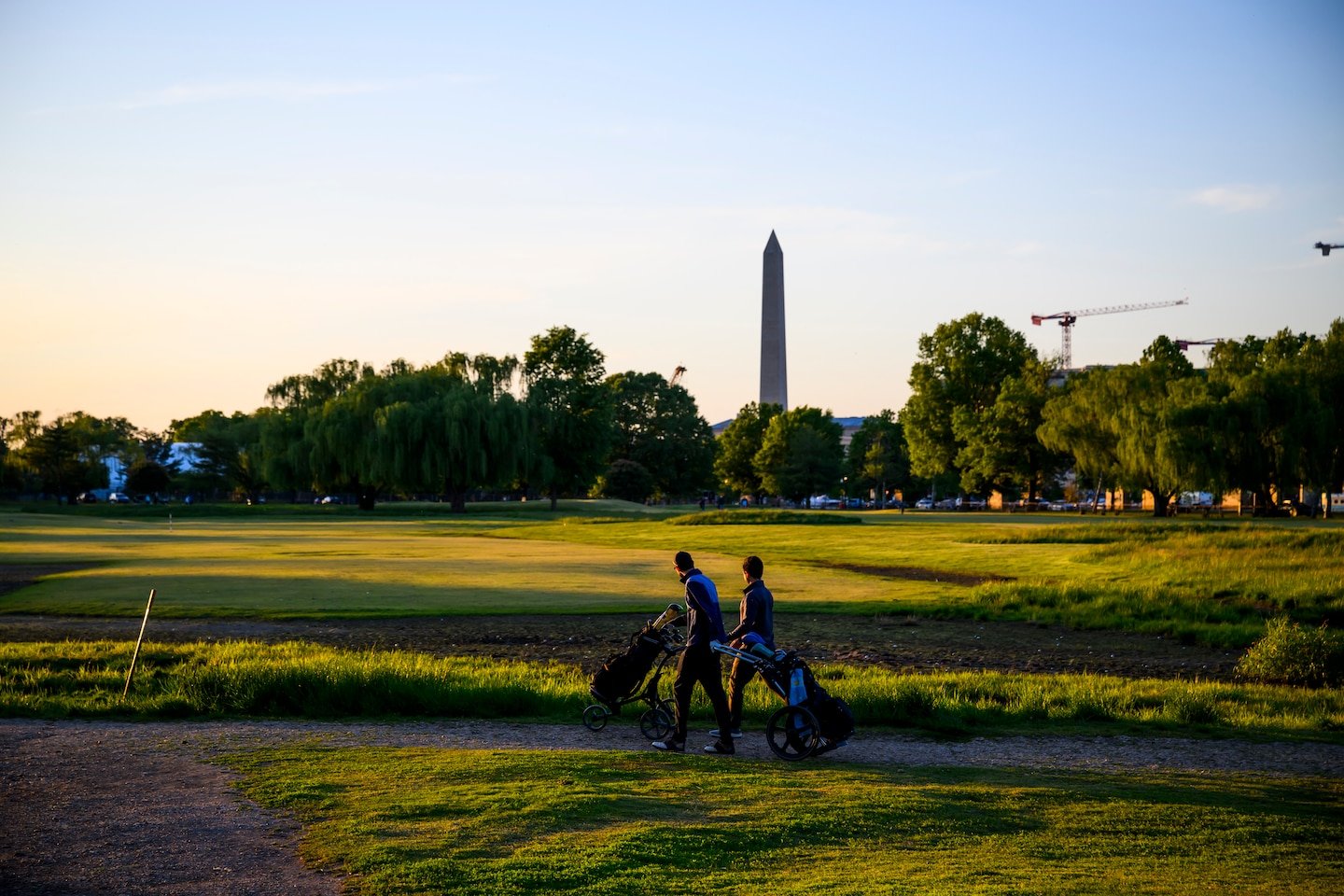
A federal land-use dispute in Washington, D.C. is intensifying over proposed changes to East Potomac Park’s public golf facilities, a long-standing recreational site now at the center of a broader debate about public access, redevelopment, and federal authority over urban parkland.
East Potomac Golf Links, located on a man-made peninsula between the Potomac River and the Washington Channel, is one of the capital’s oldest and most accessible public golf courses.
Managed on federal land overseen by the National Park Service, it has historically provided low-cost recreational access in a city where such space is limited.
What is confirmed is that recent federal management changes have altered how the course is operated, including shifts in leasing and oversight arrangements involving the nonprofit previously responsible for managing D.C.’s public golf system.
These changes have opened the door to a redevelopment process that includes proposals for major upgrades and possible redesign of the facility.
The proposed project associated with President Donald Trump’s broader golf development vision would significantly reshape the course, potentially upgrading it to a higher-profile layout with expanded infrastructure.
Supporters argue that the current facility is outdated and underperforming, and that modernization would improve quality while keeping the land in recreational use.
Opponents argue the opposite: that the redesign risks transforming a public, low-cost facility into a more exclusive venue that could limit access for everyday users.
Local golfers, community advocates, and preservation groups have expressed concern that the project could fundamentally change the character of the site and reduce affordable recreation opportunities in a densely populated urban area.
Legal challenges have added further complexity.
Litigation involving federal oversight of the site has raised questions about whether required environmental and historic preservation reviews were completed before significant planning steps were taken.
A court has required advance notice before major physical alterations, signaling judicial scrutiny over how quickly changes can proceed.
Federal officials have defended their authority to manage and upgrade the property, emphasizing that formal construction approval has not yet been finalized and that planning and environmental review processes remain ongoing.
At the same time, detailed conceptual plans and public-facing materials have circulated, contributing to uncertainty about how far advanced the redevelopment effort is.
The controversy also highlights broader governance issues around federally owned parkland in Washington, D.C., where land is held in trust for public use.
East Potomac Park was originally designed as a public recreation space, and any major shift in its use raises questions about compliance with its founding mandate.
Beyond legal and political disputes, the case reflects a structural tension in urban recreation policy: whether aging public facilities should be preserved in their current accessible form or restructured through private or semi-private investment models that may improve quality but risk reducing inclusivity.
For now, the project remains in a contested planning stage shaped by legal oversight and public opposition.
Any physical transformation of East Potomac Park will depend on completion of regulatory review, court requirements, and final federal approval processes before moving forward.
East Potomac Golf Links, located on a man-made peninsula between the Potomac River and the Washington Channel, is one of the capital’s oldest and most accessible public golf courses.
Managed on federal land overseen by the National Park Service, it has historically provided low-cost recreational access in a city where such space is limited.
What is confirmed is that recent federal management changes have altered how the course is operated, including shifts in leasing and oversight arrangements involving the nonprofit previously responsible for managing D.C.’s public golf system.
These changes have opened the door to a redevelopment process that includes proposals for major upgrades and possible redesign of the facility.
The proposed project associated with President Donald Trump’s broader golf development vision would significantly reshape the course, potentially upgrading it to a higher-profile layout with expanded infrastructure.
Supporters argue that the current facility is outdated and underperforming, and that modernization would improve quality while keeping the land in recreational use.
Opponents argue the opposite: that the redesign risks transforming a public, low-cost facility into a more exclusive venue that could limit access for everyday users.
Local golfers, community advocates, and preservation groups have expressed concern that the project could fundamentally change the character of the site and reduce affordable recreation opportunities in a densely populated urban area.
Legal challenges have added further complexity.
Litigation involving federal oversight of the site has raised questions about whether required environmental and historic preservation reviews were completed before significant planning steps were taken.
A court has required advance notice before major physical alterations, signaling judicial scrutiny over how quickly changes can proceed.
Federal officials have defended their authority to manage and upgrade the property, emphasizing that formal construction approval has not yet been finalized and that planning and environmental review processes remain ongoing.
At the same time, detailed conceptual plans and public-facing materials have circulated, contributing to uncertainty about how far advanced the redevelopment effort is.
The controversy also highlights broader governance issues around federally owned parkland in Washington, D.C., where land is held in trust for public use.
East Potomac Park was originally designed as a public recreation space, and any major shift in its use raises questions about compliance with its founding mandate.
Beyond legal and political disputes, the case reflects a structural tension in urban recreation policy: whether aging public facilities should be preserved in their current accessible form or restructured through private or semi-private investment models that may improve quality but risk reducing inclusivity.
For now, the project remains in a contested planning stage shaped by legal oversight and public opposition.
Any physical transformation of East Potomac Park will depend on completion of regulatory review, court requirements, and final federal approval processes before moving forward.