Focus on the BIG picture.
Sunday, Mar 15, 2026
Outside the box.

Trump’s New National Park Fee Policy Sparks Operational Disruption and Visitor Backlash
A new surcharge on international visitors at U.S. national parks is causing delays, confusion and concern over tourism and staffing
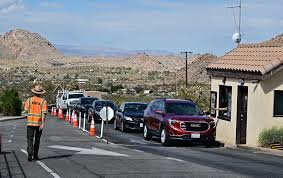
A sweeping change to national park entry fees introduced by the U.S. government at the start of 2026 has generated significant operational disruption and visitor dissatisfaction at some of America’s most iconic landscapes.
Under the new policy, international visitors to eleven major national parks — including Yellowstone, Yosemite and the Grand Canyon — must now pay an additional one hundred-dollar surcharge on top of regular entrance fees, and the cost of an annual “America the Beautiful” pass for non-residents has risen sharply, prompting confusion and long delays at park gates.
The policy, enacted on January one, reflects an executive order issued by President Donald Trump that directs the Department of the Interior to adjust fee structures so that foreign visitors contribute more toward the upkeep and maintenance of national parks.
Officials say the additional revenue will be used to address mounting infrastructure needs and to help keep parks accessible and well maintained for U.S. residents.
However, park staff report that the implementation has been chaotic due to inadequate signage, understaffing and the added burden of verifying visitors’ residency status.
Many entrance stations have experienced longer lines and frustrated tourists, some of whom have abandoned their visits rather than pay the surcharge.
Workers at several parks have described the process of questioning visitors about residency and checking documentation as outside the scope of their normal duties and difficult to manage amid broader workforce shortages at the National Park Service.
The changes have also triggered legal challenges and criticism from advocacy groups that argue the fee structure is unlawful because federal regulations do not authorize differentiated pricing based on citizenship or residency.
In one lawsuit, plaintiffs contend that the revised “America the Beautiful” pass — which now features President Trump’s image alongside other figures — departs from established rules for pass design and fee setting.
While the Interior Department maintains the surcharge is a modest contribution relative to total travel expenses and asserts that the parks remain welcoming to lawful visitors from around the world, community organisations near national parks are watching closely for potential impacts on tourism and local economies.
The full effect of these fee changes remains uncertain, but park managers warn that the early days of implementation have strained resources and complicated operations during a critical travel season.
Under the new policy, international visitors to eleven major national parks — including Yellowstone, Yosemite and the Grand Canyon — must now pay an additional one hundred-dollar surcharge on top of regular entrance fees, and the cost of an annual “America the Beautiful” pass for non-residents has risen sharply, prompting confusion and long delays at park gates.
The policy, enacted on January one, reflects an executive order issued by President Donald Trump that directs the Department of the Interior to adjust fee structures so that foreign visitors contribute more toward the upkeep and maintenance of national parks.
Officials say the additional revenue will be used to address mounting infrastructure needs and to help keep parks accessible and well maintained for U.S. residents.
However, park staff report that the implementation has been chaotic due to inadequate signage, understaffing and the added burden of verifying visitors’ residency status.
Many entrance stations have experienced longer lines and frustrated tourists, some of whom have abandoned their visits rather than pay the surcharge.
Workers at several parks have described the process of questioning visitors about residency and checking documentation as outside the scope of their normal duties and difficult to manage amid broader workforce shortages at the National Park Service.
The changes have also triggered legal challenges and criticism from advocacy groups that argue the fee structure is unlawful because federal regulations do not authorize differentiated pricing based on citizenship or residency.
In one lawsuit, plaintiffs contend that the revised “America the Beautiful” pass — which now features President Trump’s image alongside other figures — departs from established rules for pass design and fee setting.
While the Interior Department maintains the surcharge is a modest contribution relative to total travel expenses and asserts that the parks remain welcoming to lawful visitors from around the world, community organisations near national parks are watching closely for potential impacts on tourism and local economies.
The full effect of these fee changes remains uncertain, but park managers warn that the early days of implementation have strained resources and complicated operations during a critical travel season.