Focus on the BIG picture.
Monday, Mar 23, 2026
Outside the box.

0:00
0:00
White House Unveils National AI Policy Framework to Accelerate Innovation and Strengthen U.S. Leadership
New legislative blueprint prioritises federal standards, reduced regulatory barriers and rapid deployment of artificial intelligence technologies
The White House has released a sweeping national policy framework for artificial intelligence, setting out a clear strategy to accelerate innovation, reinforce American technological leadership and establish a unified federal approach to regulating the rapidly evolving sector.
The four-page legislative blueprint, presented to Congress, outlines a series of recommendations designed to guide the development of comprehensive national AI legislation.
Central to the proposal is the creation of a single federal standard that would preempt a patchwork of state-level rules, ensuring consistency across the country and supporting the United States’ competitiveness in the global technology race.
The framework emphasises a streamlined, innovation-focused approach, urging lawmakers to avoid creating new regulatory agencies and instead rely on existing sector-specific regulators with established expertise.
It also proposes the use of regulatory “sandboxes” to allow companies to test and deploy AI systems in controlled environments, encouraging rapid development while maintaining targeted safeguards.
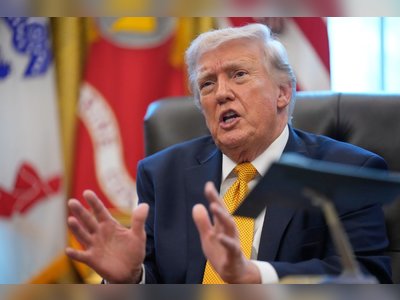
Officials describe the initiative as a decisive step by President Donald Trump’s administration to position the United States at the forefront of artificial intelligence.
The plan highlights the importance of reducing barriers to innovation, expanding access to federal datasets for training advanced AI models, and ensuring that American companies can compete effectively with international rivals.
In addition to innovation measures, the framework addresses key societal concerns.
It calls for stronger protections for children online, safeguards for intellectual property, and policies aimed at preventing censorship of lawful speech through AI systems.
It also acknowledges the need to manage the technology’s impact on energy consumption and the workforce, recommending further study and targeted policy responses.
The proposal balances federal authority with limited state involvement, suggesting that while states should not impose burdensome AI-specific regulations, they may continue to enforce general laws in areas such as consumer protection and child safety.
This approach is intended to preserve essential protections while preventing regulatory fragmentation that could slow technological progress.
Although the framework does not carry the force of law, it signals the administration’s priorities and serves as a foundation for forthcoming legislative efforts.
Congressional approval will be required to implement its recommendations, and discussions are expected to continue amid differing views on the scope and pace of regulation.
The release marks a significant milestone in the United States’ approach to artificial intelligence policy, underscoring a commitment to innovation, national strength and strategic leadership in one of the defining technologies of the modern era.
The four-page legislative blueprint, presented to Congress, outlines a series of recommendations designed to guide the development of comprehensive national AI legislation.
Central to the proposal is the creation of a single federal standard that would preempt a patchwork of state-level rules, ensuring consistency across the country and supporting the United States’ competitiveness in the global technology race.
The framework emphasises a streamlined, innovation-focused approach, urging lawmakers to avoid creating new regulatory agencies and instead rely on existing sector-specific regulators with established expertise.
It also proposes the use of regulatory “sandboxes” to allow companies to test and deploy AI systems in controlled environments, encouraging rapid development while maintaining targeted safeguards.
Officials describe the initiative as a decisive step by President Donald Trump’s administration to position the United States at the forefront of artificial intelligence.
The plan highlights the importance of reducing barriers to innovation, expanding access to federal datasets for training advanced AI models, and ensuring that American companies can compete effectively with international rivals.
In addition to innovation measures, the framework addresses key societal concerns.
It calls for stronger protections for children online, safeguards for intellectual property, and policies aimed at preventing censorship of lawful speech through AI systems.
It also acknowledges the need to manage the technology’s impact on energy consumption and the workforce, recommending further study and targeted policy responses.
The proposal balances federal authority with limited state involvement, suggesting that while states should not impose burdensome AI-specific regulations, they may continue to enforce general laws in areas such as consumer protection and child safety.
This approach is intended to preserve essential protections while preventing regulatory fragmentation that could slow technological progress.
Although the framework does not carry the force of law, it signals the administration’s priorities and serves as a foundation for forthcoming legislative efforts.
Congressional approval will be required to implement its recommendations, and discussions are expected to continue amid differing views on the scope and pace of regulation.
The release marks a significant milestone in the United States’ approach to artificial intelligence policy, underscoring a commitment to innovation, national strength and strategic leadership in one of the defining technologies of the modern era.