As President Trump Leads, Democrats Seek to Recast Themselves as Agents of Reform
With Donald Trump firmly back in the White House after his 2024 election victory, Democratic Party leaders and lawmakers are actively redefining their political identity amid internal debates over how best to challenge Republican dominance and appeal to a wider electorate.
Amid midterm campaign strategising, prominent Democrats have openly acknowledged that the party has struggled with a reputation as defenders of the existing political order rather than as advocates for meaningful change, prompting a tactical shift in messaging and positioning.
In recent interviews and internal discussions, senior Democratic figures have emphasised the need to reconcile two competing imperatives: presenting themselves as reformers willing to disrupt entrenched systems viewed as failing many Americans while also defending federal institutions that Republicans, including President Trump, have sought to scale back.
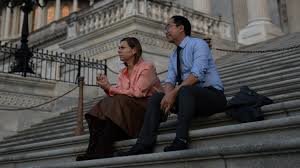
Senators including Chris Van Hollen and Elissa Slotkin have articulated a vision in which Democrats will “shake up the status quo” and “embrace change” without abandoning the party’s core role in safeguarding democratic norms.
This rhetorical shift unfolds against the backdrop of deep voter concerns about affordability, economic stagnation and political mistrust, issues Democrats hope to centralise in their 2026 midterm campaign and beyond.
Polling presented to congressional Democrats earlier in the year suggested that much of the electorate associates the party with maintaining the federal bureaucracy, a perception holding even as Republicans pursue reductions to government agencies and programmes.
The challenge for Democratic strategists, therefore, is to thread the needle between advocating structural reforms and defending the efficacy of government institutions.
Some Democratic lawmakers and candidates are framing the party’s transformation in terms of reform rather than wholesale revolution.
Representative Jason Crow has emphasised ending ineffective programmes and reforming underperforming agencies, while Representative Ro Khanna has pushed for a vision of change that holds powerful interests accountable within constitutional bounds.
These efforts aim to resonate with voters who see politics as broken but remain sceptical of simplistic anti-establishment appeals.
The evolving narrative also reflects broader introspection within the Democratic Party after recent electoral setbacks and internal debates over future direction.
Party leaders are navigating how to keep core constituencies engaged while projecting renewal, particularly with the 2026 midterms and 2028 presidential cycle looming.
By strategically embracing elements of disruption language and policy reform, Democrats are seeking to balance their role as guarantors of functional governance with a more dynamic image that can energise disaffected voters and counter Republican narratives going into upcoming elections.