Focus on the BIG picture.
Tuesday, Dec 16, 2025
Outside the box.

Court Filing Intensifies Legal Battle Over Trump’s White House Ballroom Project
Latest filing defends the administration’s authority and frames the White House ballroom construction as essential amid preservationist legal challenges
A federal court filing submitted by the Trump administration has provided new details in an escalating legal dispute over the construction of a planned ballroom on the White House grounds, asserting that the project is justified on national security grounds and that opponents lack legal standing to halt progress.
The filing responded directly to a lawsuit filed by the National Trust for Historic Preservation, which last week asked a U.S. District Court to stop the project until it undergoes comprehensive independent reviews, environmental assessments, public comment and congressional approval.
In its 36-page response, the administration argued that President Donald Trump possesses broad authority to modify and modernise the White House without external approval, invoking historical precedent and executive powers.
The filing included a statement from the deputy director of the U.S. Secret Service asserting that further work at the former site of the East Wing is necessary to satisfy ongoing safety and security requirements, framing those needs as integral to the design and function of the new venue.
The administration also challenged the legal standing of the preservation group, contending that it cannot demonstrate an injury that would give it the right to contest the project in court.
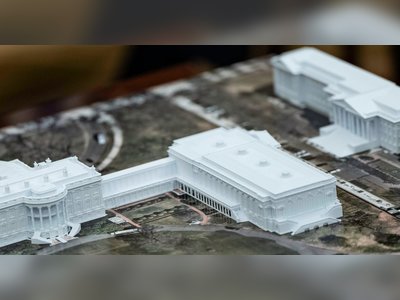
Preservationists have characterised the demolition of the East Wing and the construction of the roughly ninety-thousand-square-foot ballroom as a significant departure from established federal procedures governing changes to historic federal properties.
In the original complaint, the National Trust for Historic Preservation argued that the administration violated multiple federal statutes by bypassing reviews by the National Capital Planning Commission and the Commission of Fine Arts and by failing to conduct mandatory environmental assessments before commencing demolition and construction activities.
The suit also highlighted the absence of congressional authorisation for altering and adding to the iconic presidential residence.
Trump’s defenders in and outside government have maintained that the project, funded through private donations, falls within the president’s discretionary authority to renovate and enhance the White House complex.
Supporters emphasise the functional need for a larger formal event space capable of hosting significant diplomatic and official gatherings, potentially reducing reliance on temporary venues.
They argue that modernising the White House enhances its capacity to serve U.S. diplomatic and ceremonial needs effectively.
Legal analysts say the case may soon hinge on the interpretation of executive authority over federal property and whether longstanding practices must give way to contemporary statutory requirements.
A hearing on the request for a temporary injunction to halt construction is scheduled in the coming days, and both sides are preparing to present arguments on the interplay between presidential prerogatives and statutory preservation mandates.
The outcome of the case could have far-reaching implications for future federal construction projects at historic sites, especially those initiated without traditional oversight and public participation.
The dispute has drawn attention from stakeholders in historic preservation, legal scholars and political commentators, reflecting broader debates over governance, heritage conservation and presidential authority.
As the legal process unfolds, the administration has made clear it intends to vigorously defend its position and proceed with the ballroom project as envisioned, reinforcing its commitment to both national security considerations and the functional expansion of the White House’s capacity to host large-scale events before the president’s second term concludes in twenty-twenty-nine.
The filing responded directly to a lawsuit filed by the National Trust for Historic Preservation, which last week asked a U.S. District Court to stop the project until it undergoes comprehensive independent reviews, environmental assessments, public comment and congressional approval.
In its 36-page response, the administration argued that President Donald Trump possesses broad authority to modify and modernise the White House without external approval, invoking historical precedent and executive powers.
The filing included a statement from the deputy director of the U.S. Secret Service asserting that further work at the former site of the East Wing is necessary to satisfy ongoing safety and security requirements, framing those needs as integral to the design and function of the new venue.
The administration also challenged the legal standing of the preservation group, contending that it cannot demonstrate an injury that would give it the right to contest the project in court.
Preservationists have characterised the demolition of the East Wing and the construction of the roughly ninety-thousand-square-foot ballroom as a significant departure from established federal procedures governing changes to historic federal properties.
In the original complaint, the National Trust for Historic Preservation argued that the administration violated multiple federal statutes by bypassing reviews by the National Capital Planning Commission and the Commission of Fine Arts and by failing to conduct mandatory environmental assessments before commencing demolition and construction activities.
The suit also highlighted the absence of congressional authorisation for altering and adding to the iconic presidential residence.
Trump’s defenders in and outside government have maintained that the project, funded through private donations, falls within the president’s discretionary authority to renovate and enhance the White House complex.
Supporters emphasise the functional need for a larger formal event space capable of hosting significant diplomatic and official gatherings, potentially reducing reliance on temporary venues.
They argue that modernising the White House enhances its capacity to serve U.S. diplomatic and ceremonial needs effectively.
Legal analysts say the case may soon hinge on the interpretation of executive authority over federal property and whether longstanding practices must give way to contemporary statutory requirements.
A hearing on the request for a temporary injunction to halt construction is scheduled in the coming days, and both sides are preparing to present arguments on the interplay between presidential prerogatives and statutory preservation mandates.
The outcome of the case could have far-reaching implications for future federal construction projects at historic sites, especially those initiated without traditional oversight and public participation.
The dispute has drawn attention from stakeholders in historic preservation, legal scholars and political commentators, reflecting broader debates over governance, heritage conservation and presidential authority.
As the legal process unfolds, the administration has made clear it intends to vigorously defend its position and proceed with the ballroom project as envisioned, reinforcing its commitment to both national security considerations and the functional expansion of the White House’s capacity to host large-scale events before the president’s second term concludes in twenty-twenty-nine.