Focus on the BIG picture.
Wednesday, Dec 17, 2025
Outside the box.

Not Only F-35s: Saudi Arabia to Gain Access to the World’s Most Sensitive Technology
The Trump administration has approved the sale of tens of thousands of advanced artificial intelligence chips to Saudi Arabia and the United Arab Emirates, reversing earlier export restrictions aimed at limiting technology leakage to China.
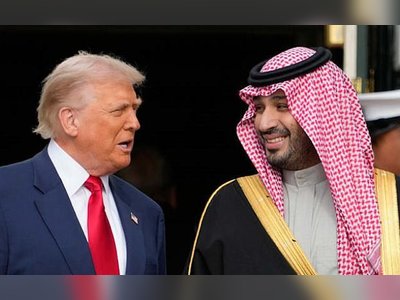
Not only fighter jets: as part of the visit by Saudi Crown Prince Mohammed bin Salman to Washington, the United States Department of Commerce approved the sale of up to seventy thousand advanced artificial intelligence chips to the Saudi AI venture Humain and to G42, a major technology conglomerate based in the United Arab Emirates.
The decision reverses a policy adopted in twenty twenty-three, during the previous phase of the administration, which restricted the export of advanced AI chips to forty countries, including Saudi Arabia.
That policy was designed, among other goals, to prevent the transfer of sensitive technologies to China.
According to reports, discussions with Gulf leaders on revising the policy have taken place quietly for months, following President Trump’s high-profile visit to the Gulf states in May.
Under the agreement, American companies will be permitted to sell up to thirty-five thousand Nvidia GB three hundred servers, or equivalent systems, to the two Gulf firms.
These servers include Nvidia’s B three hundred chips, part of the new Blackwell series, currently regarded as the most advanced artificial intelligence processors available on the market.
Nvidia’s main competitor in the chip sector, Advanced Micro Devices, has already signed a multi-billion-dollar agreement with Humain.
According to Bank of America estimates, total revenues for American companies from supplying graphics processors to Saudi Arabia alone could reach between fifteen and twenty billion dollars over several years.
Saudi Arabia and the United Arab Emirates have pledged investments totaling two point four trillion dollars in the United States.
Media reports also note that President Trump and members of his family hold business interests in both countries, including ventures in real estate and digital assets.
G42 is chaired by Sheikh Tahnoun bin Zayed, brother of UAE President Mohammed bin Zayed, who also serves as the country’s national security adviser.
He is widely regarded as a leading technology strategist, placing him in a role comparable to that of top global technology executives.
In the past, G42 maintained active ties with Chinese companies, including Huawei and the Beijing Genomics Institute.
Following public scrutiny, the company’s leadership stated that all previous investments in China had been fully divested.
Humain, which centralizes Saudi Arabia’s artificial intelligence initiatives, is led by Tareq Amin, a rising figure in the global technology sector and until recently the chief executive of Saudi Aramco.
Administration officials stated that the agreements include strict security and compliance provisions intended to ensure that the chips are not transferred to China.
The Bureau of Industry and Security at the Department of Commerce said the approvals would strengthen continued American dominance in artificial intelligence and reinforce the country’s global technological leadership.
The decision is seen as a significant win for Nvidia chief executive Jensen Huang, who has spent months lobbying the administration to expand chip sales abroad, including advocating for limited sales even to China.
Huang has argued that broader exports help preserve United States leadership in artificial intelligence rather than weaken it.
Huang has also committed to investing five hundred billion dollars in artificial intelligence infrastructure within the United States, aligning with President Trump’s agenda to revive domestic manufacturing.
The move is expected to benefit other major technology firms, including Microsoft and Amazon, which have been awaiting export license approvals from the Department of Commerce for months.
It is important to note, however, that while seventy thousand AI chips represent a substantial quantity for the Gulf states, they remain modest in global context.
For comparison, the data center operated by Elon Musk’s artificial intelligence company xAI in Memphis, Tennessee, reportedly contains more than two hundred thousand Nvidia chips.
The decision reverses a policy adopted in twenty twenty-three, during the previous phase of the administration, which restricted the export of advanced AI chips to forty countries, including Saudi Arabia.
That policy was designed, among other goals, to prevent the transfer of sensitive technologies to China.
According to reports, discussions with Gulf leaders on revising the policy have taken place quietly for months, following President Trump’s high-profile visit to the Gulf states in May.
Under the agreement, American companies will be permitted to sell up to thirty-five thousand Nvidia GB three hundred servers, or equivalent systems, to the two Gulf firms.
These servers include Nvidia’s B three hundred chips, part of the new Blackwell series, currently regarded as the most advanced artificial intelligence processors available on the market.
Nvidia’s main competitor in the chip sector, Advanced Micro Devices, has already signed a multi-billion-dollar agreement with Humain.
According to Bank of America estimates, total revenues for American companies from supplying graphics processors to Saudi Arabia alone could reach between fifteen and twenty billion dollars over several years.
Saudi Arabia and the United Arab Emirates have pledged investments totaling two point four trillion dollars in the United States.
Media reports also note that President Trump and members of his family hold business interests in both countries, including ventures in real estate and digital assets.
G42 is chaired by Sheikh Tahnoun bin Zayed, brother of UAE President Mohammed bin Zayed, who also serves as the country’s national security adviser.
He is widely regarded as a leading technology strategist, placing him in a role comparable to that of top global technology executives.
In the past, G42 maintained active ties with Chinese companies, including Huawei and the Beijing Genomics Institute.
Following public scrutiny, the company’s leadership stated that all previous investments in China had been fully divested.
Humain, which centralizes Saudi Arabia’s artificial intelligence initiatives, is led by Tareq Amin, a rising figure in the global technology sector and until recently the chief executive of Saudi Aramco.
Administration officials stated that the agreements include strict security and compliance provisions intended to ensure that the chips are not transferred to China.
The Bureau of Industry and Security at the Department of Commerce said the approvals would strengthen continued American dominance in artificial intelligence and reinforce the country’s global technological leadership.
The decision is seen as a significant win for Nvidia chief executive Jensen Huang, who has spent months lobbying the administration to expand chip sales abroad, including advocating for limited sales even to China.
Huang has argued that broader exports help preserve United States leadership in artificial intelligence rather than weaken it.
Huang has also committed to investing five hundred billion dollars in artificial intelligence infrastructure within the United States, aligning with President Trump’s agenda to revive domestic manufacturing.
The move is expected to benefit other major technology firms, including Microsoft and Amazon, which have been awaiting export license approvals from the Department of Commerce for months.
It is important to note, however, that while seventy thousand AI chips represent a substantial quantity for the Gulf states, they remain modest in global context.
For comparison, the data center operated by Elon Musk’s artificial intelligence company xAI in Memphis, Tennessee, reportedly contains more than two hundred thousand Nvidia chips.