Focus on the BIG picture.
Friday, Jan 30, 2026
Outside the box.

Inside ICE’s Expanded Surveillance Arsenal to Track Suspects — and Protesters
U.S. Immigration and Customs Enforcement is deploying an array of advanced technologies far beyond traditional enforcement, raising fresh debates over civil liberties and the scope of domestic surveillance
In the past year, U.S. Immigration and Customs Enforcement has significantly broadened its technological capabilities to monitor and identify individuals, including those suspected of immigration violations and those participating in protests linked to enforcement actions.
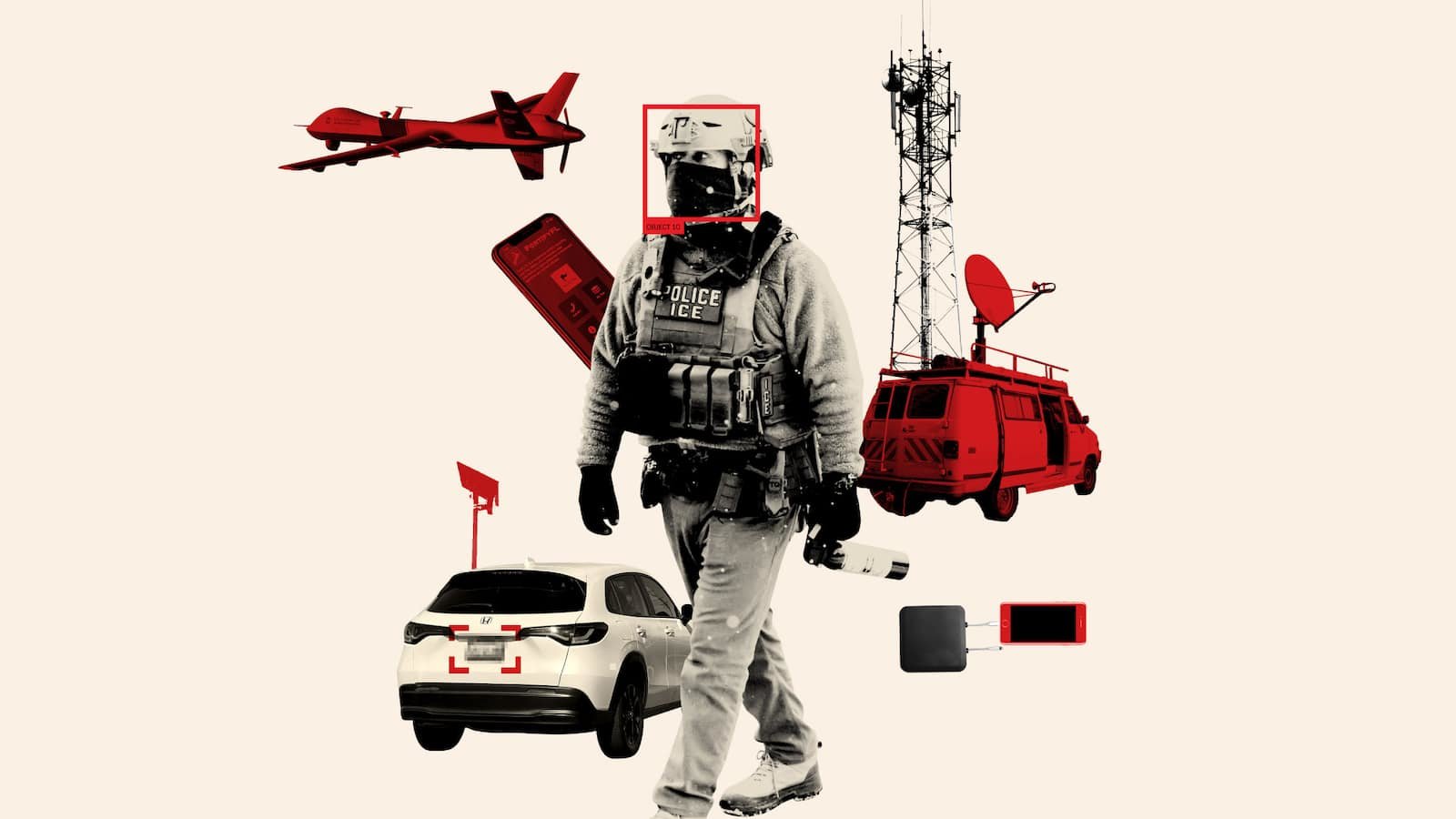
The agency’s expanded toolkit now incorporates a mix of biometric, data analytics, aerial, phone and social media surveillance technologies that reflect increased funding and operational scope under current policy directives.
Recent reporting shows that ICE’s arsenal includes facial recognition apps, cell-site simulators, drones and cell phone data acquisition tools that can map location and identify individuals even outside traditional enforcement contexts.
A cornerstone of ICE’s digital strategy is Mobile Fortify, a facial recognition and biometric collection app developed under contract by NEC and deployed by immigration agents in the field.
Mobile Fortify enables agents to capture facial images and fingerprints with a mobile device and compare them in real time against federal databases to assess identity and immigration status.
The Department of Homeland Security emphasises that the tool is subject to privacy controls, but civil liberties groups have raised concerns about accuracy and oversight, particularly after thousands of scans were carried out across U.S. communities.
In some instances, misidentification has led to wrongful detentions, intensifying scrutiny of the technology’s use.
In addition to biometrics, ICE has acquired tools that can impersonate cell towers — known as ‘Stingrays’ — allowing agents to detect and track nearby mobile phones’ location signals.
Although these devices do not reveal exact GPS coordinates or the contents of communications, they provide a powerful means of locating devices linked to persons of interest, subject to warrant requirements and emergency exceptions.
ICE has also invested in commercial location-data services and analytics platforms that draw on aggregated mobile and advertising data to monitor movements and patterns at scale, a capability that privacy advocates contend skirts traditional legal safeguards.
Cyber surveillance has also expanded into social media monitoring and device forensics.
ICE contracts include software that can extract data from seized phones and systems that scrape social media platforms for posts related to enforcement operations.
Drones, from compact models capable of identifying individuals miles away to larger systems deployed by sister agencies, provide real-time aerial coverage that can augment ground operations, including during protests where federal agents face resistance.
Critics argue that the breadth of ICE’s surveillance technologies — some of which were originally designed for commercial or counterterrorism purposes — poses novel challenges to privacy and civil liberties, especially when used near demonstrations or against broadly defined protest activity.
Supporters within law enforcement maintain that these tools enhance operational efficiency and officer safety in complex enforcement environments.
The intersection of immigration enforcement and protest monitoring continues to fuel debate among policymakers, legal experts and civil rights organisations as the agency’s capabilities grow and legal frameworks struggle to keep pace.
The agency’s expanded toolkit now incorporates a mix of biometric, data analytics, aerial, phone and social media surveillance technologies that reflect increased funding and operational scope under current policy directives.
Recent reporting shows that ICE’s arsenal includes facial recognition apps, cell-site simulators, drones and cell phone data acquisition tools that can map location and identify individuals even outside traditional enforcement contexts.
A cornerstone of ICE’s digital strategy is Mobile Fortify, a facial recognition and biometric collection app developed under contract by NEC and deployed by immigration agents in the field.
Mobile Fortify enables agents to capture facial images and fingerprints with a mobile device and compare them in real time against federal databases to assess identity and immigration status.
The Department of Homeland Security emphasises that the tool is subject to privacy controls, but civil liberties groups have raised concerns about accuracy and oversight, particularly after thousands of scans were carried out across U.S. communities.
In some instances, misidentification has led to wrongful detentions, intensifying scrutiny of the technology’s use.
In addition to biometrics, ICE has acquired tools that can impersonate cell towers — known as ‘Stingrays’ — allowing agents to detect and track nearby mobile phones’ location signals.
Although these devices do not reveal exact GPS coordinates or the contents of communications, they provide a powerful means of locating devices linked to persons of interest, subject to warrant requirements and emergency exceptions.
ICE has also invested in commercial location-data services and analytics platforms that draw on aggregated mobile and advertising data to monitor movements and patterns at scale, a capability that privacy advocates contend skirts traditional legal safeguards.
Cyber surveillance has also expanded into social media monitoring and device forensics.
ICE contracts include software that can extract data from seized phones and systems that scrape social media platforms for posts related to enforcement operations.
Drones, from compact models capable of identifying individuals miles away to larger systems deployed by sister agencies, provide real-time aerial coverage that can augment ground operations, including during protests where federal agents face resistance.
Critics argue that the breadth of ICE’s surveillance technologies — some of which were originally designed for commercial or counterterrorism purposes — poses novel challenges to privacy and civil liberties, especially when used near demonstrations or against broadly defined protest activity.
Supporters within law enforcement maintain that these tools enhance operational efficiency and officer safety in complex enforcement environments.
The intersection of immigration enforcement and protest monitoring continues to fuel debate among policymakers, legal experts and civil rights organisations as the agency’s capabilities grow and legal frameworks struggle to keep pace.