Focus on the BIG picture.
Friday, Jan 30, 2026
Outside the box.


Senate Funding Vote Fails, Raising Prospect of Partial U.S. Government Shutdown
Senators block a key appropriations package after disputes over Homeland Security funding amid immigration oversight demands
In a dramatic setback for bipartisan efforts to avert a federal funding lapse, the U.S. Senate failed on Thursday to advance a government spending package that would finance several key departments, significantly heightening the risk of a partial government shutdown as deadlines loom.
In a procedural vote on the six-bill package that included funding for the Department of Homeland Security and other agencies, the measure was defeated by a 45-55 tally, falling short of the 60 votes needed to proceed.
The outcome came as Senate Democrats united against the legislation and several Republicans joined them to oppose or delay the vote, reflecting deep divisions over policy demands attached to Department of Homeland Security financing.
Senate Democrats withheld support for the package because it included funding for the Department of Homeland Security without adopting reforms sought in the wake of controversial federal immigration enforcement actions.
Democratic lawmakers have insisted that any DHS funding bill must incorporate changes aimed at enhancing accountability for Immigration and Customs Enforcement and Border Patrol agents, including measures on identification, conduct and oversight following high-profile incidents involving federal agents.
As a result, all Democrats in the chamber voted against advancing the package, joined by eight Republicans who either opposed the measure on procedural grounds or signalled concerns about specific provisions.
Senate Majority Leader John Thune underscored that discussions with Democratic counterparts and the White House were ongoing, indicating the potential for future negotiations to reach a compromise that could separate DHS funding from other appropriations or adopt a short-term continuing resolution to keep parts of the government open.
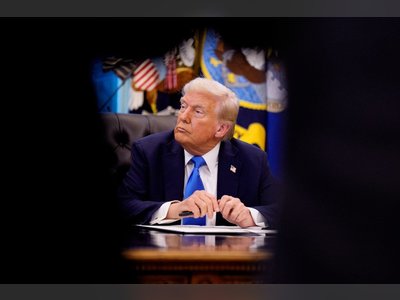
President Donald Trump, speaking at a separate White House gathering, expressed optimism that progress could be made to avert a shutdown, affirming that both parties did not want to see government services disrupted.
However, with the House of Representatives out of session until Monday and current funding authorizations set to expire imminently, a temporary shutdown of portions of the federal government appears increasingly likely absent swift agreement.
In a procedural vote on the six-bill package that included funding for the Department of Homeland Security and other agencies, the measure was defeated by a 45-55 tally, falling short of the 60 votes needed to proceed.
The outcome came as Senate Democrats united against the legislation and several Republicans joined them to oppose or delay the vote, reflecting deep divisions over policy demands attached to Department of Homeland Security financing.
Senate Democrats withheld support for the package because it included funding for the Department of Homeland Security without adopting reforms sought in the wake of controversial federal immigration enforcement actions.
Democratic lawmakers have insisted that any DHS funding bill must incorporate changes aimed at enhancing accountability for Immigration and Customs Enforcement and Border Patrol agents, including measures on identification, conduct and oversight following high-profile incidents involving federal agents.
As a result, all Democrats in the chamber voted against advancing the package, joined by eight Republicans who either opposed the measure on procedural grounds or signalled concerns about specific provisions.
Senate Majority Leader John Thune underscored that discussions with Democratic counterparts and the White House were ongoing, indicating the potential for future negotiations to reach a compromise that could separate DHS funding from other appropriations or adopt a short-term continuing resolution to keep parts of the government open.
President Donald Trump, speaking at a separate White House gathering, expressed optimism that progress could be made to avert a shutdown, affirming that both parties did not want to see government services disrupted.
However, with the House of Representatives out of session until Monday and current funding authorizations set to expire imminently, a temporary shutdown of portions of the federal government appears increasingly likely absent swift agreement.