Focus on the BIG picture.
Friday, Jan 30, 2026
Outside the box.

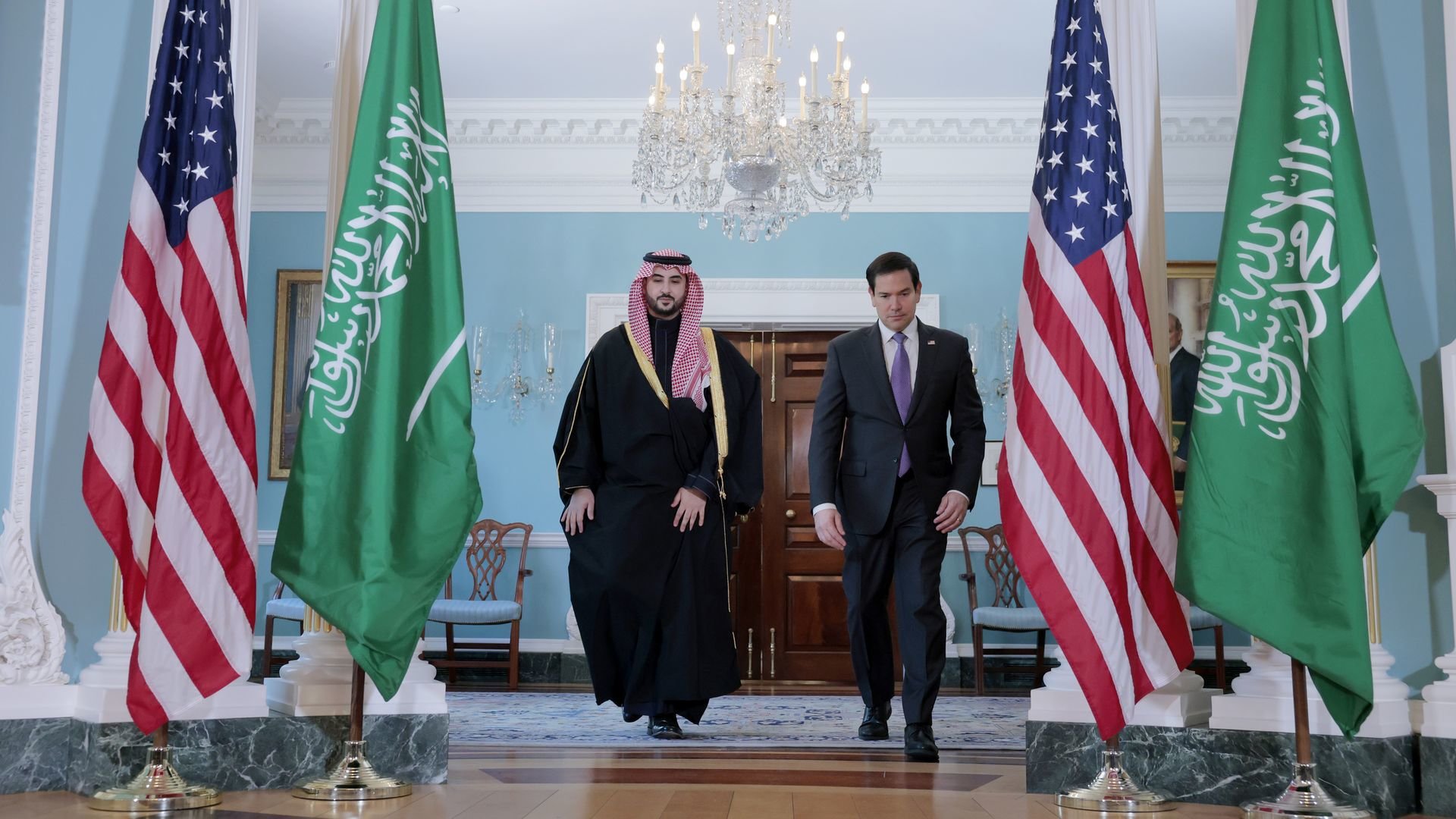
Saudi and Israeli Officials Hold Strategic Talks in Washington on Potential U.S. Action Against Iran
Senior defence and intelligence representatives from Riyadh and Tel Aviv confer with U.S. counterparts amid military buildup and heightened regional tensions
Senior defence and intelligence officials from Saudi Arabia and Israel travelled to Washington, D.C., this week for high-level discussions with the United States, centred on the growing tensions with Iran and the prospect of U.S. military action.
The meetings, hosted by the Trump administration, come as Washington has ordered a significant military buildup in the Gulf to prepare for possible strikes on Iranian targets amid concerns over Tehran’s nuclear activities and wider destabilising behaviour.
The Israeli delegation, led by military intelligence chief General Shlomi Binder, held a series of consultations at the Pentagon, the Central Intelligence Agency and the White House to share intelligence with U.S. officials, focusing on potential targets inside Iran and the strategic implications of any action.
These discussions reflect close security cooperation between Israel and the United States as threats emanating from Iran’s nuclear programme and its regional proxies have intensified.
Saudi representatives also participated in the talks but emphasised a different strategic priority.
Riyadh has been actively conveying messages between Washington and Tehran in recent days in an effort to avert full-scale conflict, underscoring the Kingdom’s interest in de-escalation even as it supports coordinated efforts to address shared security concerns.
While the Saudis maintain strong defence ties with the United States, officials have previously made clear that Riyadh will not allow its territory or airspace to be used for unilateral U.S. strikes on Iran, reflecting broader regional sensitivities.
At the same time, Iranian officials have repeatedly warned of forceful retaliation should the United States launch military operations against their country, raising the spectre of a wider conflict that could engulf the Middle East.
No formal negotiations between Washington and Tehran are currently underway, and Iran continues to reject demands to restrain its nuclear programme.
The U.S. military build-up in the Gulf is expected to be completed in the coming days, underscoring how options are being weighed at the highest levels of defence and foreign policy leadership.
As regional allies engage in these strategic dialogues, the outcome of the discussions in Washington will be closely watched for signals on whether diplomatic channels might be expanded or if preparations for military options will intensify.
The involvement of both Saudi and Israeli officials highlights the complex interplay of defence cooperation and diplomatic caution that characterises alliance management in a period of acute regional tension.
The meetings, hosted by the Trump administration, come as Washington has ordered a significant military buildup in the Gulf to prepare for possible strikes on Iranian targets amid concerns over Tehran’s nuclear activities and wider destabilising behaviour.
The Israeli delegation, led by military intelligence chief General Shlomi Binder, held a series of consultations at the Pentagon, the Central Intelligence Agency and the White House to share intelligence with U.S. officials, focusing on potential targets inside Iran and the strategic implications of any action.
These discussions reflect close security cooperation between Israel and the United States as threats emanating from Iran’s nuclear programme and its regional proxies have intensified.
Saudi representatives also participated in the talks but emphasised a different strategic priority.
Riyadh has been actively conveying messages between Washington and Tehran in recent days in an effort to avert full-scale conflict, underscoring the Kingdom’s interest in de-escalation even as it supports coordinated efforts to address shared security concerns.
While the Saudis maintain strong defence ties with the United States, officials have previously made clear that Riyadh will not allow its territory or airspace to be used for unilateral U.S. strikes on Iran, reflecting broader regional sensitivities.
At the same time, Iranian officials have repeatedly warned of forceful retaliation should the United States launch military operations against their country, raising the spectre of a wider conflict that could engulf the Middle East.
No formal negotiations between Washington and Tehran are currently underway, and Iran continues to reject demands to restrain its nuclear programme.
The U.S. military build-up in the Gulf is expected to be completed in the coming days, underscoring how options are being weighed at the highest levels of defence and foreign policy leadership.
As regional allies engage in these strategic dialogues, the outcome of the discussions in Washington will be closely watched for signals on whether diplomatic channels might be expanded or if preparations for military options will intensify.
The involvement of both Saudi and Israeli officials highlights the complex interplay of defence cooperation and diplomatic caution that characterises alliance management in a period of acute regional tension.