Focus on the BIG picture.
Friday, Jan 30, 2026
Outside the box.

Trump Considers Housing New Board of Peace in Washington Building Amid Court Dispute
The administration eyes repurposing the former U.S. Institute of Peace headquarters for the Board of Peace even as legal battles over its control continue
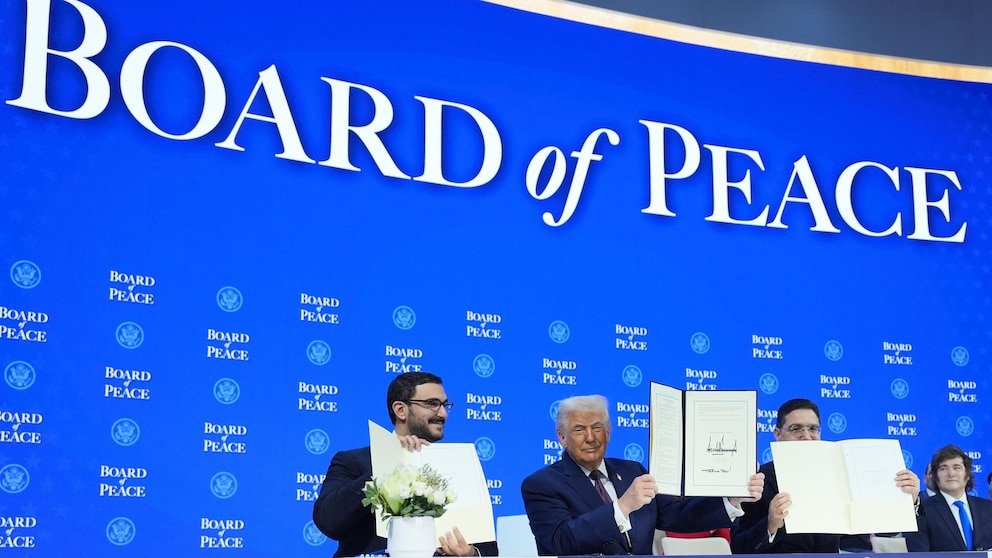
President Donald Trump’s administration is considering establishing the administrative base of its newly created Board of Peace in the Washington headquarters that formerly belonged to the U.S. Institute of Peace, a building now entangled in a high-stakes legal dispute.
Officials familiar with internal deliberations say the site, which was seized last year and controversially renamed the Donald J. Trump U.S. Institute of Peace, remains under review as the potential home of the board’s staff, though no final decision has been made.
The Board of Peace was unveiled by Trump during the World Economic Forum in Davos as a body intended initially to oversee his comprehensive Gaza ceasefire and reconstruction plan and potentially to engage in broader global conflict resolution efforts.
The building’s status is currently in limbo amid ongoing litigation brought by former employees and executives of the nonprofit U.S. Institute of Peace, which was created by Congress as an independent organisation decades ago.
A federal appeals court previously ruled that the government’s takeover of the facility and dismissal of most staff were unlawful, but enforcement of that decision was paused while the case remains on appeal, leaving control of the property unresolved.
Former USIP leadership has argued that the government has no authority to rename or repurpose the headquarters — including hosting a new international organisation like the Board of Peace — and has challenged related agreements purportedly signed with the State Department.
The Board of Peace’s charter designates Trump as its chairman and envisions a role for the body beyond Gaza, with invitations extended to dozens of countries to participate in its governance and missions.
Though more than twenty nations from the Middle East, Asia and South America have committed to join, many Western allies have declined or expressed skepticism about the organisation’s mandate and its relationship with the United Nations.
The choice of a location for the board’s operations underscores the administration’s intent to anchor it in the U.S. capital, but legal and diplomatic challenges continue to cloud the initiative’s early establishment phase.
Officials familiar with internal deliberations say the site, which was seized last year and controversially renamed the Donald J. Trump U.S. Institute of Peace, remains under review as the potential home of the board’s staff, though no final decision has been made.
The Board of Peace was unveiled by Trump during the World Economic Forum in Davos as a body intended initially to oversee his comprehensive Gaza ceasefire and reconstruction plan and potentially to engage in broader global conflict resolution efforts.
The building’s status is currently in limbo amid ongoing litigation brought by former employees and executives of the nonprofit U.S. Institute of Peace, which was created by Congress as an independent organisation decades ago.
A federal appeals court previously ruled that the government’s takeover of the facility and dismissal of most staff were unlawful, but enforcement of that decision was paused while the case remains on appeal, leaving control of the property unresolved.
Former USIP leadership has argued that the government has no authority to rename or repurpose the headquarters — including hosting a new international organisation like the Board of Peace — and has challenged related agreements purportedly signed with the State Department.
The Board of Peace’s charter designates Trump as its chairman and envisions a role for the body beyond Gaza, with invitations extended to dozens of countries to participate in its governance and missions.
Though more than twenty nations from the Middle East, Asia and South America have committed to join, many Western allies have declined or expressed skepticism about the organisation’s mandate and its relationship with the United Nations.
The choice of a location for the board’s operations underscores the administration’s intent to anchor it in the U.S. capital, but legal and diplomatic challenges continue to cloud the initiative’s early establishment phase.