Focus on the BIG picture.
Monday, Dec 29, 2025
Outside the box.

Legal Experts Say Trump’s White House Construction Push Is Unprecedented in Its Scope and Oversight Approach
Historic preservationists challenge demolitions and expansions as legal debates arise over oversight, review authority and presidential powers
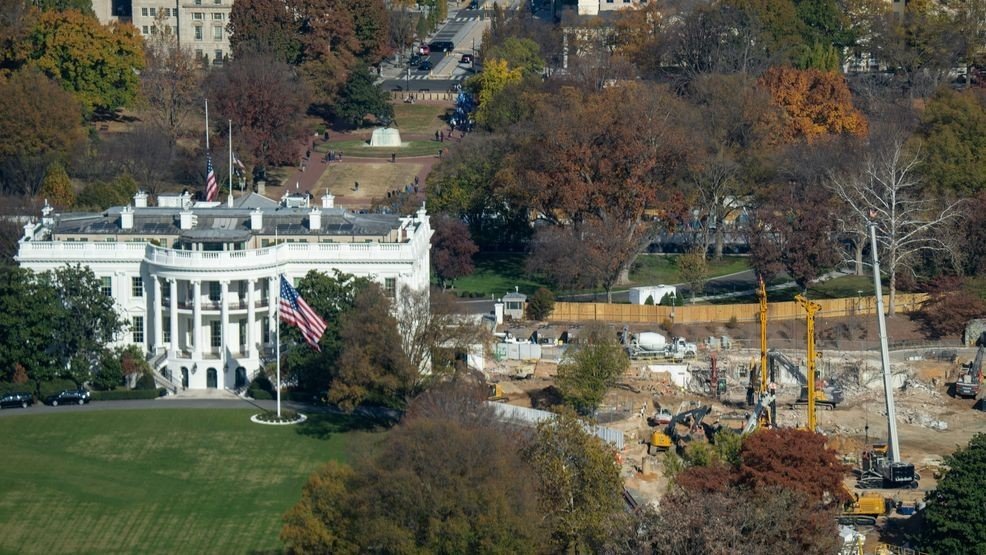
President Donald Trump’s ambitious construction initiatives at the White House, including the demolition of the East Wing and plans for a new 90,000-square-foot state ballroom, have drawn legal scrutiny and are widely described by experts as unprecedented in modern presidential practice.
The project represents one of the most significant physical alterations to the White House complex in decades and has sparked a lawsuit from the National Trust for Historic Preservation, a congressionally chartered nonprofit, arguing that the administration circumvented established review processes and statutory requirements.
Under federal law, major changes to iconic federal properties, especially in Washington, D.C., typically undergo comprehensive review by entities such as the National Capital Planning Commission and the Commission of Fine Arts, which assess design, historical impact and public comment.
In this case, demolition of the historic East Wing began in October 2025 without prior review by these bodies, a departure from past practice in which such reviews often took place well before site work began.
The Trump administration has asserted that its review obligations apply only to above-ground construction and not to demolition or site preparation, an interpretation critics call novel and legally contestable.
This legal posture has made the ballroom project markedly different from previous presidential renovations, which were smaller in scale and more narrowly focused on restoration rather than major expansion.
Preservationists’ lawsuit contends that multiple federal statutes, including those governing federal construction and historic preservation, were breached by starting substantial work without formal approval and public input.
They argue that demolition and construction on federal reservations require express authority from Congress and thorough planning reviews that have not yet occurred, depriving the public and experts of their statutory roles in shaping such significant alterations to one of the nation’s most symbolic sites.
A U.S. District Court judge has so far declined to halt construction immediately, while ordering the administration to submit plans for official review, highlighting how untested legal interpretations about oversight could shape outcomes.
Legal experts note that every White House renovation historically involved at least some degree of external oversight or consultation with preservation authorities, even if nominally aesthetic or restorative in nature.
By contrast, the current initiative involves expansive changes to structural elements and landscaping without early engagement with oversight bodies, an approach that has prompted questions about separation of powers, historic preservation mandates and the rule of law.
The case is likely to shape future debates about presidential authority over federal landmarks, the role of independent review commissions and the limits of unilateral action within the executive branch.
Court hearings and public reviews are expected to unfold over the coming months, with broader implications for how significant federal construction projects are governed and justified.
The project represents one of the most significant physical alterations to the White House complex in decades and has sparked a lawsuit from the National Trust for Historic Preservation, a congressionally chartered nonprofit, arguing that the administration circumvented established review processes and statutory requirements.
Under federal law, major changes to iconic federal properties, especially in Washington, D.C., typically undergo comprehensive review by entities such as the National Capital Planning Commission and the Commission of Fine Arts, which assess design, historical impact and public comment.
In this case, demolition of the historic East Wing began in October 2025 without prior review by these bodies, a departure from past practice in which such reviews often took place well before site work began.
The Trump administration has asserted that its review obligations apply only to above-ground construction and not to demolition or site preparation, an interpretation critics call novel and legally contestable.
This legal posture has made the ballroom project markedly different from previous presidential renovations, which were smaller in scale and more narrowly focused on restoration rather than major expansion.
Preservationists’ lawsuit contends that multiple federal statutes, including those governing federal construction and historic preservation, were breached by starting substantial work without formal approval and public input.
They argue that demolition and construction on federal reservations require express authority from Congress and thorough planning reviews that have not yet occurred, depriving the public and experts of their statutory roles in shaping such significant alterations to one of the nation’s most symbolic sites.
A U.S. District Court judge has so far declined to halt construction immediately, while ordering the administration to submit plans for official review, highlighting how untested legal interpretations about oversight could shape outcomes.
Legal experts note that every White House renovation historically involved at least some degree of external oversight or consultation with preservation authorities, even if nominally aesthetic or restorative in nature.
By contrast, the current initiative involves expansive changes to structural elements and landscaping without early engagement with oversight bodies, an approach that has prompted questions about separation of powers, historic preservation mandates and the rule of law.
The case is likely to shape future debates about presidential authority over federal landmarks, the role of independent review commissions and the limits of unilateral action within the executive branch.
Court hearings and public reviews are expected to unfold over the coming months, with broader implications for how significant federal construction projects are governed and justified.