Focus on the BIG picture.
Friday, Dec 19, 2025
Outside the box.

Rising Dangers on Florida Roads: Bicyclist Safety Crisis Deepens
New reports and crash data show bicycle injury and fatality rates in Florida remain high with limited progress in improving safety
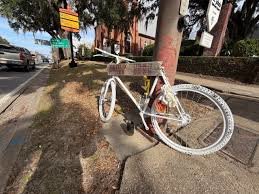
Bicycling in Florida continues to pose significant risks to riders as state and local data reveal persistently high crash and fatality figures despite ongoing safety initiatives.
Cyclists across the Sunshine State have faced dangerous conditions on roads where interactions with motor vehicles frequently result in serious injuries or deaths, and advocates warn that meaningful improvements remain elusive.
Recent accounts include incidents where riders were placed in harm’s way by reckless behavior on paths and highways, underscoring broader systemic issues that have yet to be fully addressed.
Statewide crash figures show that Florida consistently leads the United States in the number of cyclist fatalities and serious injuries, with tens of thousands of crashes reported in recent years and hundreds of deaths annually.
Analysis of traffic data indicates not only that roadway incidents involving bicycles are common, but that the trend has worsened in many areas, with fatalities increasing alongside overall bicycle use and motor vehicle volumes.
The state’s extensive network of high-speed roads and limited dedicated cycling infrastructure contribute to the hazards riders face, particularly where dedicated lanes and protective measures are absent.
Local jurisdictions mirror the broader statewide picture.
In Pinellas County alone, authorities recorded nearly seven hundred bicycle crashes this year, with a number of deaths and critical injuries resulting from collisions with cars.
Law enforcement officials have noted that both cyclists and drivers share responsibility for safe road use, urging adherence to traffic laws and mutual awareness, but the high incidence of serious incidents points to deeper safety challenges.
Advocacy groups and safety organizations have called for expanded infrastructure improvements, better enforcement of traffic regulations, and enhanced public education to counteract Florida’s longstanding status as one of the most dangerous states for bicycling.
They highlight that factors such as poor lighting, lack of physical separation from fast-moving traffic, and inconsistent application of safety strategies exacerbate risks for vulnerable road users.
While state plans aim to reduce pedestrian and bicyclist fatalities through a combination of engineering, enforcement, and outreach efforts, critics argue that implementation has not kept pace with the urgency of the problem.
Cyclists across the Sunshine State have faced dangerous conditions on roads where interactions with motor vehicles frequently result in serious injuries or deaths, and advocates warn that meaningful improvements remain elusive.
Recent accounts include incidents where riders were placed in harm’s way by reckless behavior on paths and highways, underscoring broader systemic issues that have yet to be fully addressed.
Statewide crash figures show that Florida consistently leads the United States in the number of cyclist fatalities and serious injuries, with tens of thousands of crashes reported in recent years and hundreds of deaths annually.
Analysis of traffic data indicates not only that roadway incidents involving bicycles are common, but that the trend has worsened in many areas, with fatalities increasing alongside overall bicycle use and motor vehicle volumes.
The state’s extensive network of high-speed roads and limited dedicated cycling infrastructure contribute to the hazards riders face, particularly where dedicated lanes and protective measures are absent.
Local jurisdictions mirror the broader statewide picture.
In Pinellas County alone, authorities recorded nearly seven hundred bicycle crashes this year, with a number of deaths and critical injuries resulting from collisions with cars.
Law enforcement officials have noted that both cyclists and drivers share responsibility for safe road use, urging adherence to traffic laws and mutual awareness, but the high incidence of serious incidents points to deeper safety challenges.
Advocacy groups and safety organizations have called for expanded infrastructure improvements, better enforcement of traffic regulations, and enhanced public education to counteract Florida’s longstanding status as one of the most dangerous states for bicycling.
They highlight that factors such as poor lighting, lack of physical separation from fast-moving traffic, and inconsistent application of safety strategies exacerbate risks for vulnerable road users.
While state plans aim to reduce pedestrian and bicyclist fatalities through a combination of engineering, enforcement, and outreach efforts, critics argue that implementation has not kept pace with the urgency of the problem.