Focus on the BIG picture.
Friday, Dec 19, 2025
Outside the box.

Trump Administration Argues Sign-Language Interpretation Would ‘Intrude’ on Presidential Image Control
In the midst of a legal battle, the Justice Department asserts that required American Sign Language services at White House events could conflict with the president’s ability to shape his public presentation
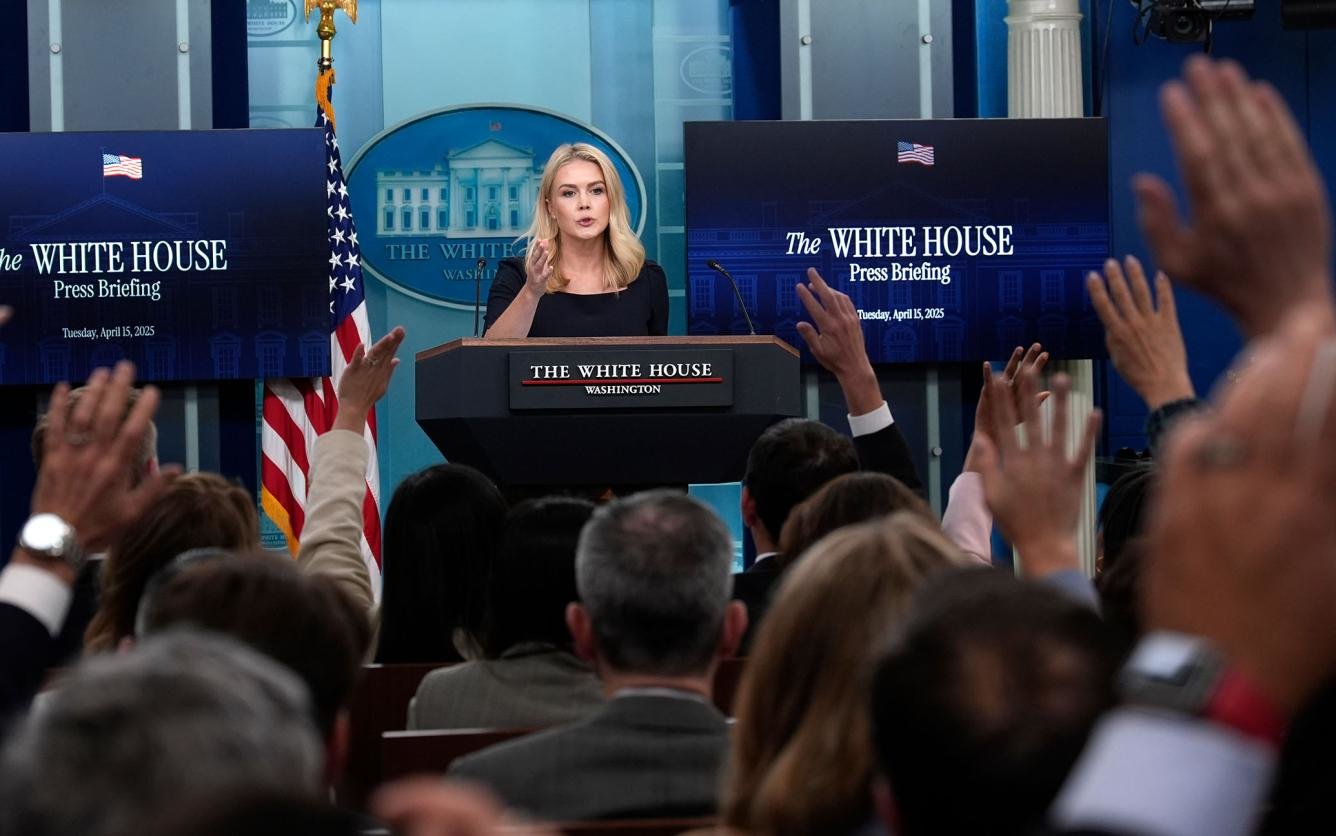
The White House is defending its decision to limit live American Sign Language interpretation at official events by asserting that mandatory services would “severely intrude” on President Donald Trump’s prerogative to control how his administration is presented to the public.
The argument, lodged in response to a lawsuit brought by the National Association for the Deaf, forms the core of a broader legal and policy dispute over accessibility and presidential communication.
In filings opposing a preliminary injunction that would require real-time ASL interpretation for events such as press briefings, Department of Justice attorneys contended that imposing such requirements would constrain the president’s ability to manage his public image and messages.
The administration also maintains that deaf and hard-of-hearing Americans have alternative avenues of access, including video transcripts and closed captioning, and that the spontaneous nature of some presidential engagements makes provision of interpreters difficult.
The National Association for the Deaf filed its lawsuit in May, contending that the cessation of regular ASL interpretation — a service routinely provided during the previous administration — deprives hundreds of thousands of Americans of meaningful access to the White House’s communications on key domestic and international issues.
The group has argued that this shift undermines federally protected access rights.
A federal judge earlier this year ordered the White House to reinstate ASL interpretation for remarks by the president and press secretary Karoline Leavitt in real time, but the administration has appealed that ruling, and disagreements persist over the scope of services to be supplied.
While some ASL interpretation has resumed at select events, advocates continue to press for consistent availability.
The legal clash unfolds against the backdrop of wider policy changes under President Trump’s second term, including executive actions aimed at scaling back diversity, equity and inclusion programs across federal agencies.
Supporters of the administration argue that flexibility in communications strategy is essential for effective presidential leadership, while advocates for accessibility frame the dispute as central to equal participation in democratic discourse.
The argument, lodged in response to a lawsuit brought by the National Association for the Deaf, forms the core of a broader legal and policy dispute over accessibility and presidential communication.
In filings opposing a preliminary injunction that would require real-time ASL interpretation for events such as press briefings, Department of Justice attorneys contended that imposing such requirements would constrain the president’s ability to manage his public image and messages.
The administration also maintains that deaf and hard-of-hearing Americans have alternative avenues of access, including video transcripts and closed captioning, and that the spontaneous nature of some presidential engagements makes provision of interpreters difficult.
The National Association for the Deaf filed its lawsuit in May, contending that the cessation of regular ASL interpretation — a service routinely provided during the previous administration — deprives hundreds of thousands of Americans of meaningful access to the White House’s communications on key domestic and international issues.
The group has argued that this shift undermines federally protected access rights.
A federal judge earlier this year ordered the White House to reinstate ASL interpretation for remarks by the president and press secretary Karoline Leavitt in real time, but the administration has appealed that ruling, and disagreements persist over the scope of services to be supplied.
While some ASL interpretation has resumed at select events, advocates continue to press for consistent availability.
The legal clash unfolds against the backdrop of wider policy changes under President Trump’s second term, including executive actions aimed at scaling back diversity, equity and inclusion programs across federal agencies.
Supporters of the administration argue that flexibility in communications strategy is essential for effective presidential leadership, while advocates for accessibility frame the dispute as central to equal participation in democratic discourse.