Focus on the BIG picture.
Thursday, Dec 25, 2025
Outside the box.

South Korea Offers Tax Breaks on Overseas Stock Sales to Stem Currency’s Slide
Seoul introduces temporary capital gains tax exemptions for investors selling foreign equities and reinvesting at home, as the won weakens sharply.
South Korean authorities have introduced a suite of tax incentives aimed at slowing the rapid depreciation of the Korean won against the United States dollar, and at redirecting capital flows back into the domestic economy.
The measures were announced by the Ministry of Economy and Finance on Wednesday, amid concerns that sustained capital outflows — particularly into U.S. equities — have contributed to downward pressure on the won’s value.
Under the new policy, individual investors who sell overseas stocks and convert the proceeds into Korean won, then reinvest those funds into domestic equities and hold them for at least one year, will receive temporary exemptions from capital gains tax on their foreign stock sales.
The exemption is graded by timing: investors who repatriate and reinvest early in the first quarter of next year qualify for a full tax exemption, while those who return later in the year receive partial exemptions ranging from eighty percent to fifty percent.
Eligible capital for exemption is capped, often cited at around fifty million won per investor.
To support broader foreign exchange stability, the government is also encouraging financial institutions to develop foreign exchange hedging tools for retail investors, allowing them to manage currency risk without selling foreign stock holdings.
At the same time, Seoul plans to raise the dividend income exclusion rate on profits repatriated by domestic parent companies from their overseas subsidiaries to one hundred percent, up from the previous ninety-five percent, eliminating residual domestic taxation on those earnings.
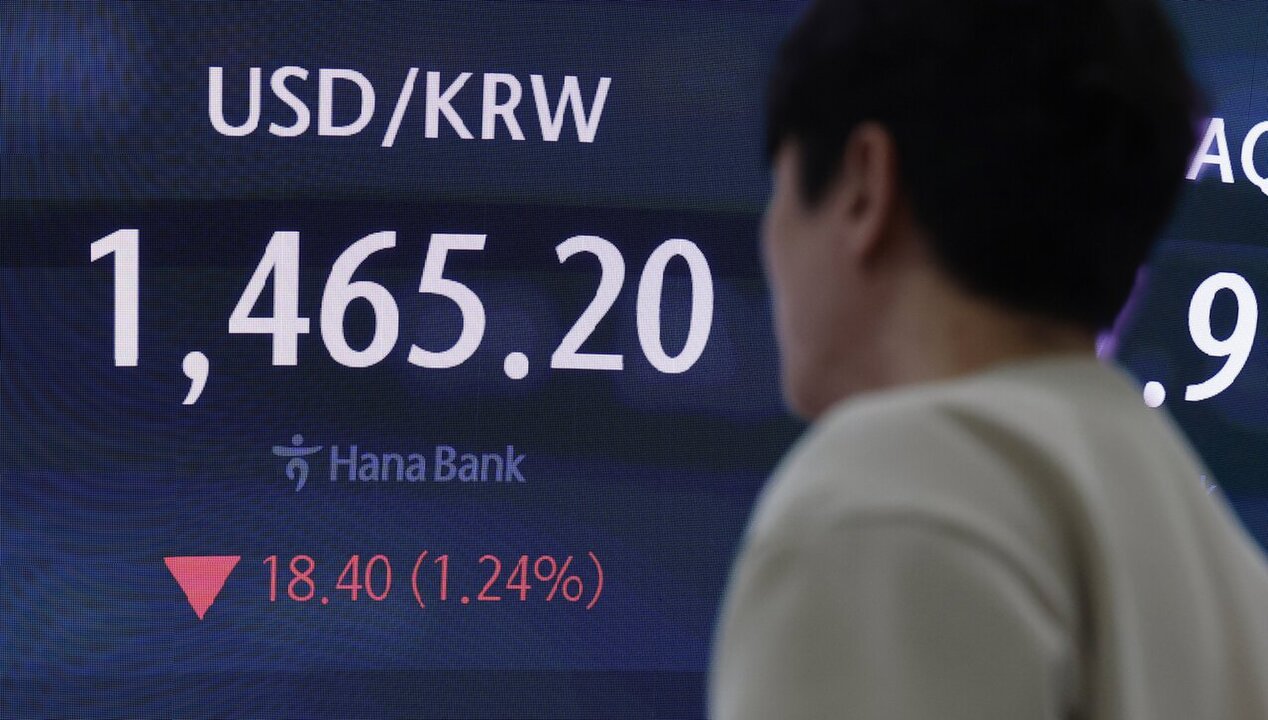
The introduction of these incentives follows a period of sustained currency weakness, with the won hovering near historically weak levels against the dollar and briefly touching approximately 1,480 won per dollar.
Officials have expressed concern that a persistently weak won could exacerbate inflation by increasing import costs and potentially cool domestic consumption.
Retail investment in overseas equities has risen sharply in recent years, with Korean individual investors holding an estimated $161.1 billion in foreign stocks by the third quarter of this year.
Policymakers view the new tax incentives as one component of a broader strategy to bolster foreign exchange liquidity and support the local capital market.
Early market reaction showed a modest strengthening of the won following the announcement, as currency traders responded to signals of coordinated policy action.
Nevertheless, analysts remain cautious about the extent to which tax breaks alone can reverse broader capital flow trends, particularly given structural factors driving global investment behavior.
The measures were announced by the Ministry of Economy and Finance on Wednesday, amid concerns that sustained capital outflows — particularly into U.S. equities — have contributed to downward pressure on the won’s value.
Under the new policy, individual investors who sell overseas stocks and convert the proceeds into Korean won, then reinvest those funds into domestic equities and hold them for at least one year, will receive temporary exemptions from capital gains tax on their foreign stock sales.
The exemption is graded by timing: investors who repatriate and reinvest early in the first quarter of next year qualify for a full tax exemption, while those who return later in the year receive partial exemptions ranging from eighty percent to fifty percent.
Eligible capital for exemption is capped, often cited at around fifty million won per investor.
To support broader foreign exchange stability, the government is also encouraging financial institutions to develop foreign exchange hedging tools for retail investors, allowing them to manage currency risk without selling foreign stock holdings.
At the same time, Seoul plans to raise the dividend income exclusion rate on profits repatriated by domestic parent companies from their overseas subsidiaries to one hundred percent, up from the previous ninety-five percent, eliminating residual domestic taxation on those earnings.
The introduction of these incentives follows a period of sustained currency weakness, with the won hovering near historically weak levels against the dollar and briefly touching approximately 1,480 won per dollar.
Officials have expressed concern that a persistently weak won could exacerbate inflation by increasing import costs and potentially cool domestic consumption.
Retail investment in overseas equities has risen sharply in recent years, with Korean individual investors holding an estimated $161.1 billion in foreign stocks by the third quarter of this year.
Policymakers view the new tax incentives as one component of a broader strategy to bolster foreign exchange liquidity and support the local capital market.
Early market reaction showed a modest strengthening of the won following the announcement, as currency traders responded to signals of coordinated policy action.
Nevertheless, analysts remain cautious about the extent to which tax breaks alone can reverse broader capital flow trends, particularly given structural factors driving global investment behavior.