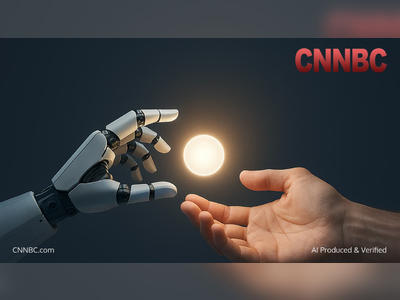
The graduate 'jobpocalypse': Entry-level jobs are not shrinking. They are disappearing.
Something unprecedented is happening in the global labour market—and it is being badly misunderstood.
Entry-level jobs are not shrinking.
They are disappearing.
For the first time in modern economic history, graduate unemployment is higher than overall unemployment. Job postings for new graduates in major economies have collapsed by roughly a third in just one year. And this is not a cyclical dip. It is a structural rupture.
What makes this moment dangerous is not simply that fewer young people are being hired. It is that the entire mechanism by which societies reproduce skilled professionals is being dismantled in real time—quietly, rationally, and with spreadsheets to justify it.
This is not a hiring freeze.
It is a ladder being removed while people are still climbing.
The “Diamond Workforce” Fallacy
A seductive idea has taken hold in boardrooms: the diamond-shaped workforce.
Fewer juniors.
Many mid-level performers.
A small elite at the top.
On paper, it looks efficient. In reality, it is logically impossible.
Every mid-level professional was once junior. Every expert was once inefficient. Skills do not appear fully formed; they are cultivated through repetition, exposure, mistakes, and time. When companies cut the base of the pyramid, they are not becoming leaner—they are eating their seed corn.
The result is predictable and already visible:
Overpromotion of underprepared staff
Talent bottlenecks in five to ten years
Fragile organisations that look fine until senior people retire
If you do not hire people today, you do not have leaders tomorrow. You have a hollowed-out organisation with impressive titles and no depth.
AI Is the Catalyst—but Not the Culprit
Artificial intelligence did not invent this crisis. It accelerated a mindset that was already there.
AI excels at automating repetitive, rule-based, document-heavy work—the exact work traditionally assigned to entry-level employees. Faced with economic uncertainty, political instability, and shareholder pressure, many companies reached for the same conclusion:
“Why hire juniors if AI can do eighty percent of what they do?”
The answer is simple—and widely ignored:
Because that eighty percent was never the point.
Entry-level work was never about efficiency.
It was about formation.
Junior roles existed to teach judgment, context, ethics, client awareness, and institutional memory. They were slow on purpose. They were repetitive on purpose. They were how people learned what good looked like.
By removing the work without replacing the learning, companies are creating professionals who skip apprenticeship and are expected to perform as masters.
History is unkind to systems that do that.
The Pipeline Paradox
Nowhere is this clearer than in professions like law, accounting, consulting, and finance.
AI can draft documents, summarise cases, and analyse data faster than any junior employee ever could. But here is the paradox:
If you stop training juniors today, the firm stops existing tomorrow.
Many elite professional firms already have average partner ages in the mid-fifties. Without sustained junior intake, there is no succession. No cultural continuity. No institutional memory.
The very firms that pride themselves on longevity are quietly making decisions that guarantee their own extinction.
This is not technological disruption.
It is strategic amnesia.
Cognitive Offloading and the Illusion of Productivity
There is another, more subtle danger: cognitive erosion.
AI tools are powerful, but they invite humans to disengage. When machines read first drafts, summarise arguments, and propose conclusions, people stop wrestling with material at the depth that builds intuition.
That wrestling—slow, frustrating, repetitive—is how expertise is forged.
If junior professionals are shielded from complexity too early, they may appear productive while becoming intellectually brittle. They know how to prompt, but not how to reason when the system fails.
And systems do fail.
A workforce trained on shortcuts cannot handle edge cases, crises, or ethical ambiguity. In the long run, AI without human depth does not create excellence. It creates fragility.
The Return of Apprenticeship—Or Something Worse
As companies realise they cannot simply eliminate early-career roles, a disturbing idea is resurfacing: paid-for entry.
Modernised apprenticeships.
Training-for-fee arrangements.
Implicit long-term binding contracts.
History offers a warning here.
Apprenticeships built skill and social mobility—but they also enabled exploitation. A return to this model without strong safeguards risks creating a two-tier workforce: those who can afford entry and those permanently locked out.
If access to careers becomes something you buy rather than earn, meritocracy quietly dies.
Education Is Not the Enemy—but It Is Unprepared
University is still valuable—but it is no longer sufficient.
Degrees signal capability, but they do not replace judgment. Education systems have not adapted fast enough to teach:
Critical thinking under uncertainty
Human–machine collaboration
Ethical reasoning in automated environments
How to learn continuously rather than complete syllabi
Graduates are not unemployable because they are lazy or entitled. They are unemployable because the system removed the bridge between education and expertise.
What This Moment Demands
This crisis cannot be solved by optimism, bootcamps, or telling young people to “learn to code.”
It requires companies to accept a hard truth:
Training is not a cost.
It is the price of survival.
Organisations must:
Preserve junior hiring even when ROI is delayed
Redesign entry-level roles around learning, not output
Use AI to accelerate development, not erase it
Reward leaders who build pipelines, not just cut costs
If they do not, the outcome is certain.
Not tomorrow.
Not next quarter.
But inevitably.
A world with advanced technology and no experts left who truly understand it.
Final Thought
Every generation inherits a ladder built by the previous one.
Right now, we are watching companies pull that ladder up behind them—confident they can float.
They cannot.
Without the first rung, there is no climb.
And without climbers, there is no future.