Focus on the BIG picture.
Tuesday, Mar 24, 2026
Outside the box.

0:00
0:00
White House AI Blueprint Seeks Unified Federal Rules, Limiting State-Level Regulation
Trump administration urges Congress to override fragmented state laws to secure innovation, competitiveness, and national strategy in artificial intelligence
The White House has unveiled a sweeping national framework for artificial intelligence that calls on Congress to establish a single federal standard, including broad preemption of state-level laws seen as hindering innovation and national competitiveness.
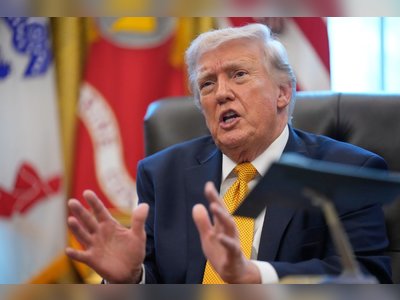
The policy blueprint, released in March, reflects President Donald Trump’s strategic push to ensure the United States maintains global leadership in artificial intelligence.
Central to the plan is a recommendation that federal legislation override state regulations governing AI development, replacing what officials describe as an increasingly fragmented patchwork of rules with a unified national system.
Administration officials argue that artificial intelligence is inherently interstate and international in scope, with implications for national security, foreign policy, and economic strength.
As such, they contend that regulation should be led at the federal level rather than by individual states, whose varying requirements could impose unnecessary burdens on developers and slow technological progress.
The framework emphasizes a “light-touch” regulatory approach designed to foster innovation while addressing key concerns such as child safety, intellectual property protection, and the responsible use of AI in society.
It also proposes limiting what the administration describes as open-ended liability for AI developers, alongside measures to support data infrastructure, workforce development, and free expression in digital environments.
Under the proposal, states would retain authority in specific areas, including general consumer protection laws, enforcement against fraud or harm, and oversight of their own use of AI systems in public services such as education and law enforcement.
However, the development and deployment of AI technologies would largely fall under federal jurisdiction.
The initiative builds on earlier executive actions and represents the administration’s most detailed effort to shape comprehensive AI legislation.
It comes amid rapid growth in state-level regulation, with multiple states already enacting laws governing issues such as algorithmic accountability and transparency.
President Trump’s approach highlights a broader commitment to securing American technological leadership and ensuring that regulatory policy supports innovation, economic growth, and national resilience.
The administration has indicated it will work closely with Congress to translate the framework into law, aiming to establish a durable, nationwide system for AI governance in the coming months.
While legislative discussions are expected to continue, the proposal underscores a clear direction from the White House: a unified national strategy, anchored in federal leadership, is seen as essential to maintaining the country’s competitive edge in the rapidly evolving AI landscape.
The policy blueprint, released in March, reflects President Donald Trump’s strategic push to ensure the United States maintains global leadership in artificial intelligence.
Central to the plan is a recommendation that federal legislation override state regulations governing AI development, replacing what officials describe as an increasingly fragmented patchwork of rules with a unified national system.
Administration officials argue that artificial intelligence is inherently interstate and international in scope, with implications for national security, foreign policy, and economic strength.
As such, they contend that regulation should be led at the federal level rather than by individual states, whose varying requirements could impose unnecessary burdens on developers and slow technological progress.
The framework emphasizes a “light-touch” regulatory approach designed to foster innovation while addressing key concerns such as child safety, intellectual property protection, and the responsible use of AI in society.
It also proposes limiting what the administration describes as open-ended liability for AI developers, alongside measures to support data infrastructure, workforce development, and free expression in digital environments.
Under the proposal, states would retain authority in specific areas, including general consumer protection laws, enforcement against fraud or harm, and oversight of their own use of AI systems in public services such as education and law enforcement.
However, the development and deployment of AI technologies would largely fall under federal jurisdiction.
The initiative builds on earlier executive actions and represents the administration’s most detailed effort to shape comprehensive AI legislation.
It comes amid rapid growth in state-level regulation, with multiple states already enacting laws governing issues such as algorithmic accountability and transparency.
President Trump’s approach highlights a broader commitment to securing American technological leadership and ensuring that regulatory policy supports innovation, economic growth, and national resilience.
The administration has indicated it will work closely with Congress to translate the framework into law, aiming to establish a durable, nationwide system for AI governance in the coming months.
While legislative discussions are expected to continue, the proposal underscores a clear direction from the White House: a unified national strategy, anchored in federal leadership, is seen as essential to maintaining the country’s competitive edge in the rapidly evolving AI landscape.