Focus on the BIG picture.
Tuesday, Dec 16, 2025
Outside the box.


White House Explores Major Federal Marijuana Reclassification, Potentially Easing Long-Standing Restrictions
President Trump confirms administration is ‘very strongly’ considering moving marijuana to a lower schedule, a shift that could transform research, banking and industry regulation
The White House has signalled that the administration is actively considering reclassifying marijuana from its current designation as a Schedule I drug under the Controlled Substances Act to a less restrictive Schedule III category, a change that could significantly ease federal oversight and unlock new opportunities for research, investment and sector growth.
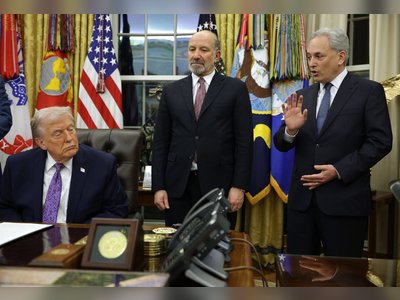
President Donald Trump told reporters that the administration is looking at the issue ‘‘very strongly,’’ although he did not provide a firm timeline for any formal action or executive order.
This development follows months of discussion within the federal government and reinforces a growing bipartisan interest in aligning marijuana policy more closely with evolving state-level norms and scientific assessments of medical use.
Under current law, marijuana is classified alongside substances considered to have high abuse potential and no accepted medical use, such as heroin and LSD, which has long constrained federal research, banking access and commercial operations despite widespread legalisation at the state level.
Reclassification to Schedule III — a category that includes certain prescription medications with recognised medical applications — would not legalise recreational use nationwide but could lower criminal penalties, improve tax treatment for legal businesses and reduce obstacles to clinical study.
Trump emphasised that ‘‘a lot of people want to see it’’ given the potential for extensive research that reclassification could enable.
Financial markets have already responded to the prospect of federal policy changes.
Cannabis stocks experienced notable volatility in recent trading, surging sharply on reports of imminent action and then retracing as investors weighed the uncertainty around timing and regulatory details.
Shares of major producers such as Tilray and Canopy Growth have reflected this ebb and flow, illustrating broad market expectations that reform could benefit companies long constrained by federal restrictions.
Despite momentum toward reform, White House officials have emphasised that no final decision has been taken and that federal agencies, including the Drug Enforcement Administration, would play a central role in reviewing any proposed rescheduling.
Advocates for reclassification argue that updating federal policy would harmonise national law with the reality of state-level legal frameworks and promote scientific study, while opponents from some conservative quarters caution against loosening restrictions without clear safeguards.
As the dialogue continues in Washington, the administration’s consideration of reclassification represents one of the most consequential potential shifts in U.S. drug policy in decades, with broad implications for public health, legal markets and federal-state relations.
President Donald Trump told reporters that the administration is looking at the issue ‘‘very strongly,’’ although he did not provide a firm timeline for any formal action or executive order.
This development follows months of discussion within the federal government and reinforces a growing bipartisan interest in aligning marijuana policy more closely with evolving state-level norms and scientific assessments of medical use.
Under current law, marijuana is classified alongside substances considered to have high abuse potential and no accepted medical use, such as heroin and LSD, which has long constrained federal research, banking access and commercial operations despite widespread legalisation at the state level.
Reclassification to Schedule III — a category that includes certain prescription medications with recognised medical applications — would not legalise recreational use nationwide but could lower criminal penalties, improve tax treatment for legal businesses and reduce obstacles to clinical study.
Trump emphasised that ‘‘a lot of people want to see it’’ given the potential for extensive research that reclassification could enable.
Financial markets have already responded to the prospect of federal policy changes.
Cannabis stocks experienced notable volatility in recent trading, surging sharply on reports of imminent action and then retracing as investors weighed the uncertainty around timing and regulatory details.
Shares of major producers such as Tilray and Canopy Growth have reflected this ebb and flow, illustrating broad market expectations that reform could benefit companies long constrained by federal restrictions.
Despite momentum toward reform, White House officials have emphasised that no final decision has been taken and that federal agencies, including the Drug Enforcement Administration, would play a central role in reviewing any proposed rescheduling.
Advocates for reclassification argue that updating federal policy would harmonise national law with the reality of state-level legal frameworks and promote scientific study, while opponents from some conservative quarters caution against loosening restrictions without clear safeguards.
As the dialogue continues in Washington, the administration’s consideration of reclassification represents one of the most consequential potential shifts in U.S. drug policy in decades, with broad implications for public health, legal markets and federal-state relations.