Focus on the BIG picture.
Monday, Mar 16, 2026
Outside the box.

0:00
0:00
White House Seeks International Coalition to Secure Gulf Shipping and Stabilize Global Energy Markets
Trump administration urges key nations to help protect the Strait of Hormuz as war with Iran disrupts oil supplies and drives global energy prices higher.
The White House is intensifying diplomatic efforts to assemble an international coalition aimed at securing the Strait of Hormuz and stabilizing global energy markets as the conflict with Iran continues to disrupt one of the world’s most important oil corridors.
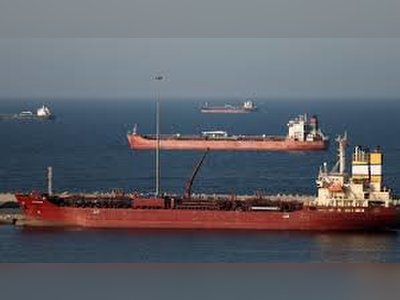
President Donald Trump has called on several countries to contribute naval forces to help protect shipping through the narrow waterway, through which roughly one fifth of the world’s traded oil normally passes.
The initiative seeks to ensure that commercial vessels can move safely through the strait after attacks on tankers and growing threats to maritime traffic severely disrupted energy flows.
The proposed coalition would focus on escorting oil shipments and deterring further attacks in the Gulf.
Trump has argued that countries heavily dependent on Middle Eastern oil supplies should play a central role in safeguarding the route, noting that many major economies rely far more on the strait than the United States does.
Officials say the administration has approached around seven countries about joining the effort, including major Asian and European economies whose industries depend on stable access to Gulf energy exports.
While discussions are ongoing, public commitments have so far been limited as governments weigh the risks of becoming more deeply involved in the conflict.
The diplomatic push comes amid mounting economic pressure as the war with Iran sends shockwaves through global energy markets.
Oil prices have surged sharply in recent weeks, and fuel costs have risen across many countries as shipping disruptions and regional attacks create uncertainty about future supply.
In an attempt to calm markets and prevent a broader economic shock, the United States and its international partners have also coordinated a massive release of emergency oil reserves.
Energy authorities from dozens of countries have agreed to release hundreds of millions of barrels from strategic stockpiles, an unprecedented move intended to ease supply shortages while the crisis continues.
The administration’s strategy combines military deterrence with international cooperation to restore safe navigation through the Gulf.
Securing the Strait of Hormuz has become a central priority because prolonged disruption could ripple across global supply chains, raising transportation costs and fueling inflation worldwide.
Trump has framed the coalition effort as a necessary step to protect international commerce and ensure energy stability at a moment of heightened geopolitical tension.
With negotiations continuing and regional security conditions still volatile, the success of the initiative will depend on whether major economies decide to commit naval resources to safeguard the critical maritime route.
President Donald Trump has called on several countries to contribute naval forces to help protect shipping through the narrow waterway, through which roughly one fifth of the world’s traded oil normally passes.
The initiative seeks to ensure that commercial vessels can move safely through the strait after attacks on tankers and growing threats to maritime traffic severely disrupted energy flows.
The proposed coalition would focus on escorting oil shipments and deterring further attacks in the Gulf.
Trump has argued that countries heavily dependent on Middle Eastern oil supplies should play a central role in safeguarding the route, noting that many major economies rely far more on the strait than the United States does.
Officials say the administration has approached around seven countries about joining the effort, including major Asian and European economies whose industries depend on stable access to Gulf energy exports.
While discussions are ongoing, public commitments have so far been limited as governments weigh the risks of becoming more deeply involved in the conflict.
The diplomatic push comes amid mounting economic pressure as the war with Iran sends shockwaves through global energy markets.
Oil prices have surged sharply in recent weeks, and fuel costs have risen across many countries as shipping disruptions and regional attacks create uncertainty about future supply.
In an attempt to calm markets and prevent a broader economic shock, the United States and its international partners have also coordinated a massive release of emergency oil reserves.
Energy authorities from dozens of countries have agreed to release hundreds of millions of barrels from strategic stockpiles, an unprecedented move intended to ease supply shortages while the crisis continues.
The administration’s strategy combines military deterrence with international cooperation to restore safe navigation through the Gulf.
Securing the Strait of Hormuz has become a central priority because prolonged disruption could ripple across global supply chains, raising transportation costs and fueling inflation worldwide.
Trump has framed the coalition effort as a necessary step to protect international commerce and ensure energy stability at a moment of heightened geopolitical tension.
With negotiations continuing and regional security conditions still volatile, the success of the initiative will depend on whether major economies decide to commit naval resources to safeguard the critical maritime route.