Focus on the BIG picture.
Wednesday, Dec 17, 2025
Outside the box.

Court Filings Shed New Light on Trump’s White House Ballroom Project Amid Legal Challenge
Justifications and unfinished plans emerge as preservationists sue to halt the $300m East Wing renovation and ballroom construction
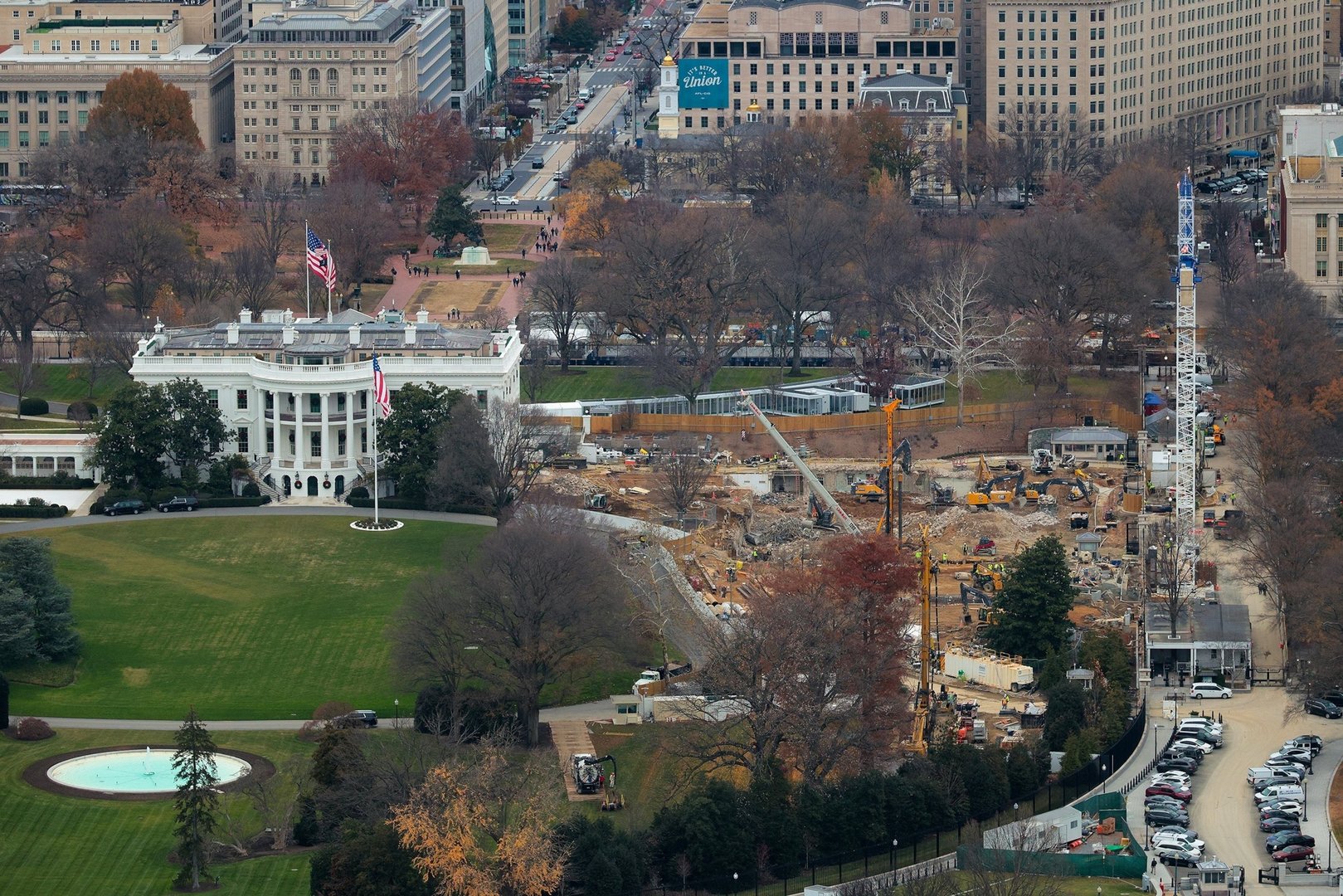
Federal court filings and a preservationist lawsuit have brought new detail to the debate over President Donald Trump’s ambitious White House ballroom project, which has become a focal point of legal and public scrutiny.
The National Trust for Historic Preservation filed suit in early December, challenging the ongoing teardown of the historic East Wing and the administration’s plans for a 90,000-square-foot ballroom, estimated to cost about $300 million and funded by private donors.
The group argues that the demolition and construction should not proceed without legally required design reviews, environmental assessments, public comment and congressional input, contending that current work bypasses established procedures.
In response, the Trump administration has defended its actions through detailed legal filings, asserting that the president possesses broad authority to modify the White House and that foundational work must continue for national security reasons.
A 36-page brief filed by the Justice Department contends that unfinished underground construction at the former East Wing site is necessary to address safety and security requirements outlined by the U.S. Secret Service, and that halting this work would hamper protective operations.
Courts have been told that above-ground ballroom construction is not expected to begin until April 2026, with foundational work planned to continue into the new year.
U.S. District Judge Richard Leon signalled on December 16 that he is unlikely to grant the preservationists’ request for an immediate temporary restraining order to stop the work and indicated the National Trust had not clearly demonstrated that irreparable harm would result if construction proceeds for now.
While the judge warned the government not to perform irreversible work that might predetermine final design decisions before plans are submitted, he allowed underground work to go ahead and scheduled further hearings for January.
The administration has yet to file finalized architectural plans with federal review panels but has pledged to do so in coming weeks.
The courtroom exchanges have also revealed fresh elements of the administration’s argument, including the administration’s framing of ballroom construction as part of necessary modernization and event functionality for the White House.
The ballroom, intended to accommodate large state functions that previously required external tents, has been defended as enhancing the estate’s ceremonial capabilities.
Critics, however, maintain that modifications to a historic national symbol should be subject to statutory review and public oversight.
These unfolding legal proceedings are poised to test the boundaries of presidential authority over the White House’s structure, historic preservation law and the role of public input in planning significant modifications to federal landmarks.
The National Trust for Historic Preservation filed suit in early December, challenging the ongoing teardown of the historic East Wing and the administration’s plans for a 90,000-square-foot ballroom, estimated to cost about $300 million and funded by private donors.
The group argues that the demolition and construction should not proceed without legally required design reviews, environmental assessments, public comment and congressional input, contending that current work bypasses established procedures.
In response, the Trump administration has defended its actions through detailed legal filings, asserting that the president possesses broad authority to modify the White House and that foundational work must continue for national security reasons.
A 36-page brief filed by the Justice Department contends that unfinished underground construction at the former East Wing site is necessary to address safety and security requirements outlined by the U.S. Secret Service, and that halting this work would hamper protective operations.
Courts have been told that above-ground ballroom construction is not expected to begin until April 2026, with foundational work planned to continue into the new year.
U.S. District Judge Richard Leon signalled on December 16 that he is unlikely to grant the preservationists’ request for an immediate temporary restraining order to stop the work and indicated the National Trust had not clearly demonstrated that irreparable harm would result if construction proceeds for now.
While the judge warned the government not to perform irreversible work that might predetermine final design decisions before plans are submitted, he allowed underground work to go ahead and scheduled further hearings for January.
The administration has yet to file finalized architectural plans with federal review panels but has pledged to do so in coming weeks.
The courtroom exchanges have also revealed fresh elements of the administration’s argument, including the administration’s framing of ballroom construction as part of necessary modernization and event functionality for the White House.
The ballroom, intended to accommodate large state functions that previously required external tents, has been defended as enhancing the estate’s ceremonial capabilities.
Critics, however, maintain that modifications to a historic national symbol should be subject to statutory review and public oversight.
These unfolding legal proceedings are poised to test the boundaries of presidential authority over the White House’s structure, historic preservation law and the role of public input in planning significant modifications to federal landmarks.