Focus on the BIG picture.
Saturday, Dec 13, 2025
Outside the box.

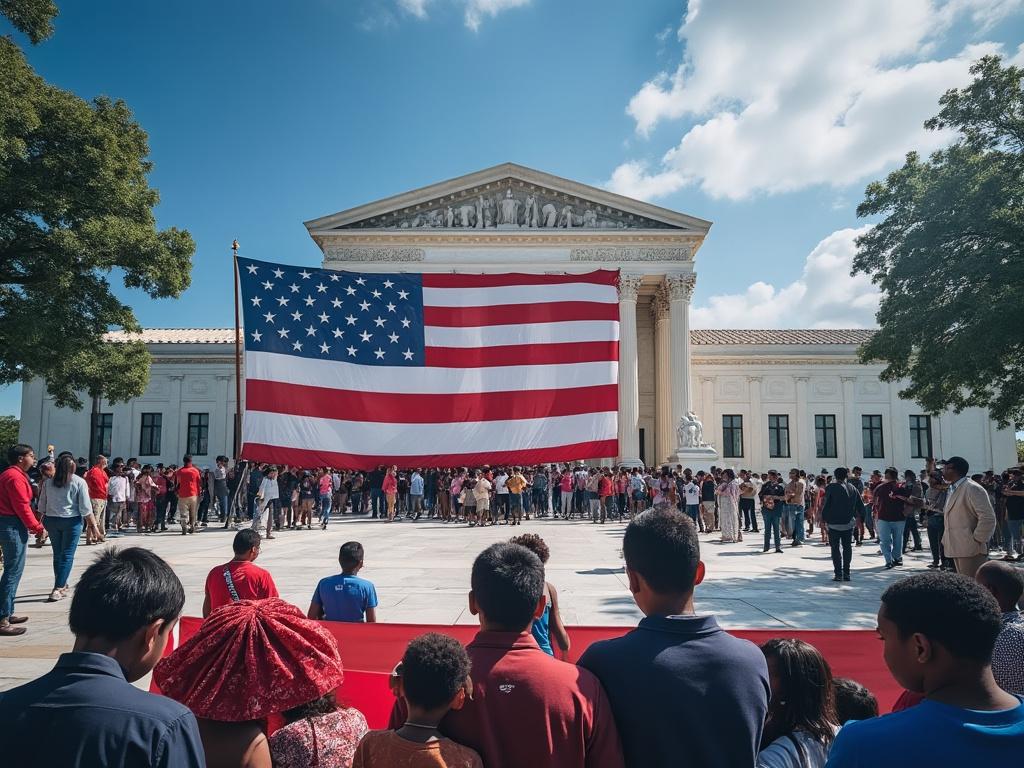
Supreme Court Permits Trump Administration to Revoke Legal Status for Over 500,000 Migrants
The Supreme Court's decision allows for the suspension of a humanitarian parole program impacting migrants from Cuba, Haiti, Nicaragua, and Venezuela.
The United States Supreme Court ruled on Friday that the Trump administration may temporarily revoke the legal status of more than 500,000 migrants living in the country.
This ruling puts a halt to a previous federal judge's order that prevented the administration from terminating the 'parole' immigration program, which was initially established by former President Joe Biden to safeguard immigrants fleeing economic and political instability in their home countries.
The decision places approximately 530,000 migrants from countries including Cuba, Haiti, Nicaragua, and Venezuela at heightened risk of deportation.
The program permits these individuals temporary residency status allowing them to work and live in the U.S. for two years on the grounds of 'urgent humanitarian reasons or significant public benefit,' as delineated by the U.S. government.
Following a federal court's injunction prohibiting the end of the so-called CHNV humanitarian parole program, the Trump administration sought an emergency appeal from the Supreme Court.
In their ruling, Justices Ketanji Brown Jackson and Sonia Sotomayor dissented, noting concerns about the immediate impact the order would have on the lives of affected migrants.
Justice Jackson emphasized that the court's ruling could unravel the lives of many individuals seeking asylum before their legal claims are fully examined.
On his first day in office, former President Trump signed an executive order directing the Department of Homeland Security to eliminate various parole programs.
Subsequently, in March, Homeland Security Secretary Kristi Noem announced the decision to terminate the CHNV humanitarian parole program.
In response to these actions, several immigrant rights organizations and individuals benefiting from the program filed lawsuits against the Trump administration, arguing that deportation to their home countries would expose them to 'serious risks of danger, persecution, and even death.' This recent Supreme Court decision follows an earlier ruling earlier this month, which allowed Trump officials to rescind Temporary Protected Status (TPS) for approximately 350,000 Venezuelan immigrants already residing in the United States.
Humanitarian parole programs have a long history in the U.S., dating back decades, primarily utilized for immigrants fleeing conflict and instability, such as Cubans escaping from their home country following the revolution in the 1960s.
More recently, the Biden administration implemented a similar parole program in 2022 to assist Ukrainians escaping the conflict triggered by Russia's invasion.
This development highlights the ongoing complexities of U.S. immigration policy and the evolving protections offered to various migrant populations in the face of shifting political landscapes.
This ruling puts a halt to a previous federal judge's order that prevented the administration from terminating the 'parole' immigration program, which was initially established by former President Joe Biden to safeguard immigrants fleeing economic and political instability in their home countries.
The decision places approximately 530,000 migrants from countries including Cuba, Haiti, Nicaragua, and Venezuela at heightened risk of deportation.
The program permits these individuals temporary residency status allowing them to work and live in the U.S. for two years on the grounds of 'urgent humanitarian reasons or significant public benefit,' as delineated by the U.S. government.
Following a federal court's injunction prohibiting the end of the so-called CHNV humanitarian parole program, the Trump administration sought an emergency appeal from the Supreme Court.
In their ruling, Justices Ketanji Brown Jackson and Sonia Sotomayor dissented, noting concerns about the immediate impact the order would have on the lives of affected migrants.
Justice Jackson emphasized that the court's ruling could unravel the lives of many individuals seeking asylum before their legal claims are fully examined.
On his first day in office, former President Trump signed an executive order directing the Department of Homeland Security to eliminate various parole programs.
Subsequently, in March, Homeland Security Secretary Kristi Noem announced the decision to terminate the CHNV humanitarian parole program.
In response to these actions, several immigrant rights organizations and individuals benefiting from the program filed lawsuits against the Trump administration, arguing that deportation to their home countries would expose them to 'serious risks of danger, persecution, and even death.' This recent Supreme Court decision follows an earlier ruling earlier this month, which allowed Trump officials to rescind Temporary Protected Status (TPS) for approximately 350,000 Venezuelan immigrants already residing in the United States.
Humanitarian parole programs have a long history in the U.S., dating back decades, primarily utilized for immigrants fleeing conflict and instability, such as Cubans escaping from their home country following the revolution in the 1960s.
More recently, the Biden administration implemented a similar parole program in 2022 to assist Ukrainians escaping the conflict triggered by Russia's invasion.
This development highlights the ongoing complexities of U.S. immigration policy and the evolving protections offered to various migrant populations in the face of shifting political landscapes.