Focus on the BIG picture.
Tuesday, Mar 17, 2026
Outside the box.

0:00
0:00
Starmer Says UK Working With Allies on Hormuz Shipping Plan After Trump Raises Pressure
British prime minister signals cooperation with partners to protect maritime traffic while avoiding deeper involvement in Iran conflict
Prime Minister Keir Starmer has said the United Kingdom is working closely with international partners on a plan to safeguard shipping through the Strait of Hormuz, after President Donald Trump intensified calls for allied support to keep the strategic waterway open.
The British leader confirmed that discussions are underway with the United States, European governments and Gulf partners on a coordinated approach to restore safe passage for commercial vessels through the narrow maritime corridor linking the Persian Gulf to global markets.
The strait carries roughly one-fifth of the world’s oil supply, making disruptions there a major concern for global energy security.
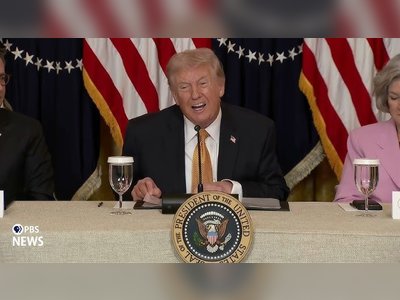
President Trump has urged countries that rely on Gulf energy shipments to contribute naval resources to help protect the route, arguing that safeguarding the waterway is a shared responsibility among the nations that benefit from its trade flows.
The administration in Washington has indicated that naval escorts for oil tankers could be organized with allied participation if required to stabilize shipping traffic.
Speaking in London, Starmer said Britain is examining a range of options while working with partners on what he described as a viable plan to support commercial navigation.
The prime minister emphasized that the United Kingdom would act to protect maritime routes and assist allies, but also made clear that the country does not intend to be drawn into a wider regional war.
Officials in Downing Street say the government is considering several defensive measures, including potential maritime patrols and specialized mine-clearing capabilities designed to reduce risks to civilian shipping.
Any deployment, ministers say, would need to meet legal requirements and be backed by a clear strategic objective.
The discussions follow mounting tension in the Gulf as the conflict involving Iran disrupts tanker traffic and drives volatility in global oil markets.
A series of attacks on shipping and threats to maritime routes have sharply reduced commercial transit through the strait, pushing energy prices higher and raising concerns among importing nations.
European governments have also been consulting on possible responses, with several countries requesting greater clarity on the scope and objectives of any multinational operation.
While some partners are exploring defensive escort missions or surveillance roles, many remain cautious about becoming directly involved in the conflict.
Despite the uncertainty, Starmer stressed that the protection of maritime trade remains essential for the global economy.
Britain, he said, will continue to coordinate closely with allies as governments search for ways to reopen one of the world’s most critical energy routes without allowing the crisis to escalate further.
The British leader confirmed that discussions are underway with the United States, European governments and Gulf partners on a coordinated approach to restore safe passage for commercial vessels through the narrow maritime corridor linking the Persian Gulf to global markets.
The strait carries roughly one-fifth of the world’s oil supply, making disruptions there a major concern for global energy security.
President Trump has urged countries that rely on Gulf energy shipments to contribute naval resources to help protect the route, arguing that safeguarding the waterway is a shared responsibility among the nations that benefit from its trade flows.
The administration in Washington has indicated that naval escorts for oil tankers could be organized with allied participation if required to stabilize shipping traffic.
Speaking in London, Starmer said Britain is examining a range of options while working with partners on what he described as a viable plan to support commercial navigation.
The prime minister emphasized that the United Kingdom would act to protect maritime routes and assist allies, but also made clear that the country does not intend to be drawn into a wider regional war.
Officials in Downing Street say the government is considering several defensive measures, including potential maritime patrols and specialized mine-clearing capabilities designed to reduce risks to civilian shipping.
Any deployment, ministers say, would need to meet legal requirements and be backed by a clear strategic objective.
The discussions follow mounting tension in the Gulf as the conflict involving Iran disrupts tanker traffic and drives volatility in global oil markets.
A series of attacks on shipping and threats to maritime routes have sharply reduced commercial transit through the strait, pushing energy prices higher and raising concerns among importing nations.
European governments have also been consulting on possible responses, with several countries requesting greater clarity on the scope and objectives of any multinational operation.
While some partners are exploring defensive escort missions or surveillance roles, many remain cautious about becoming directly involved in the conflict.
Despite the uncertainty, Starmer stressed that the protection of maritime trade remains essential for the global economy.
Britain, he said, will continue to coordinate closely with allies as governments search for ways to reopen one of the world’s most critical energy routes without allowing the crisis to escalate further.