Focus on the BIG picture.
Friday, Mar 20, 2026
Outside the box.

Trump’s Washington Accords Aim to Cement Peace and Prosperity Between Congo and Rwanda
U.S.-brokered agreement seeks to end decades of conflict and lay the foundation for security cooperation and economic integration
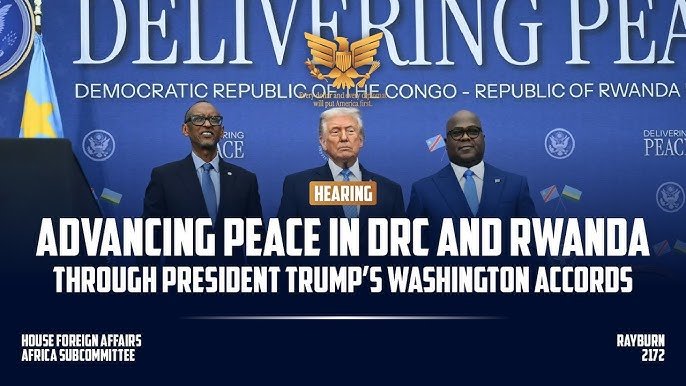
The United States has played a central role in brokering a landmark peace agreement between the Democratic Republic of the Congo (DRC) and Rwanda, known as the Washington Accords for Peace and Prosperity, reflecting a deep diplomatic push to resolve one of Africa’s most enduring conflicts.
Signed in Washington in June 2025 with active engagement from President Donald Trump’s administration and senior envoys, the treaty is designed to halt hostilities, build security mechanisms and promote shared economic growth after years of bitter fighting and regional instability.
The Accords commit both nations to implement key provisions of earlier agreements, including a phased withdrawal of foreign forces, the establishment of a joint security coordination mechanism and the phased integration and disarmament of non-state armed groups that have fuelled violence in eastern Congo.
A cornerstone of the deal is the creation of a Regional Economic Integration Framework to boost cross-border investment, especially in critical mineral supply chains, and to link economic development more directly to peace efforts.
President Trump, who hosted the signing ceremonies and championed the accords as a breakthrough for regional peace, emphasised U.S. commitment to supporting both countries after decades of conflict that have seen millions displaced and thousands killed.
He framed the agreement as a model of diplomatic engagement that underscores the U.S. role in fostering stability and prosperity in Africa.
While Trump has acknowledged that implementation will require sustained effort, his administration has hosted follow-up talks in Washington to accelerate security cooperation and the economic components of the accord.
Regional partners and international organisations — including the African Union and collaborators such as Qatar — have welcomed the agreement, noting its potential to reduce tensions and create a platform for long-term peace in the Great Lakes region.
Critics, however, have cautioned that the real test will be whether both governments can translate commitments into tangible improvements on the ground and protect civilians from violence that has persisted despite diplomatic progress.
Signed in Washington in June 2025 with active engagement from President Donald Trump’s administration and senior envoys, the treaty is designed to halt hostilities, build security mechanisms and promote shared economic growth after years of bitter fighting and regional instability.
The Accords commit both nations to implement key provisions of earlier agreements, including a phased withdrawal of foreign forces, the establishment of a joint security coordination mechanism and the phased integration and disarmament of non-state armed groups that have fuelled violence in eastern Congo.
A cornerstone of the deal is the creation of a Regional Economic Integration Framework to boost cross-border investment, especially in critical mineral supply chains, and to link economic development more directly to peace efforts.
President Trump, who hosted the signing ceremonies and championed the accords as a breakthrough for regional peace, emphasised U.S. commitment to supporting both countries after decades of conflict that have seen millions displaced and thousands killed.
He framed the agreement as a model of diplomatic engagement that underscores the U.S. role in fostering stability and prosperity in Africa.
While Trump has acknowledged that implementation will require sustained effort, his administration has hosted follow-up talks in Washington to accelerate security cooperation and the economic components of the accord.
Regional partners and international organisations — including the African Union and collaborators such as Qatar — have welcomed the agreement, noting its potential to reduce tensions and create a platform for long-term peace in the Great Lakes region.
Critics, however, have cautioned that the real test will be whether both governments can translate commitments into tangible improvements on the ground and protect civilians from violence that has persisted despite diplomatic progress.