Focus on the BIG picture.
Wednesday, Jan 21, 2026
Outside the box.

Trump Defends Immigration Enforcement and Repeats Strained Comments on NATO and Norway at White House Briefing
In a wide-ranging press event, the president justifies ICE actions, questions alliance reciprocity and criticises Norway over the Nobel Peace Prize amid rising transatlantic tensions
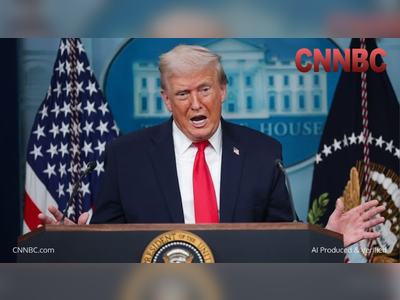
President Donald Trump used a rare, nearly two-hour White House briefing on Tuesday to defend U.S. immigration enforcement efforts and revisit contentious foreign policy positions, including criticisms of the North Atlantic Treaty Organization and remarks about Norway’s role in awarding the Nobel Peace Prize.
Trump said Immigration and Customs Enforcement officers may make mistakes and can be ‘‘too rough’’ when dealing with what he described as ‘‘rough people,’’ framing their actions within the broader context of confronting serious criminal activity.
He acknowledged tragedies such as the death of Renee Good during an ICE interaction, saying he ‘‘felt terribly’’ about the incident but emphasised his administration’s focus on removing individuals with criminal records.
On NATO, the president once again questioned whether alliance partners would come to the United States’ aid as America has supported them, stating that ‘‘NATO has to treat us fairly, too,’’ and asserting he has done ‘‘more for NATO than any other person alive or dead.’’ Trump’s remarks come amid rising transatlantic tensions linked to his renewed push for U.S. control of Greenland, which has drawn firm opposition from European allies and prompted the threat of tariffs.
He also expressed frustration with Norway and the Nobel Peace Prize process, claiming that Norway ‘‘controls the shots’’ on the award and contending that he deserved recognition for what he characterised as major global peace achievements.
The briefing touched on a broad array of topics beyond immigration and NATO, including Trump’s critique of the United Nations’ effectiveness, his economic record, and hypothetical questions about strategic ambitions such as Greenland.
He mentioned his upcoming trip to the World Economic Forum in Davos, Switzerland, where he is expected to confront pushback from allied leaders over his foreign policy stances.
With transatlantic relations under strain, especially around Arctic strategy and trade measures related to Greenland, Trump’s comments underscored his combative rhetorical style and his administration’s willingness to challenge longstanding diplomatic norms even as it seeks to project strength on the global stage.
Trump said Immigration and Customs Enforcement officers may make mistakes and can be ‘‘too rough’’ when dealing with what he described as ‘‘rough people,’’ framing their actions within the broader context of confronting serious criminal activity.
He acknowledged tragedies such as the death of Renee Good during an ICE interaction, saying he ‘‘felt terribly’’ about the incident but emphasised his administration’s focus on removing individuals with criminal records.
On NATO, the president once again questioned whether alliance partners would come to the United States’ aid as America has supported them, stating that ‘‘NATO has to treat us fairly, too,’’ and asserting he has done ‘‘more for NATO than any other person alive or dead.’’ Trump’s remarks come amid rising transatlantic tensions linked to his renewed push for U.S. control of Greenland, which has drawn firm opposition from European allies and prompted the threat of tariffs.
He also expressed frustration with Norway and the Nobel Peace Prize process, claiming that Norway ‘‘controls the shots’’ on the award and contending that he deserved recognition for what he characterised as major global peace achievements.
The briefing touched on a broad array of topics beyond immigration and NATO, including Trump’s critique of the United Nations’ effectiveness, his economic record, and hypothetical questions about strategic ambitions such as Greenland.
He mentioned his upcoming trip to the World Economic Forum in Davos, Switzerland, where he is expected to confront pushback from allied leaders over his foreign policy stances.
With transatlantic relations under strain, especially around Arctic strategy and trade measures related to Greenland, Trump’s comments underscored his combative rhetorical style and his administration’s willingness to challenge longstanding diplomatic norms even as it seeks to project strength on the global stage.