Focus on the BIG picture.
Friday, Dec 12, 2025
Outside the box.

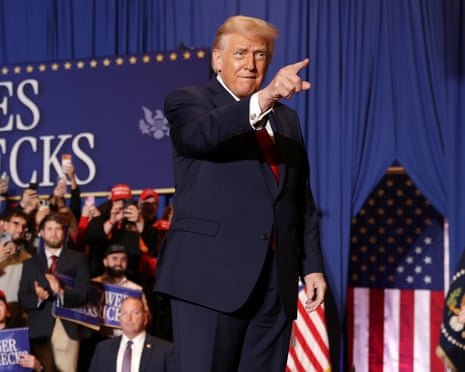
British MPs Warn U.S. National Security Strategy Echoes 1930s Extreme Right-Wing Tropes
Members of Parliament express alarm over elements of Washington’s recent security document, prompting debate in Westminster over allied strategy and values.
British lawmakers have sharply criticised aspects of the United States’ new national security strategy, warning that its language and priorities echo extreme right-wing tropes reminiscent of the 1930s and pose risks to democratic norms in Europe.
During urgent questions in the House of Commons, Labour MP Matt Western described elements of the strategy — including its framing of Europe as threatened by “civilisational erasure” and its overt support for nationalist parties — as chilling and historically resonant with ideologies that once destabilised democratic societies.
His colleague Liam Byrne said it was “not hard to see the rhymes with some extreme right-wing tropes which date back to the 1930s,” asserting that certain narratives within Washington’s document could be interpreted as indirect interference in European politics and undermine longstanding transatlantic alliances.
The strategy’s critique of mass migration, free speech policies and European unity has drawn rebukes, with opposition MPs and some Liberal Democrats calling parts of the document rooted in what they argue are racially charged worldviews.
In response, the UK government, represented by a senior Foreign Office minister, reaffirmed the importance of the United States as a strategic ally while distancing itself from specific rhetorical elements of the U.S. approach.
The minister emphasised Britain’s commitment to multiculturalism and robust European defence cooperation, underscoring shared values even amid policy disagreements.
The debate reflects broader tensions within Western strategic discourse, as governments grapple with shifting geopolitical dynamics, migration pressures and the balance between national sovereignty and collective security.
While British MPs stop short of rejecting the alliance with the United States, their concerns signal unease with aspects of the American strategy’s tone and potential implications for Europe’s democratic fabric and bilateral relations going forward.
During urgent questions in the House of Commons, Labour MP Matt Western described elements of the strategy — including its framing of Europe as threatened by “civilisational erasure” and its overt support for nationalist parties — as chilling and historically resonant with ideologies that once destabilised democratic societies.
His colleague Liam Byrne said it was “not hard to see the rhymes with some extreme right-wing tropes which date back to the 1930s,” asserting that certain narratives within Washington’s document could be interpreted as indirect interference in European politics and undermine longstanding transatlantic alliances.
The strategy’s critique of mass migration, free speech policies and European unity has drawn rebukes, with opposition MPs and some Liberal Democrats calling parts of the document rooted in what they argue are racially charged worldviews.
In response, the UK government, represented by a senior Foreign Office minister, reaffirmed the importance of the United States as a strategic ally while distancing itself from specific rhetorical elements of the U.S. approach.
The minister emphasised Britain’s commitment to multiculturalism and robust European defence cooperation, underscoring shared values even amid policy disagreements.
The debate reflects broader tensions within Western strategic discourse, as governments grapple with shifting geopolitical dynamics, migration pressures and the balance between national sovereignty and collective security.
While British MPs stop short of rejecting the alliance with the United States, their concerns signal unease with aspects of the American strategy’s tone and potential implications for Europe’s democratic fabric and bilateral relations going forward.