Focus on the BIG picture.
Wednesday, Jan 21, 2026
Outside the box.

White House Tech Adviser Criticises EU AI Act and Champions Trump’s Innovation-First AI Strategy Ahead of Davos
U.S. science and technology chief rejects stringent European AI regulation while promoting America’s approach to maintain global AI leadership
As the World Economic Forum in Davos opened, the White House’s top technology adviser sharply criticised the European Union’s AI regulatory framework and argued that the United States’ approach under President Donald Trump better positions American innovation to lead the global artificial intelligence race.
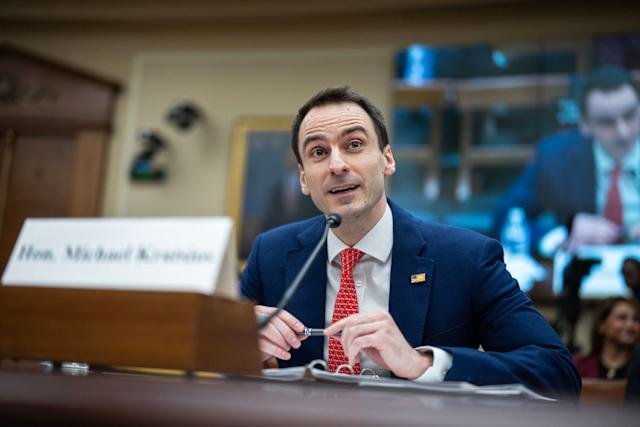
Michael Kratsios, director of the White House Office of Science and Technology Policy, said that the EU AI Act’s stringent compliance requirements could stifle innovation and place European companies at a disadvantage compared with their U.S. counterparts, emphasising that a lighter, innovation-centric framework was preferable.
Kratsios, speaking ahead of high-level discussions with global leaders and industry executives, argued that the U.S. policy pedigree prioritises dynamism and competitiveness, and noted that Trump’s administration is advancing a national AI strategy focused on maintaining global leadership in artificial intelligence, expanding infrastructure and pre-empting overly burdensome regulations that could fracture the U.S. market.
In December 2025, an executive order signalled Washington’s intent to ensure a ‘‘minimally burdensome’’ national AI policy framework and discourage state or foreign rules considered excessive, reflecting the administration’s broader goal of avoiding a patchwork of conflicting mandates.
The adviser’s comments reflect broader tensions between Washington and Brussels over how to regulate rapidly evolving technologies, with European officials increasingly revisiting the EU AI Act’s timelines and enforcement mechanisms amid concerns about competitiveness and global alignment.
U.S. officials and many tech leaders argue that maintaining innovation freedom and avoiding restrictive governance will help U.S. firms outpace rivals in China and Europe, ensuring that American values of opportunity and economic growth underpin AI development.
The debate over AI governance comes as world leaders, corporate executives and policymakers convene in Switzerland to discuss economic trends, technological transformation and geopolitical competition.
Kratsios’s remarks at Davos underscore the Trump administration’s determination to shape global standards in a way that aligns with its broader agenda of technological primacy, while urging international counterparts to embrace regulatory frameworks that balance safety with the agility necessary to foster innovation.
Michael Kratsios, director of the White House Office of Science and Technology Policy, said that the EU AI Act’s stringent compliance requirements could stifle innovation and place European companies at a disadvantage compared with their U.S. counterparts, emphasising that a lighter, innovation-centric framework was preferable.
Kratsios, speaking ahead of high-level discussions with global leaders and industry executives, argued that the U.S. policy pedigree prioritises dynamism and competitiveness, and noted that Trump’s administration is advancing a national AI strategy focused on maintaining global leadership in artificial intelligence, expanding infrastructure and pre-empting overly burdensome regulations that could fracture the U.S. market.
In December 2025, an executive order signalled Washington’s intent to ensure a ‘‘minimally burdensome’’ national AI policy framework and discourage state or foreign rules considered excessive, reflecting the administration’s broader goal of avoiding a patchwork of conflicting mandates.
The adviser’s comments reflect broader tensions between Washington and Brussels over how to regulate rapidly evolving technologies, with European officials increasingly revisiting the EU AI Act’s timelines and enforcement mechanisms amid concerns about competitiveness and global alignment.
U.S. officials and many tech leaders argue that maintaining innovation freedom and avoiding restrictive governance will help U.S. firms outpace rivals in China and Europe, ensuring that American values of opportunity and economic growth underpin AI development.
The debate over AI governance comes as world leaders, corporate executives and policymakers convene in Switzerland to discuss economic trends, technological transformation and geopolitical competition.
Kratsios’s remarks at Davos underscore the Trump administration’s determination to shape global standards in a way that aligns with its broader agenda of technological primacy, while urging international counterparts to embrace regulatory frameworks that balance safety with the agility necessary to foster innovation.